Best Baby Phone Toys for Fun, Learning, and Pretend Play
Choosing the right pretend phone for babies supports early language skills, fine motor development, and social play. This guide highlights five engaging options that blend colorful lights, sound effects, and interactive modes, helping little ones explore communication by mimicking grown-up devices. Each pick below emphasizes durability, kid-friendly design, and safe play to suit toddlers and infants alike.
| Product | Brand | Key Benefit |
|---|---|---|
| Wolmund Toy Learning Play Cell Phone | Wolmund | 8 modes for interactive learning and imaginative play |
| LeapFrog Chat and Count Emoji Phone | LeapFrog | Count numbers 0-10 with light-up buttons and playful videos |
| Fisher-Price Toddler Chatter Telephone | Fisher-Price | Classic pull-along design with rotating dial and moving eyes |
| VTech Little Smartphone | VTech | Small, kid-friendly smartphone with pretend voicemail and lights |
| JOYIN Baby Learning Phone And Remote Toy | JOYIN | Multifunction pretend remote and phone with sound effects |
These picks cover a spectrum from traditional pull-toy experiences to modern interactive devices, all designed to entertain while supporting early communication and cognitive development. The following sections provide a closer look at each option, including how the features translate to playtime benefits and what guardians should consider when choosing a toy phone for their child.
Wolmund Toy Learning Play Cell Phone With 8 Functions

The Wolmund device is designed as a toddler-friendly toy phone that mirrors a real phone with a compact, kid-sized form. It features eight modes including mobile, piano, color, fruit, drum, game, maths, and question modes. This variety encourages exploration, language prompts, and early numeracy through interactive play. The LED lights provide visual cues while adjustable volume helps tailor sensory input to a child’s comfort level. A USB charging option keeps the toy ready for extended play sessions, reducing the need for frequent battery changes. The design emphasizes safety and engagement, aiming to hold a baby’s attention during learning activities or quiet playtime.
LeapFrog Chat And Count Emoji Phone

This LeapFrog model blends pretend play with early numeracy. Kids can simulate conversations with Scout and answer pretend calls and voicemails, supporting language development and social interaction. The light-up number buttons invite children to explore numbers 0 through 10, aligning with early math concepts. A video button delivers engaging clips featuring Scout, while the emoji sounds add an interactive, social-media-inspired layer of fun. The toy’s compact, toddler-friendly size supports small-hand manipulation and fine motor practice as kids press buttons and explore cause-and-effect relationships.
Fisher-Price Chatter Telephone

The Fisher-Price Chatter Telephone embraces a classic design with a toddler-friendly twist. This pull-along toy encourages movement and walking play, combining a friendly face and ringing sounds to capture a child’s interest. The rotating dial introduces basic number recognition while encouraging hand-eye coordination as kids twist the dial and chase after the toy. Moving eyes add a playful, engaging element during pretend conversations, aligning with social play and language development. The durability and timeless appeal make it a robust option for early pretend play environments.
VTech Little Smartphone
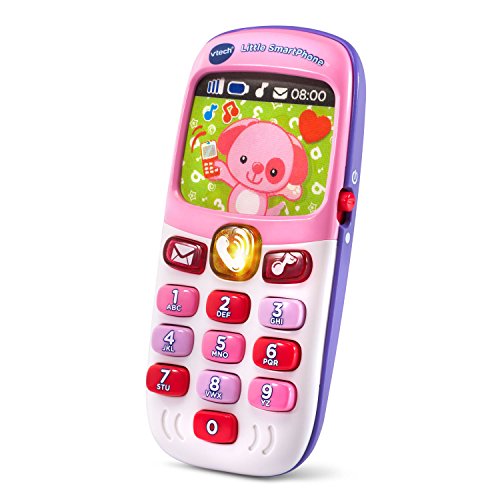
The VTech Little Smartphone prioritizes small-hand usability with a compact form and bright, accessible buttons. Pretend voicemail and music features along with a light-up interface foster imaginative play and early communication skills. The holographic puppy and kitty visuals spark story-telling and visualization, while the large, colorful buttons encourage precise finger movements as children dial, press, and experiment with cause-and-effect. The toy’s design supports solo play as well as guided activities with caregivers for language-rich sessions.
JOYIN Baby Learning Phone And Remote Toy

The JOYIN package offers a multifaceted pretend device that includes both a phone and a remote control. Its design supports language development, cognitive growth, and sensory stimulation through a variety of sounds and effects. The large screen and buttons are sized for small hands, making it easier for toddlers to manipulate. This kit-like approach provides variety in a single purchase, which can help maintain a child’s interest during learning activities and playful role-play sessions. The toy’s holiday-ready, gift-friendly presentation makes it a popular option for early education playtime.
Buying Guide
Key purchase considerations help ensure the chosen toy phone aligns with a child’s development stage and safety needs.
- Age range and safety: Look for toys labeled for infants and toddlers with rounded edges, non-toxic materials, and sturdy construction to withstand rough handling and drops.
- Interactivity and learning goals: Decide whether you want a device focused on language and social play, or one that introduces numbers, colors, and basic problem-solving through varied modes.
- Durability and maintenance: Consider battery life, ease of cleaning, and whether the toy uses replaceable batteries or USB charging to minimize ongoing costs.
- Sensory features: Lights, sounds, and textures should engage without overwhelming. Adjustable volume and soft-to-bright lighting support customizable play experiences.
- Portability and storage: Lightweight designs with compact forms are easier for travel and caregiver supervision in various environments.
- Value and variety: Kits that combine multiple pretend devices (phone plus remote) can provide extended play opportunities without needing multiple separate toys.
From a developmental perspective, pretend play with phones supports early language acquisition, narrative skills, and social competence as children imitate conversations, ask questions, and respond to imagined situations. Caregivers can enhance learning by narrating actions, prompting turn-taking, and linking on-screen prompts to real-world experiences, such as family phone calls or role-play around daily routines. The selected products emphasize safe, engaging experiences suitable for babies and toddlers, with varying degrees of complexity to match growing skills.