Best Picture Cards for Autism to Aid Communication and Learning
Picture cards play a vital role in supporting communication for individuals with autism, speech delays, or non-verbal needs. This article highlights five effective card sets that use vivid visuals to convey essential words, actions, and feelings. Each product offers tangible ways to reduce frustration, boost independence, and encourage interactive learning in daily routines, therapy, and classroom settings.
Summary of selected products
| Product | Brand | What It Includes | Format |
|---|---|---|---|
| Special Needs Communication Cards | Hidaya Prints | 30 double‑sided cards, 60 words, ring binder | Visual aid for daily needs and feelings |
| 50 Verb Flashcards | SpriteGru | 50 double‑sided verb cards | Action words with images |
| 80 Nouns Flash Cards | ALSOLIFE | 80 basic noun words | Vocabulary building with real-life images |
| 50 First Words Flash Cards | ALSOLIFE | 50 high‑frequency words | First words and pictures |
| Special Needs My Communication Cards | Amonev | 27 illustrated flash cards | Visual cues for speech delay |
Special Needs Communication Cards for Non Verbal Children and Adults with Autism

These 30 double‑sided picture cards come in a compact ring binder for easy access, totaling 60 picture words. The set emphasizes essential daily needs and feelings to facilitate non‑verbal communication. Card dimensions are 75 x 75 mm, optimized for portability and quick reference. Designed for individuals with autism, speech impairments, and toddlers learning to communicate, this kit supports bilingual and inclusive learning environments as an accessible communication tool.
50 Verb Flashcards: Picture & Word Cards for Language Building

This value pack provides 50 double‑sided verb flash cards to expand vocabulary and support language development. The front of each card features a verb, while the back showcases a corresponding action illustration, reinforcing word–image associations. Cards measure about 4” x 5.8”, offering ample space for clear text and vivid imagery. The large format is practical for small hands and improves readability during therapy and classroom activities.
ALSOLIFE 80 Nouns Flash Cards for Toddlers

ALSOLIFE’s set includes 80 basic nouns across varied categories like farm animals, fruits, vegetables, vehicles, and outdoors. The flash cards are designed to support language development in toddlers and those building foundational vocabularies. Interactive videos accompany the cards to enhance engagement, while the included games and activities guide caregivers through structured practice. Durable construction supports repeated handling in therapy sessions and home use.
ALSOLIFE 50 First Words Flash Cards for Baby

Designed for early language development, this set features 50 high‑frequency first words that kids encounter daily. It includes videos to demonstrate the word in action, turning passive viewing into active speaking practice. The cards are distraction‑free with white backgrounds to simplify recognition, and the back side lists the word to reinforce word–object connections. Ideal for baby and toddler learning, speech therapy, and special education tools.
Special Needs My Communication Cards
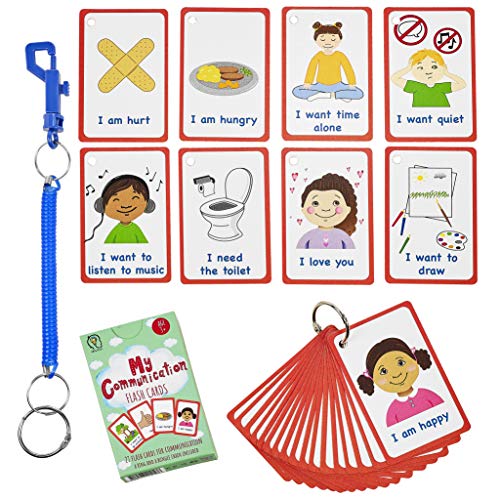
These 27 flash cards are focused on promoting language and communication for special education. The illustrated cues aim to reduce anxiety and build confidence by providing clear visual prompts that support response and recognition. The set is designed for individuals with autism or speech delays, offering a simple, effective tool to bridge communication gaps when words are hard to find.
Stages Learning Materials Language Builder Picture Noun Flash Cards

This 353‑card vocabulary kit covers nine basic categories, including animals, food, vehicles, furniture, clothing, toys, and everyday objects. Each flashcard shows a photorealistic image on the front with descriptive content on the back, facilitating comprehension and categorization. The 3.5″ x 5″ size and gloss finish support repeated handling in classrooms and therapy sessions, making it suitable for early language development and ABA therapy contexts.
Buying Guide: Key Purchase Considerations
- Age and communication level: Choose sets aligned with the learner’s current abilities—ranging from basic nouns to action verbs and first words—to maximize engagement and progress.
- Visual design: Look for high-contrast images, clear labels, and minimal distractions. Real-life photos generally improve recognition and retention for many learners.
- Format and durability: Consider card size, double-sided designs, and binding or box storage. Durable cardstock and rounded corners support long-term use in therapy and classroom settings.
- Therapy compatibility: Some sets include guided activities or companion videos. These can extend learning beyond passive viewing to active language practice.
- Portability and accessibility: Ring binders or compact packs help caregivers carry tools to school, clinics, or appointments, promoting consistent practice.
- Language scope: A mixed toolkit with nouns, verbs, and first words supports broad vocab development and varied communicative intents.
- Customization potential: Check whether cards are easily manipulable for customizing to individual routines or personalized cues.
- Safety features: Ensure materials are toddler- and child-safe, with rounded corners and non-toxic printing for younger users.
- Cost and value: Compare sets by the number of cards, reuse potential, and included learning aids to determine best return on investment for ongoing therapy needs.
Across multiple perspectives, picture card sets provide structured, repeatable opportunities to practice communication, reduce frustration, and build confidence in social interactions. When selecting a kit, consider the learner’s daily contexts, therapy goals, and the level of parental or caregiver guidance available to maximize effectiveness.