Best Fine Motor Skills Toys for 12-18 Months: Develop Tiny Hands
Finding engaging, safe toys that support fine motor development for 12- to 18-month-olds can boost hand strength, coordination, and early problem-solving. This guide highlights five carefully chosen options that align with Montessori-inspired learning, sensory play, and open-ended exploration. Each product emphasizes grasping, placing, sorting, and finger dexterity to support early milestones while offering durable, kid-friendly design.
Summary of chosen products:
| Product | Brand | Key Focus | Amazon Link |
|---|---|---|---|
| Spike The Fine Motor Hedgehog | Learning Resources | Colorful quills for inserting/removing; color recognition; counting | Product |
| Montessori 3-in-1 Color Sorting Toy | EARLY EXPLORER TOYS | Three lids to build grip strength; multi-sensorial, screen-free | Product |
| GOPO TOYS Montessori Shape Sorter | GOPO TOYS | Stacking, sorting, and matching; non-toxic wood | Product |
| MINGKIDS Bath Toys 12-18 Months | MINGKIDS | Bright shapes; open-sided container; finger-friendly manipulation | Product |
| iPlay, iLearn Hedgehog Montessorri Set | iPlay, iLearn | Colorful quills; color/number recognition; dexterity practice | Product |
Spike The Fine Motor Hedgehog
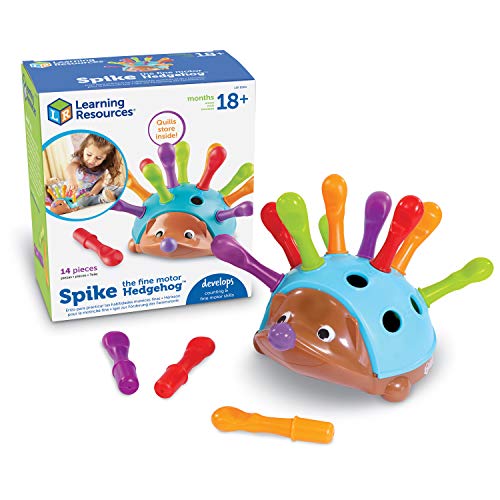
This Learning Resources Hedgehog toy develops essential fine motor skills as children remove and place quills into the hedgehog’s back. The quills promote hand muscles strengthening and improve hand-eye coordination. Suitable for 18 months and up, it supports expanding play to colors, counting, and pattern recognition as children grow, offering durable, tactile engagement that evolves with the child.
Montessori 3-in-1 Color Sorting Toy

This three-lid, multi-sensorial wooden toy emphasizes hands-on learning without screens. Each lid offers a distinct challenge—geometric, round coin-style, and flat stick—helping kids build grip strength, hand-eye coordination, and directional awareness through active problem solving. The design aligns with Montessori principles, encouraging open-ended exploration and autonomous play at a gentle, toddler-friendly pace.
GOPO Montessori Shape Sorter
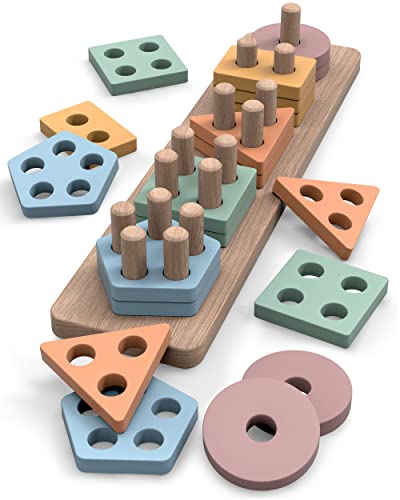
GOPO TOYS’ wooden shape sorter emphasizes independence and cognitive development through stacking, matching, and sorting. The chunky shapes and sturdy pegs help develop dexterity and hand-eye coordination. Made from natural wood with smooth edges and water-based paint, it is designed for safety and durability, reducing the risk of small parts while promoting calm, repeatable play that supports early problem-solving skills.
MINGKIDS Bath Toys

This bath-time toy set features a shape sorter concept in a water-friendly format, with open sides and elastic strips that allow easy insertion and removal of shapes. The bright colors and toddler-friendly size support fine motor practice during bath play, offering a simple, durable option for sensory and dexterity development in a fun, water-rich environment.
iPlay, iLearn Hedgehog Montessorri Set

Designed for color and number recognition, this hedgehog-themed set features removable quills that support finger dexterity and fine motor practice. The quills encourage hands-on manipulation, helping children improve grip strength and finger coordination while introducing basic color and number concepts in a playful context.
Buying Guide: Key Purchase Considerations
Purpose and development stage: Choose toys that align with the child’s current abilities and next milestones. For 12- to 18-month-olds, look for simple inserting, stacking, sorting, and matching activities that progressively challenge fine motor skills without frustration.
Safety and materials: Prioritize non-toxic finishes, rounded edges, and sturdy construction. Wood-based toys with water-based paint and safe finishes are durable and less likely to break into small parts that could pose a choking risk.
Open-ended vs. guided play: Montessori-inspired toys favor open-ended exploration that supports autonomy, while structured activities help with specific skills like color recognition or counting. A mix provides a well-rounded development experience.
Durability and maintenance: Look for washable or water-resistant components, especially for bath-related toys. Durable hardware and quality stitching or joints reduce wear from daily use and teething-related chewing.
Adaptability and growth: Toys that scale with a child’s development—starting with simple insertion and evolving into sorting or counting—offer longer play value and learning continuity as skills advance.
Sensory appeal: Textured quills, smooth wood, and tactile elements can boost focus and attention. Sensory-rich toys support engagement and can be particularly beneficial for children who benefit from tactile feedback.
Multisensory learning: Toys that blend colors, shapes, numbers, and spatial thinking promote better memory and problem-solving. A combination of visual, tactile, and cognitive challenges yields robust early-learning outcomes.
Caregiver involvement: Consider toys that are easy for caregivers to demonstrate and extend learning with simple activities or prompts. Clear activity ideas can help parents and therapists use the toy effectively in daily routines.