Best Forensic Science Kits for High Schoolers
For students exploring forensic science, practical kits provide hands-on experience with real-world lab techniques. This guide highlights five top-rated kits that align with high school curricula, covering topics from fingerprinting and handwriting to blood typing and evidence handling. Each listing includes key features to help educators and students choose the right fit for class or homeschool use.
Summary of chosen products
| Product | Brand | Key Features |
|---|---|---|
| Mark Twain Forensic Investigations Workbook | Mark Twain Media | Deductive-reasoning skills; multiple plausible outcomes; handwriting and fingerprinting activities |
| Crime Scene Forensic Science Kit: Missy Hammond Murder | Crime Scene | Actual forensic tests; latent print and fabric evidence; case file with internet access |
| ALDON Murder at Eagle Nest Harbor Case Study | ALDON | Fingerprints, hair, blood, fiber, handwriting analysis; multi-student teamwork |
| Forensic Chemistry of Blood Typing | ALDON | Blood typing concepts; simulated blood; crime scenario analysis |
| Crime Scene Forensic Supply Kit for Classrooms | Crime Scene | Comprehensive evidence bags, tape, and supplies for realistic scene processing |
Mark Twain Forensic Investigations Workbook

The Mark Twain Investigations Workbook helps students build strong deductive-reasoning skills as they engage in crime-solving activities. Many scenarios offer multiple plausible outcomes, encouraging students to interpret evidence from different angles. Activities include interpretive handwriting, body language cues, fingerprinting, and other forensic tasks, making it a well-rounded classroom or homeschool resource for introductory crime science.
Crime Scene Forensic Science Kit: Missy Hammond Murder
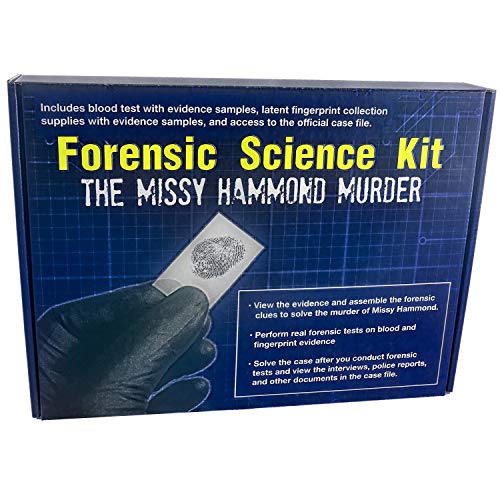
This kit provides hands-on forensic tests students can perform to analyze included evidence. It includes fingerprint exemplars, an item with a latent print to discover, a fabric sample with a synthetic bloodstain, and full access to the police case file (internet required). It’s designed to engage aspiring detectives through authentic experimentation and critical thinking as they work to solve a case.
ALDON Murder at Eagle Nest Harbor

In this classroom lab activity, students analyze a variety of forensic evidence—fingerprints, hair, blood, fibers, and handwriting—to help solve the crime. The exercise emphasizes applying analytical results to identify the most likely suspect, providing a collaborative problem-solving experience for groups and an objective approach to evidence interpretation.
Forensic Chemistry of Blood Typing

This distance-learning kit introduces students to chemical forensic science through blood typing concepts. It uses safe, simulated blood to demonstrate testing and analysis, with emphasis on determining the likelihood of suspect involvement based on chemical properties and interpretation of results. It suits remote or blended learning environments while maintaining an investigative focus.
Crime Scene Forensic Supply Kit for Classrooms
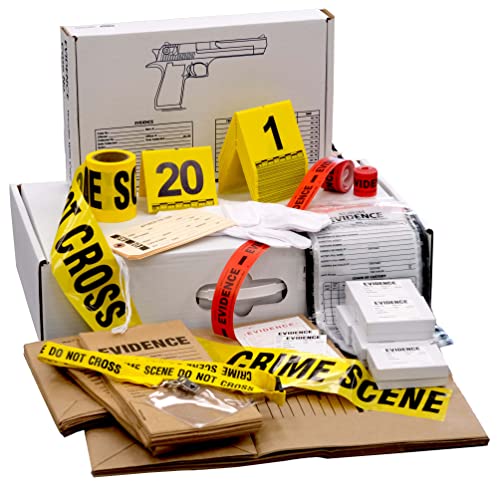
This classroom kit includes essential evidence bags, a large roll of crime scene tape, and multiple rolls of evidence sealing tape. It’s designed to support realistic scene processing and organization, enabling students to practice proper handling and documentation of evidence in an organized, scalable way.
Buying Guide
Important purchase considerations help ensure the chosen kit aligns with course goals, age appropriateness, and instructional time:
- Content scope and alignment: Look for kits that cover core forensic topics like fingerprinting, handwriting analysis, blood typing, and evidence handling to provide a well-rounded experience.
- Hands-on viability: Ensure the activities use safe, classroom-friendly materials. Simulated blood, non-toxic reagents, and reusable components help with long-term usage.
- Group work vs. individual tasks: Some kits support collaborative investigations, while others are suitable for individual practice. Consider class size and structure when selecting.
- Assessment potential: Check if the kit provides teacher guides, rubrics, or activity sheets that support formative and summative assessment.
- Remote and in-person flexibility: Distance-learning components or digital case files can be valuable for blended learning environments.
- Durability and storage: Kits with sturdy containers, reusable components, and organized storage assist in maintenance across school years.
- Safety and compliance: Confirm that all materials meet safety standards appropriate for a classroom setting and that supervision requirements are clear.
- Price versus value: Consider the number of experiments, the breadth of topics, and the scalability for multiple classes when evaluating value.
In sum, the best forensic science kits for high schoolers combine authentic investigative activities with safe, educationally rich materials. The five options highlighted here offer diverse approaches—from literature-based notebooks to full hands-on crime scene simulations—allowing teachers to tailor instruction to their students’ needs and curricula.