Best Toys for Autistic Preschoolers: Engaging Sensory Play & Calm-Down Tools
Discover a curated selection of sensory-friendly toys designed for autistic preschoolers. This guide highlights items that promote fine motor skills, emotional recognition, focus, and calm down strategies through engaging, safe play. All picks emphasize non-toxic materials, portability, and classroom-friendly designs to support learning at home or in school settings.
| Product | Brand | Key Benefit |
|---|---|---|
| Scientoy Fidget Toy Set, 35 Pcs | Scientoy | Wide range of sensory fidgets for focus and anxiety relief |
| KidSquare Color Sorting Sensory Toys | KidSquare | Emotion recognition with color sorting for social learning |
| Valentine’s Day Classroom Sensory Toys Pack | Dr.Kbder | Portable, classroom-friendly fidgets for routines and transitions |
| Sensory Fidget Toys for Kids (Spkwis) | Spkwis | Travel-friendly calming toys with tactile variety |
| JOYIN 4-Pack Fidget Tubes | JOYIN | Quiet, calming fidget tubes for self-regulation |
Note: The five selections above were chosen for a balance of sensory stimulation, emotion awareness, portability, and classroom suitability. Each product offers multiple ways to engage preschoolers with autism while supporting calm, focused play and social interaction.
Scientoy Fidget Toy Set Overview
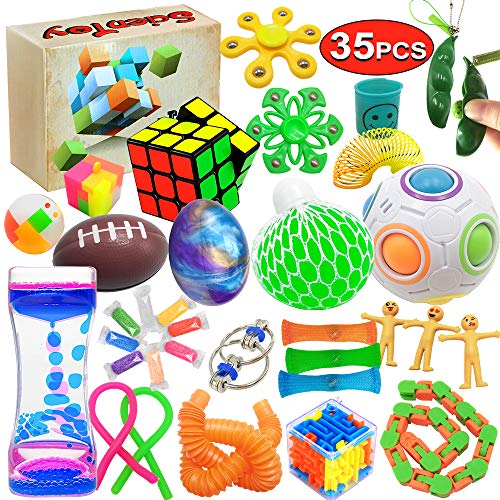
The Scientoy set offers 35 pieces tailored for calming, focus, and anxiety relief. Included items cover a broad range of textures and actions—squeeze balls, mesh & marble toys, putties, a maze puzzle, and more. All pieces are designed with safety in mind, using ABS material that meets safety standards. The variety supports kids with autism or ADHD by providing tactile feedback and opportunities for independent play as well as classroom reinforcement. The included gift-worthy packaging makes it suitable for rewards or gift-giving in group settings.
KidSquare Color Sorting Sensory Toys

This color sorting toy blends vibrant colors with emotion representation. It features five petals representing happy, angry, scared, sad, and disgust to help children communicate feelings during play. The design emphasizes portability (about 6.5 inches) for easy use at home or on the go, making it ideal for car rides, airports, or waiting rooms. Its tactile textures aid sensory exploration, while the emotion-focused framework supports social-emotional learning for autistic preschoolers.
Valentine’s Day Classroom Sensory Toys Pack
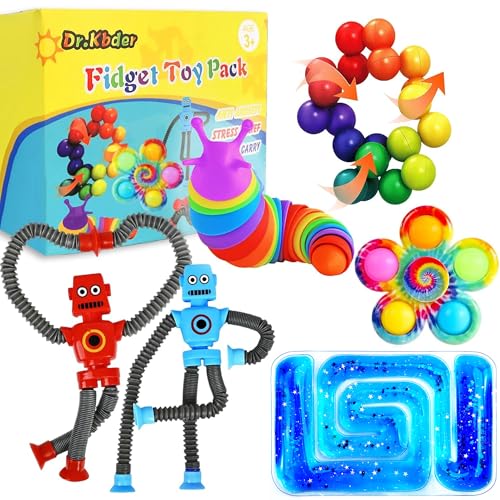
This six-pack set includes water squishy fidgets, a sensory slug worm, two telescopic suction cup robot toys, rainbow balls, and a colorful fidget spinner. It aligns with classroom safety standards (non-toxic and easy to clean) and is designed for quiet operation, reducing disruption during lessons. Aimed at preschool and pre-kindergarten settings, these tools support sensory regulation, fine motor practice, and positive behavior reinforcement in a compact, travel-friendly package.
Spkwis Sensory Fidget Toys for Kids

The Spkwis line emphasizes calm-down support for kids with autism and ADHD, offering travel-friendly fidget options that engage the senses without overpowering noise or movement. Its tactile textures, varied shapes, and compact design support on-the-go learning and self-regulation. The set is appropriate for home use, school environments, or therapy sessions, helping to enhance focus and reduce anxiety through interactive play.
JOYIN Fidget Tubes Mini Pack

The JOYIN four-pack fidget tubes provide sensory stimulation and stress relief through visually captivating, tactile tubes. They are well-suited for quiet, calm-down corners in classrooms or at home. Fidget tubes offer a simple, low-distraction way to channel energy, promote focus, and support self-regulation during transitions, breaks, or after challenging activities.
Buying Guide
Key purchase considerations
- Sensory profile alignment: Choose toys that address specific sensory needs (tine tactile feel, visual cues, or auditory feedback) relevant to the child’s interests and triggers.
- Portability and ease of use: For preschoolers, compact designs that are simple to operate reduce frustration and support independent play.
- Safety and materials: Look for non-toxic, BPA-free materials with smooth edges and durable construction appropriate for young children.
- Calming vs. stimulating balance: A mix of calming tools (fidget tubes, soft tactile toys) and stimulating options (colorful puzzles, motion-based toys) supports transitions and preferred play styles.
- Classroom suitability: Quiet operation, noise levels, and ease of cleaning matter for school settings and group activities.
- Portfolios of skills: Select toys that support fine motor skills, emotion recognition, language development, and executive function through guided or exploratory play.
Comparative considerations
- Emotional learning: Tools such as color-emotion sorting foster social-emotional skills alongside sensory play.
- Motor development: Puzzles and manipulatives can support hand-eye coordination and dexterity, with a focus on age-appropriate challenges.
- Engagement: A variety of textures, colors, and actions helps keep attention while reducing overstimulation.
- Maintenance: Easy-clean, durable items mitigate wear and tear from daily school use.
When selecting, consider combining one or two calming items with a few interactive toys to create a balanced sensory toolkit. This approach supports daily routines, classroom transitions, and individualized therapy plans while keeping play engaging and developmentally appropriate for preschoolers on the autism spectrum.