Best Learning Cards for 3 Year Olds That Make Learning Fun
Finding the right learning cards for a 3-year-old can support early literacy, vocabulary, and cognitive development. The following picks prioritize durability, engaging visuals, age-appropriate content, and interactive features like audio or double-sided cards. This guide highlights five standout options designed to capture a child’s attention while encouraging independent exploration and family sharing. The selections cover alphabet, numbers, colors, shapes, and common words, helping young learners build foundational skills through play.
| Product | Brand | Key Focus | Highlights |
|---|---|---|---|
| Airbition Talking Flash Cards | Airbition | Language & Speech Therapy | 224 words, animals/food/vehicles, American accent, volume control |
| QUOKKA ABC Learning Flash Cards | QUOKKA | Alphabet & Early Vocabulary | 60 double-sided cards, large fonts, first words, colors & shapes |
| Carson Dellosa Toddler Flash Cards 4 Pack | Carson Dellosa Education | Math, Phonics & Core Concepts | 4 packs: alphabet, first words, colors/shapes, numbers |
| Merka Toddler Flash Cards | merka | Integrated Alphabet & Concepts | 64 double-sided cards, vivid visuals, comprehensively covers letters, numbers, shapes |
| Aullsaty Toddler Talking Flash Cards | Aullsaty | Speech & Sensory Learning | 248 sight words, 14 subjects, Montessori-style reader, repeat/volume features |
Below you’ll find concise, objective overviews of each card set, with practical tips on how to use them with a preschooler. Each section stays focused on learning goals suitable for a 3-year-old, emphasizing hands-on activities, safety, and caregiver involvement.
Airbition Talking Flash Cards

Airbition’s flash card set blends visuals with sounds to create an interactive language-learning experience. With 224 words across animals, vehicles, foods, fruits, and more, the cards support vocabulary growth and cognitive connections. The device includes real animal sounds and a repeat feature, enabling children to hear pronunciation in a standard American accent. It is described as a Montessori-style tool, which can complement speech therapy or autism-focused learning. A five-level volume control helps tailor sessions to a child’s comfort level, making it adaptable for home use or classroom play.
Scholastic Flash Cards: Sight Words

Scholastic’s Sight Words flash cards focus on recognizing common words to build early reading fluency. Although marketed toward a broad range of learners, this set aligns well with a preschool program emphasizing English language readiness and reading readiness. The content is described as English-language arts, supporting visual and word recognition through age-appropriate designs. This can pair nicely with phonics activities and daily reading routines, especially when combined with the other cards listed here for a well-rounded literacy toolkit.
QUOKKA ABC Learning Flash Cards

QUOKKA presents a robust set of 60 double-sided cards designed for 2-4 year-olds. Large fonts and clear illustrations support early visual development and letter recognition, while the inclusion of numbers, colors, shapes, animals, and first words broadens vocabulary. The cards are positioned as a practical tool for speech therapy materials and homeschool or classroom use, particularly beneficial for at-home alphabet learning and early phonics games. The generous card size helps children see details from a comfortable distance.
Carson Dellosa Toddler Flash Cards 4 Pack
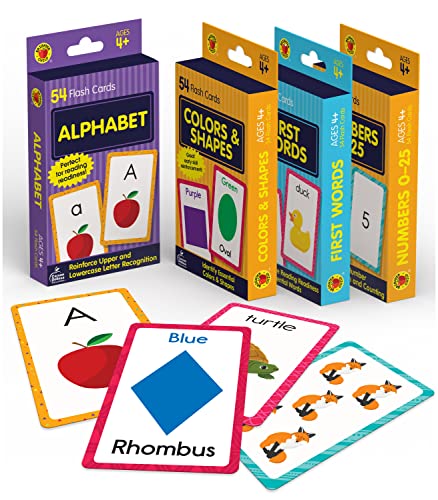
The Carson Dellosa four-pack bundle targets core early-learning areas: alphabet, first words, colors/shapes, and numbers 0-25. It’s a practical, versatile option for daily quick-learning sessions or longer structured activities. The set includes additional phonics and math game ideas on resource cards, helping educators and parents create varied practice routines. The breadth of content makes it suitable for establishing foundational literacy and numeracy skills, especially when paired with hands-on games and cooperative play with a caregiver or sibling.
Merka Toddler Flash Cards

Merka’s 64 double-sided cards provide a compact, well-rounded learning set, covering alphabet, numbers, and shapes with vivid visuals. The cards’ size (4.2″ x 2.4″) is designed for small hands, making it easier for toddlers to handle and manipulate them on their own. Educators and parents can use the cards to support letter familiarity, early number sense, and shape recognition, while encouraging independent exploration and fine motor skills through easy-to-turn pages and clear imagery.
Advanced Flash Cards For Toddlers

Advanced Flash Cards from LearnWorx are tailored for 3- to 5-year-olds who are ready to stretch vocabulary. The set includes words that go beyond basics—think dolphin, guitar, microwave, and monument references—plus diverse categories like animals, foods, vehicles, and everyday objects. Each card’s reverse side provides fun facts or questions to promote conversation and cognitive engagement, helping children build memory and expressive language through curious dialogue with adults or peers.
Aullsaty Talking Flash Cards

Aullsaty’s talking flash cards combine a cat-reader concept with 248 sight words across 14 subjects. The Montessori-inspired format emphasizes sound-symbol associations to support early literacy and speech development. The set includes an interactive element with animal and vehicle sounds, plus volume and repeat features. This makes it suitable for solo play, as well as guided sessions with caregivers, and aligns well with sensory learning preferences for some children.
Buying Guide: Key Purchase Considerations
- Learning goals: Decide whether you want alphabet focus, sight words, number sense, or a broad mix. Sets with multiple subjects offer flexibility for varied activities.
- Interactivity: Audio features, repetition, and adjustable volume can enhance engagement, particularly for children who benefit from multisensory learning.
- Card design: Large, clear illustrations and bold fonts improve visibility. Double-sided cards extend the range of content without increasing bulk.
- Durability and safety: Look for sturdy materials and rounded edges suitable for toddlers. Consider cases or organizers for easy storage between uses.
- Therapy and development alignment: Some cards are marketed for speech therapy or autism-friendly learning. If this is a goal, review language and sound cues to ensure they align with your approach.
- Parental involvement: Cards that include prompts for caregiver-child dialogue can encourage meaningful interaction and conversational practice.
- Expansion potential: Choose sets that complement each other, so you can build a broader curriculum over time without needing to replace materials.
When selecting learning cards for a 3-year-old, aim for a balance between fun and educational value. The recommended sets offer visual appeal, practical content, and configurable features that support independent play as well as guided activities. A mixed approach—rotating between alphabet, numbers, and early vocabulary—helps maintain engagement while laying a solid foundation for future literacy and numeracy.