Best Word Cards for Toddlers: Top Picks for Early Language Learning
Finding effective word cards for toddlers can support early vocabulary, pronunciation, and recognition without screen time. This guide reviews five top options, highlighting how each card set engages young learners through bright visuals, interactive activities, and practical word families. Read on to compare features and choose cards that fit your child’s development stage and learning style.
| Product | Brand | Key Focus | Amazon Link |
|---|---|---|---|
| First Words Flash Cards | Scholastic | Starter words, visual mastery | Link |
| LearnWorx 101 Baby Flash Cards for Toddlers | learnworx | 101 words, interactive games | Link |
| Scholastic Flash Cards: Sight Words | Scholastic | Sight word focus, reading readiness | Link |
| Airbition 510 Words, Talking Flash Cards | Airbition | Rich vocabulary, 31 themes | Link |
| Carson Dellosa Toddler Flash Cards 4 Pack | Carson Dellosa Education | Alphabet, colors, numbers, shapes | Link |
First Words Flash Cards

Scholastic’s First Words Flash Cards introduce essential early words through simple, high-contrast imagery designed to capture a toddler’s attention. The set focuses on foundational vocabulary, encouraging quick recognition and pronunciation practice. The visual cues help parents guide talking, labeling objects, and building receptive language. This card collection is ideal for daily quick activities, such as naming objects, pointing, and repeating sounds to reinforce early phonemic awareness.
Features include durable card stock, clear labeling, and kid-friendly designs that support independent exploration alongside guided parent-led sessions. While the cards emphasize everyday words, caregivers can augment play with simple games like “What’s this?” or “Point to the ball,” promoting interaction and memory retention. The compact set travels well for on-the-go learning or quiet nest-time sessions.
LearnWorx 101 Baby Flash Cards

LearnWorx delivers a robust set of 101 flash cards covering animals, foods, household items, outdoor objects, places, numbers, and more. Each card is paired with practical games on the reverse side, designed to boost speech recognition and cognitive skills. The program supports children from baby to preschool by offering activities that translate into early storytelling and sentence-building opportunities. The bright, large cards are especially helpful for visual learners and weaning from screen-based activities.
Educational value is enhanced by award-winning design that emphasizes age-appropriate sizing (approx. 5″ x 3.7″) and vivid illustrations. The included games—such as color and difference challenges—encourage turn-taking, memory, and problem-solving. Parents can adapt the cards into quick daily routines, aiding vocabulary growth while keeping learning fun and interactive.
Scholastic Flash Cards: Sight Words

This Scholastic set centers on sight words, a crucial skill for early reading readiness. Age-appropriate words are presented with clear typography and supportive imagery that helps toddlers connect spoken language to written form. The focus on high-frequency words supports early reading confidence, enabling kids to recognize words they will encounter often in daily writing, stories, and classroom materials.
Designed for short, structured sessions, these cards can be used as part of daily reading routines, flash card games, or guided storytelling. The simplicity of the words ensures consistent practice without overwhelming young learners. Parents may pair the cards with short sentences or picture prompts to build context around each word, fostering comprehension alongside recognition.
Airbition 510 Words Flash Cards

Airbition’s 510 Words set features 31 themed topics, spanning animals, transport, food, colors, numbers, and more. The talking feature combines audio with visuals to reinforce word recognition and pronunciation in an engaging Montessori-inspired format. This tool is particularly beneficial for children who benefit from auditory cues and repeating sounds, supporting speech development as part of a structured learning routine.
The device is designed for simple operation—insert cards, press a repeat button, and adjust volume across five levels. The content is delivered in a clear American English voice, helping young learners acclimate to standard pronunciation. The broad vocabulary readiness ensures coverage across diverse daily contexts, from home to public spaces, making it a versatile supplement to early language development.
Carson Dellosa Toddler Flash Cards 4 Pack
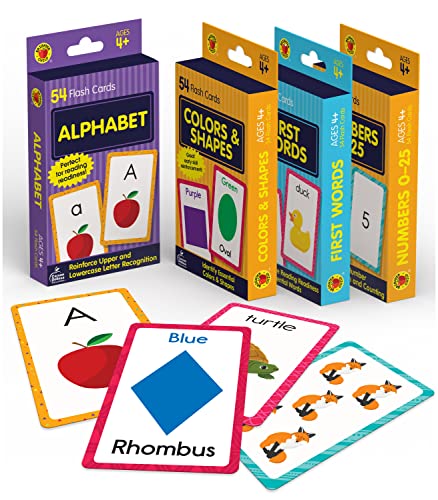
This four-pack bundle from Carson Dellosa covers alphabet, first words, colors and shapes, and number flash cards. The multi-pack format makes it easy to diversify daily activities, from letter recognition to basic math concepts like counting from 0–25. The included resource cards also offer additional phonics and math game ideas, expanding play-based learning opportunities for toddlers and preschoolers alike.
Parents can rotate through cards to introduce new themes, or combine sets for extended play sessions that blend language, math, and spatial reasoning. The cards’ sturdy construction supports frequent handling, while bright illustrations and clear labels help maintain engagement and curiosity in early learners.
Buying Guide: Key Purchase Considerations
- Age and reading readiness: Choose sets aligned with your child’s vocabulary level and attention span. Starter sets with common objects are ideal for toddlers, while sight word-focused cards suit early emergent readers.
- Interactivity: Look for cards that incorporate games, prompts, or audio features to keep learning dynamic and engaging. Games that require naming, sorting, or matching reinforce active participation.
- Durability and size: For toddlers, select sturdy card stock and appropriately sized cards that are easy to handle. Laminated options endure rough handling and wipe-clean surfaces.
- Visual design: Bright colors and clear imagery support faster recognition. High-contrast visuals can help pre-readers focus and retain information better.
- Language support: If you’re aiming for pronunciation guidance, audio-enabled cards or talking flash cards can provide a consistent model for speech development.
- Theme breadth: A broader set with themes like animals, colors, numbers, and everyday items offers versatile practice across contexts, aiding generalization of vocabulary.
- parental involvement: Sets that include suggested activities or printable games help caregivers structure short, effective sessions within daily routines.
- Cost and quantity: Consider whether a 4-pack or a larger deck fits your learning schedule and budget while still delivering variety across topics.
Overall, choosing the right word cards for toddlers involves balancing vocabulary breadth, interaction level, and durability. For broad early literacy support, a mix of word-focused cards (sight words) along with thematic, interactive sets (story prompts, talking cards) can provide complementary advantages. For screen-free play, prioritize cards that promote both recognition and expressive language through guided play and family involvement.