Best Science Kits for 11 Year Olds to Spark Exploration
Ignite curiosity with hands-on science that blends fun and learning. The following selections are designed for 11-year-olds, offering engaging experiments, budding chemistry, engineering challenges, and STEM activities that foster critical thinking. Each kit is chosen for age-appropriate concepts, clear instructions, and repeatable exploration that keeps young scientists excited about discovery.
Summary of Selected Products
| Product | Brand | Key Focus |
|---|---|---|
| National Geographic Gross Science Kit | Blue Marble | Gross experiments; biology and chemistry basics |
| NATIONAL GEOGRAPHIC Science Magic Kit | Blue Marble | Science magic tricks; physics & chemistry concepts |
| Thames & Kosmos Mega Cyborg Hand STEM Kit | Thames & Kosmos | Hydraulic robotics; pneumatics; mechanical design |
| Playz Edible Candy Making Science Kit | Playz | Food science; chemistry basics through candy making |
| National Geographic Magic Chemistry Set | Blue Marble | Chemistry tricks; color changes and reactions |
National Geographic Gross Science Kit

The Gross Science Kit delivers 15 gross experiments with an additional 30 ideas using common household items. It emphasizes engaging, kid-friendly instructions with illustrations to guide each step, making complex ideas approachable for young scientists. The kit’s emphasis on biology and chemistry concepts is paired with playful, memorable experiments that help kids see how science applies to everyday life, while the bundled activities promote independent exploration and family participation.
NATIONAL GEOGRAPHIC Science Magic Kit

This kit merges curiosity with performance by offering 100+ science experiments that double as magic tricks. It engages children in physics and chemistry concepts through visual demonstrations—such as bending metal with water or levitating a test tube—while including a wand and gloves to amplify the magic experience. It is designed for curious minds who enjoy presenting mini science shows while learning the underlying science behind each effect.
Thames & Kosmos Mega Cyborg Hand STEM Kit

This hands-on kit invites kids to build a wearable hydraulic hand that mimics real-life mechanics. No motors or batteries are required; air pressure and water power the gripping action. Each finger joint is adjustable, allowing exploration of leverage, pneumatics, and mechanical design. The project emphasizes engineering thinking, problem solving, and iterative testing as kids refine their own cyborg-like hand.
Playz Edible Candy Making Science Kit

This edible science kit merges chemistry with culinary creativity. It guides kids through making jelly candies, crystal rock candy, chocolates, and lollipops while exploring sugar science, dissolution, and crystallization. The kid-friendly guide presents science concepts alongside colorful, step-by-step instructions, helping young chemists connect theory with tasty, tangible results.
National Geographic Magic Chemistry Set
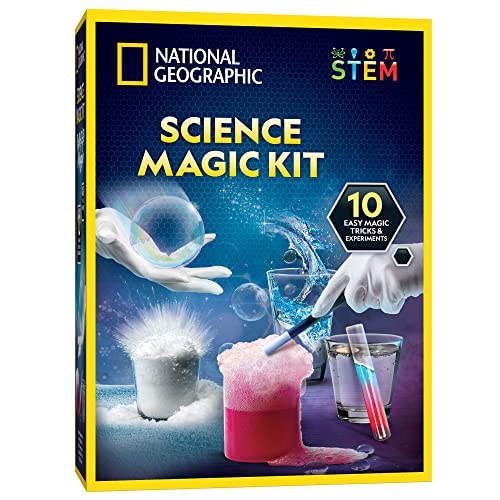
This chemistry-focused set delivers 10 magic-like experiments that reveal real chemical principles. Activities like color-changing reactions and visual demonstrations are designed to be performed as tricks, with an illustrated guide that explains the science behind each effect. It’s a strong option for kids who enjoy dramatic experiments paired with clear scientific explanations.
Buying Guide
Key purchase considerations help ensure the best match for an 11-year-old’s interests and safety. Consider these perspectives when choosing a science kit.
- Skill level and learning goals: Look for kits that progress from basic concepts to more advanced experiments to maintain challenge without causing frustration.
- Safety and age range: Check for non-toxic materials, age recommendations, and adult supervision requirements to ensure responsible use.
- STEM focus balance: Decide whether the child enjoys biology, chemistry, physics, or engineering, and select kits that align with those interests.
- Hands-on vs. guided exploration: Some kits provide robust step-by-step instructions, while others encourage open-ended exploration and hypothesis testing.
- Repeatability and value: Favor kits with multiple experiments or expandable components to maximize long-term engagement.
- Instruction clarity: Look for kid-friendly guides with visuals, glossaries, and practical explanations to support independent learning.
- Expansion opportunities: Some sets include extra experiments or compatible add-ons, expanding the learning pathway beyond the initial activities.
- Theme variety: A mix of magic-like demonstrations, real-world applications, and traditional experiments can sustain sustained interest.
Additional Purchase Considerations
– Data privacy and product sourcing: Prefer kits from reputable brands that provide clear safety data and reputable customer support.
– Cultural relevance and inclusivity: Choose kits that present science as accessible to diverse audiences and avoid stereotypes in presentation.
– Longevity and storage: Assess packaging and the durability of materials, shelving, and storage needs for ongoing use in classrooms or at-home labs.
– Educational value: Compare how each kit conveys underlying science concepts (theory, observation, and conclusions) and whether it includes explanations suitable for parent-led discussions.