Best Wooden Toys for 9‑Month‑Olds: Safe Picks for Early Learning
Choosing the right wooden toys for a 9‑month‑old supports developing motor skills, object permanence, and sensory exploration. Below are five carefully chosen options that emphasize natural materials, safe finishes, and engaging play experiences. Each product fosters hand‑eye coordination, problem solving, and early cognitive development while staying age‑appropriate for curious babies.
| Product | Brand | Why It Stands Out |
|---|---|---|
| Busy edition Montessori Toys for Babies 6-12 Months | Busy edition | Object permanence box with three balls; promotes cognitive and fine motor skills |
| Melissa & Doug First Bead Maze | Melissa & Doug | Classic wooden maze for push, pull, and grasp actions; durable suction base |
| Wooden Push Car Toys for Infants | KIDS TOYLAND | Two wooden push cars for rolling play; natural wood, safe for teething |
| Adena Montessori Wooden Toy 3 Balls | Adena Montessori | Three colorful balls for sorting, stacking, and object permanence play |
| Hape Beaded Raindrops | Hape | Musical rainmaker with soothing sounds and bright colors |
Busy Edition Montessori Object Permanence Box
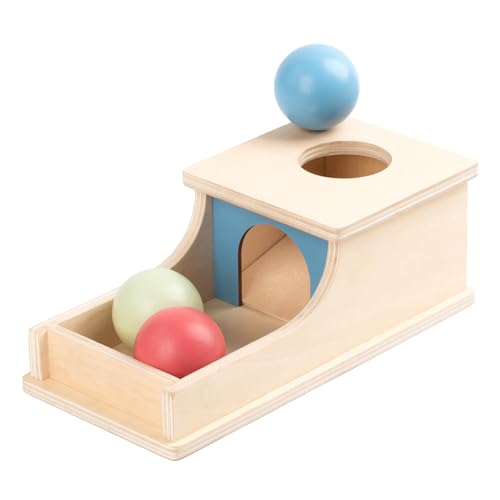
Promotes cognitive development with three balls included (each about 1.77 inches in diameter). Designed for infants aged 6 to 12 months, this toy demonstrates object permanence—helping babies understand that objects exist even when out of sight. The setup also supports fine motor skills as babies grasp and drop the balls into the holes, encouraging hand–eye coordination and focused play.
Melissa & Doug First Bead Maze

Classic wooden bead maze with four looping wires, 18 beads, and 3 rings. The toy supports pushing, pulling, and grasping, whether on the floor, at a table, or in a high chair. Built with smooth wooden blocks and a secure suction base to keep the toy steady. Through sliding and spinning actions, babies develop fine motor control, hand–eye coordination, and early problem solving while exploring colors and shapes.
Wooden Push Car Toys for Infants

Two natural wooden push cars (Cement Truck and Road Roller) sized for little hands. The design emphasizes safety and durability—FSC‑accredited wood with no coatings that could irritate teething gums. The simple rolling action supports gross motor skills and imaginative play as babies explore rolling vehicles alongside caregivers or siblings.
Adena Montessori Wooden Toy 3 Balls

This three-ball set emphasizes cognitive development and sensory exploration. Balls come in distinct textures and colors (yellow wooden, green plastic, pink EVA soft), encouraging tactile feedback and visual interest. Infants practice grasping and inserting balls into the matching holes, supporting fine motor precision and object permanence understanding.
Hape Beaded Raindrops

Mini wooden rainmaker with colorful beads that create soothing raindrop sounds when tipped or shaken. The design focuses on an easy grip to support growing motor skills, while vibrant colors stimulate visual attention. Babies benefit from the auditory and tactile stimulation provided by this musical toy, which also serves as a calm sensory aid during play sessions.
Buying Guide: Key Considerations for 9‑Month‑Old Wooden Toys
- Materials and finish: Look for solid wood, non-toxic finishes, and no sharp edges. FSC certification or other sustainability notes are a plus.
- Age appropriateness: Choose toys designed for infants around 6–12 months to ensure safe use and developmental alignment with object permanence, grasping, and sitting/standing support.
- Motor skill development: Favor toys that promote gross motor actions (pushing, rolling) and fine motor tasks (pinching, placing, twisting) to support overall dexterity.
- Sensory engagement: Incorporate varied textures, colors, and sounds to stimulate touch and hearing, aiding sensory processing and curiosity.
- Durability and safety: Prioritize sturdy construction, smooth finishes, and non-toxic materials. Check for small parts that could pose choking hazards for younger infants.
- Maintenance: Choose easy‑to‑clean surfaces and simple disassembly for safe cleaning and long‑term use.
- Developmental balance: Combine objects that encourage cognitive skills (object permanence), motor skills (grasping, pushing), and sensory exploration for a well-rounded play experience.
- Price and longevity: Wooden toys can offer lasting value; consider modular designs that adapt as your child grows.
Additional Considerations
When selecting wooden toys for a 9‑month‑old, consider how each toy supports learning goals without overwhelming the child. A mix of stationary and actively manipulated toys helps sustain attention spans, while simple cause‑and‑effect mechanics (such as releasing a ball or rolling a car) reinforce early logical thinking. Always supervise playtime and rotate toys to maintain novelty and engagement.