Best Standing Toys for Babies: Engaging Activity Tables
Standing toys create sturdy play spaces that encourage infants to explore, practice balance, and develop fine motor skills. This guide highlights five top standing-friendly activity tables and centers that blend learning with interactive play. Each option supports babies as they transition from floor play to upright exploration, offering multisensory activities, adjustable features, and durable construction suitable for growing toddlers. Readers will find options that grow with their child, spare you clutter, and provide educational engagement during every stage.
Summary of Selected Products
| Product | Brand | Key Features | Age Range |
|---|---|---|---|
| VTech Magic Star Learning Table | VTech | Six bilingual activities, light-up buttons, gears, steering wheel, nursery rhymes | Infants to toddlers |
| Skip Hop Explore & More Activity Center | Skip Hop | 3-stage grow-with-me design, 25+ activities, musical piano, adjustable toys | 4 months and up |
| Fisher-Price Laugh & Learn Puppy Walker | Fisher-Price | Two play modes, 75+ songs, shapes, colors, numbers, Spanish words | 6+ months |
| Dahuniu Baby Activity Center | Dahuniu | Engaging lights, sounds, 2-level volume, floor or table play | 6-18 months |
| LeapFrog Little Office Learning Center | LeapFrog | Laptop, globe, 27 touch points, Explore/Learn/Music modes | Toddler and up |
VTech Magic Star Learning Table
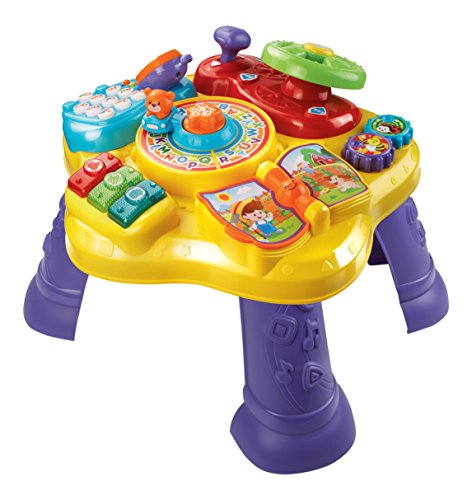
The VTech Magic Star Learning Table provides a compact, interactive hub for early learners. Six bilingual activities support language development in English and Spanish, fostering dual-language exposure in a playful setting. Kids can turn a steering wheel to move a bear around the table, flip a book page to hear nursery rhymes, and turn gears to practice fine motor skills. Light-up music buttons introduce colors and basic sound concepts, making it a well-rounded option for supervised stand-and-play sessions. The table’s design emphasizes safe, developmental play that aligns with early-learning curricula.
Skip Hop Explore & More Activity Center
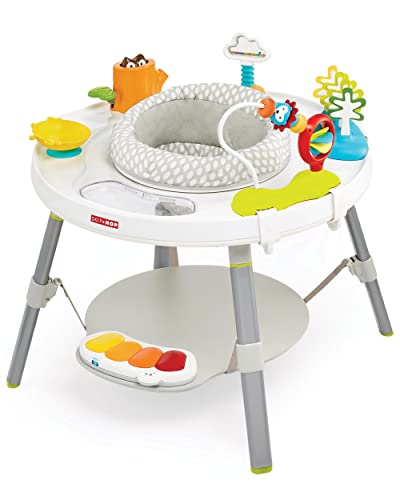
Skip Hop’s activity center is a versatile, growth-oriented option designed to accompany babies through multiple developmental stages. It supports sitting, swiveling, bouncing, and eventually cruising as toddlers. The set includes a musical, light-up piano with three modes—piano, song, and motion sensor—plus a peek-a-boo owl that pops out and hoots. Clip-on toys can be rearranged to suit a child’s preferred play style, and the unit is designed to accommodate babies from roughly 4 months upward, up to 25 pounds. This center emphasizes interactive exploration with a long-term use perspective.
Fisher-Price Laugh & Learn Puppy Walker

This musical infant walking toy supports early mobility with two play modes that adapt as babies grow from sitting to standing and walking. The unit features 75+ songs, sounds, and phrases across three Smart Stages levels, teaching the alphabet, shapes, colors, numbers, and Spanish words. With seven hands-on activities—such as a light-up piano, a nose, a roller, a spinner, and a flip page—this walker blends movement with cognitive learning, encouraging independent exploration while offering guidance through developmentally appropriate content.
Dahuniu Baby Activity Center

Dahuniu’s activity center is designed for floor or table play, delivering a robust mix of lights, music, and a variety of activities to foster exploration. The set includes colorful lights and a lineup of classic sounds to engage babies and toddlers. Its multi-instrumental and gear activities help teach numbers, shapes, and colors while promoting fine motor skills. A two-level volume control allows caregivers to tailor sound exposure, making it practical for different living spaces and child sensitivities. The design emphasizes safety and durability for busy play sessions.
LeapFrog Little Office Learning Center
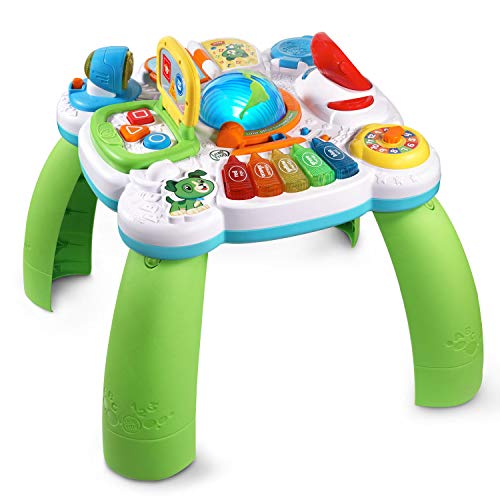
The LeapFrog Little Office Learning Center is a compact, engaging desk-like station featuring a laptop and globe to encourage pretend play. With 27 electronic touch points, it supports early literacy and geography exploration. The device offers Explore, Learn, and Music modes, enabling children to hear first words, greetings, and global music. Opening the laptop reveals activities that teach shapes and animals through interactive visuals. This option blends role-play with foundational early-learning concepts, suitable for toddlers and preschoolers seeking a desk-based interactive experience.
Baby Einstein Curiosity Table

The Baby Einstein Curiosity Table invites hands-on exploration with multiple STEAM activities designed to spark creativity and early scientific thinking. It grows with the child from sitting on the floor to standing and playing, offering role-play opportunities and a removable dry erase panel. The table features color circuits, lights, and vocabulary in three languages, plus a broad library of melodies and sounds. Removable table legs allow tabletop use, making it adaptable for floor play or sits-and-play sessions. This option emphasizes collaborative play and multilingual vocabulary exposure.
BACCOW Baby & Toddler Activity Center

The BACCOW activity center is designed for 6 to 18-month-olds with sturdy, tall-legged construction for stability. It combines musical play with educational elements—music mode and learning mode include songs, stories, numbers, shapes, colors, and letters. The durable build supports rougher play while keeping safety in focus. Its generous size and varied activities aim to sustain attention and encourage experimentation, making it a practical option for growing babies who enjoy a wide range of stimuli in a single station.
Buying Guide: Key Purchase Considerations
- Age and growth trajectory: Look for products with adjustable features or that clearly state growth stages to maximize long-term value.
- Activity variety: A mix of musical, visual, and fine motor activities supports multiple developmental domains—language, cognitive, and motor skills.
- Safety and stability: Choose sturdy bases, non-toxic materials, and rounded edges. Consider whether the toy allows for floor and table use if space is limited.
- Volume controls and noise levels: Parents should prefer devices with adjustable volume to accommodate different environments and sensitivities.
- Space and portability: Consider footprint size, dimensions, and whether the toy can be easily moved or stored when not in use.
- Learning vs. entertainment balance: Select toys that integrate purposeful learning outcomes (colors, shapes, numbers, languages) with engaging play.
- Durability and materials: Prioritize durable plastics and fabrics with easy cleaning options for everyday use and longevity.
When evaluating standing toys for babies, balance is key: ensure that the device supports upright play without compromising safety. A good option should offer developmental versatility, age-appropriate activities, and a design that adapts as the child grows from early floor play to standing exploration. The listed selections provide a spectrum of features, from language-rich experiences to interactive music and fine-motor development, helping caregivers choose a reliable, long-lasting addition to a child’s learning environment.