Best Science Kits for 4 Year Olds: Hands-on Learning Adventures
Exploring science at a young age helps children develop curiosity, observation skills, and a love for discovery. The following hand-picked science kits are designed for four-year-olds, featuring age-appropriate experiments, safe materials, and simple, illustrated instructions. Each kit focuses on foundational concepts like chemistry, physics, and measurement while keeping play engaging. The selections below emphasize safe, screen-free experimentation that supports early STEM development in a home setting or classroom mini-locals.
| Product | Brand | Key Benefit |
|---|---|---|
| National Geographic Kids Junior Chemistry Set | Blue Marble | 50 experiments with easy, illustrated steps |
| Learning Resources Fizzy Volcano | Learning Resources | 13 fizzing reactions for hands-on exploration |
| Doctor Jupiter My First Science Kit (50+ Experiments) | Doctor Jupiter | Broad variety of beginner-friendly experiments |
| Doctor Jupiter Girls First Science Experiment Kit | Doctor Jupiter | 50+ experiments with girl-friendly framing |
| Doctor Jupiter Little Genius Kit | Doctor Jupiter | Multi-discipline learning for ages 4-6 |
National Geographic Kids Junior Chemistry Set

The National Geographic Kids Junior Chemistry Set provides a compact, beginner-friendly chemistry lab designed for young scientists aged 4 and up. The kit centers on safety and simplicity, enabling children to explore chemistry using common household items such as baking soda and vinegar. It includes 50 hands-on experiments and more than 20 lab tools, offering a rich, interactive learning experience. Clear, illustrated instructions guide each activity, helping kids follow steps with independence and confidence. The kit encourages curiosity while laying a solid foundation in basic scientific thinking.
Doctor Jupiter My First Science Kit (50+ Experiments)

This kit introduces young learners to science through engaging, hands-on experiments that number over 50. It emphasizes active STEM exploration, prompting kids to ask questions, observe outcomes, and explore cause-and-effect relationships. The activities are designed to foster critical thinking in a playful context, making science feel approachable rather than intimidating. It’s positioned as a wonderful screen-free gift for birthdays or holidays, suitable for both boys and girls who enjoy discovery and problem-solving in a colorful, kid-friendly package.
Learning Resources Fizzy Volcano

The Fizzy Volcano kit offers 13 pieces designed for eruption-ready, safe chemistry play. Children follow a full-color guide to perform ten or more experiments, building observation skills and foundational scientific methods. The included kid-sized lab tools, such as beakers and droppers, support fine motor development while engaging curiosity. This kit blends visual instructions with hands-on activities to help preschoolers grasp basic chemical reactions in a memorable, age-appropriate way.
Doctor Jupiter My First Science Kit (50+ Experiments)

This Doctor Jupiter kit emphasizes over 50 introductory experiments designed to ignite early scientific interest. It encourages kids to think critically by exploring questions, making observations, and testing ideas. The kit is positioned as a screen-free gift suitable for birthdays or holidays, with activities ranging from simple chemistry to basic physics and everyday science concepts. The included manuals are illustrated to help caregivers support children through each step, promoting independence and confidence in scientific exploration.
Doctor Jupiter Girls First Science Experiment Kit
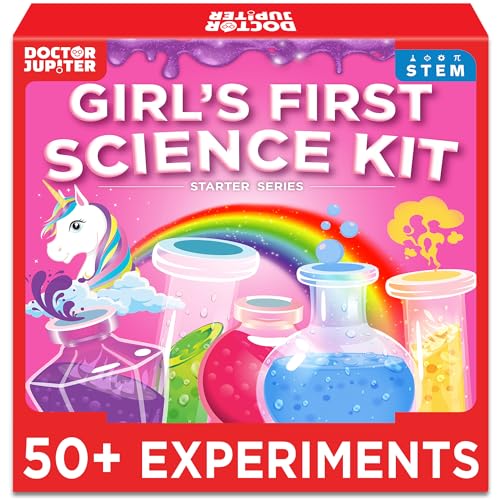
This kit is designed with a girls-forward framing while delivering 50+ experiments that explore color science, water science, and related topics. It emphasizes STEM learning in a fun, engaging way and includes well-illustrated, step-by-step instructions to ensure a smooth, supportive experience for young learners. The content supports critical thinking, observation, and problem-solving, offering an inclusive way to introduce science concepts to young girls and boys alike.
Doctor Jupiter Little Genius Kit

Doctor Jupiter’s Little Genius Kit targets early learners with a multi-disciplinary approach that includes science, math, language, and more. It features age-appropriate activities, 60+ real-world images, and 50+ stickers to reinforce concepts in an engaging, tactile way. Designed for children aged 4 to 6, it promotes curiosity through hands-on experiments and activities, helping children develop fine motor skills and foundational STEM thinking in a safe, kid-friendly package.
Buying Guide
Key considerations when choosing a science kit for four-year-olds include safety, age appropriateness, number and variety of activities, the clarity of instructions, and the ability to foster independent exploration. Look for kits with non-toxic materials, large, kid-safe tools, and color-illustrated manuals that guide step-by-step processes. A robust set of experiments—ranging from simple reactions to basic experiments—helps maintain engagement over weeks or months. Consider whether the kit emphasizes chemistry, physics, or multi-discipline exploration to align with your child’s interests and your educational goals.
- Safety first: Choose kits with child-safe packaging, non-toxic ingredients, and parent/guardian involvement recommendations.
- Learning progression: Seek kits that start with simple tasks and gradually introduce more complex experiments.
- Hands-on time: Favor kits that provide all-needed tools and supplies, minimizing extra purchases.
- Instructions: Prefer clearly illustrated, age-appropriate guides that support independent play while offering adult support when needed.
- Flexibility: Multi-topic kits may better sustain interest by offering diverse activities in one package.
In choosing among these options, consider whether you want a chemistry-centric set or a broader STEM experience. For early explorations, kits with vivid visuals, safe materials, and a generous number of experiments tend to keep four-year-olds engaged longer and cultivate a lifelong interest in science.