Best Engineering Kits for Tweens to Explore STEM
Fans of hands-on science will find these engineering kits ideal for curious tweens. Each option blends building, problem solving, and real-world physics to spark long-lasting interest in STEM. The selections below cover bridges, machines, robotics, and architectural structures, offering multiple perspectives on how things work—from force and motion to circuitry and control systems.
The table below highlights five top picks, focusing on core engineering concepts and age-appropriate complexity. Use it to compare what each kit teaches and how it aligns with a tween’s growing skills.
| Product | Brand | Key Focus |
|---|---|---|
| Thames & Kosmos Structural Engineering: Bridges & Skyscrapers | Thames & Kosmos | Force, load, compression, tension; 20 models |
| Thames & Kosmos Mechanical Engineering: Machines & Vehicles | Thames & Kosmos | Gears, levers, energy transfer; 20 models |
| Tinkering Labs Robotics Engineering Kit | Tinkering Labs | Electrical engineering and robotics; 10 STEM projects |
| Smartivity DIY Robotic Mechanical Hand | Smartivity | Mechanics and motion; engineering challenges |
| Thames & Kosmos Architectural Engineering | Thames & Kosmos | Structures, trusses, domes; 20 models |
Thames & Kosmos Structural Engineering: Bridges & Skyscrapers

Build 20 different models to explore force, load, compression, and tension. The kit includes 285+ interchangeable pieces with a 36-page illustrated manual. It emphasizes structural concepts via hands-on construction, encouraging learners to compare how trusses, arches, and frames respond to loads. This kit supports classroom and family STEM activities, making complex ideas tangible through repeated modeling and experimentation.
Thames & Kosmos Mechanical Engineering: Machines & Vehicles

Twenty mechanical models introduce the science of machines, gears, and movement. The durable building system is designed for reuse, enabling kids to reconfigure parts into a variety of vehicles and devices. The kit also includes experiments that illustrate energy transfer and the fundamentals of simple machines, fostering a practical understanding of physics in everyday objects.
Tinkering Labs Robotics Engineering Kit
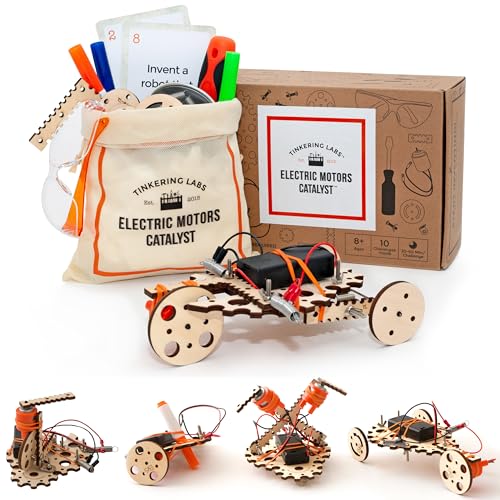
This kit features 50+ parts and 10 STEM projects, focusing on electronics and robotics. It’s designed to reduce screen time while building confidence and creativity. The set supports hands-on problem solving with a clear path from simple circuits to more complex robotic mechanisms, helping tweens grasp how electrical signals control machines. It also includes a parts replacement policy to keep ongoing projects progressing without interruptions.
Smartivity DIY Robotic Mechanical Hand

Designed as a parental choice award winner, this kit delivers action-packed, step-by-step assembly of a robotic hand. It emphasizes screen-free learning, expanding knowledge of physics and engineering while building motor control and mechanical reasoning. Replacement parts are provided, ensuring long-term engagement and reduced frustration during complex builds.
Thames & Kosmos Architectural Engineering

Play the role of architect and engineer by building more than 20 models of structures and structural elements. The kit introduces basic to advanced building concepts like trusses, arches, and domes, with new flexible pieces that mimic steel frames. It also connects with other Thames & Kosmos kits, enabling integrated experiments that expand understanding of construction and architectural design.
Buying Guide
Key purchase considerations include age range, complexity, and learning goals. For beginners or younger tweens, kits with guided steps and safer, reusable components help sustain curiosity and reduce frustration. For more advanced learners, look for kits that introduce foundational physics concepts—such as force, momentum, or energy transfer—through open-ended experiments and multiple build options.
Durability and component quality matter. Durable plastic parts or wooden elements withstand repeated assembly and disassembly, supporting longer-term exploration. A comprehensive manual with clear diagrams and troubleshooting tips reduces dependency on luck and speeds up progress.
Learning style should guide choice. Some kits emphasize structural engineering and real-world modeling (bridges, towers), while others focus on robotics, circuits, or mechanical hand projects. Mixed kits that combine electronics with mechanical building offer a broad STEM exposure, beneficial for broad interest or future specialization.
Compatibility and expansion potential are worth considering. Kits that allow reconfiguration or compatibility with other sets enable progressive learning paths. Replacement parts policies help keep projects going after the inevitable part loss or wear, especially for ambitious builds.
Safety and age appropriateness are essential. Ensure small parts are suitable for the child’s age and supervision level. Clear safety guidance and tool-free assembly reduce risk and promote independent exploration.
In summary, the best option for a tween depends on their current interests—structural design, robotics, or hands-on electronics. A kit that encourages experimentation, repeated building, and connection to real-world physics will provide the strongest foundation for continued STEM engagement.