Best Intellectual Toys for Toddlers: Hands-on Learning to Build Early Minds
When supporting early development, choosing the right cognitive toys for toddlers matters. The following selections blend Montessori-inspired design, color and shape recognition, fine motor skills, and engaging storytelling to promote problem-solving and perseverance. Each pick emphasizes safe materials, age-appropriate challenges, and clear progressions from simple sorting to more complex sequencing. Use these toys to guide curious toddlers through interactive play that supports core cognitive milestones while keeping sessions fun and engaging.
| Product | Brand | Key Benefit | Amazon Link |
|---|---|---|---|
| Tonberless Montessori Toys for Toddlers | Tonberless | 20-piece shape sorter with colorful shapes for early geometry and hand-eye coordination | https://www.amazon.com/dp/B0CG8YD7L8?tag=toysscout-20 |
| YHHYTOY Montessori Shape Sorter | YHHYTOY | Natural wood blocks and color sorting to foster color/shape recognition | https://www.amazon.com/dp/B0DZXC4P5W?tag=toysscout-20 |
| MTYOKILN Magnetic Color & Number Maze | MTYOKILN | Magnetic beads and numbers for counting, color matching, and fine motor focus | https://www.amazon.com/dp/B0BZR8CPCK?tag=toysscout-20 |
| Learning Resources Spike The Fine Motor Hedgehog | Learning Resources | Fine motor skill stacking and sorting with sensory play | https://www.amazon.com/dp/B078WM314M?tag=toysscout-20 |
| oazoxcx Wooden Color Sorting Toy | oazoxcx | Color matching and independent play using wooden pieces | https://www.amazon.com/dp/B0DG829L4B?tag=toysscout-20 |
Tonberless Montessori Shape Sorter Set

The Tonberless set focuses on foundational geometry and sensorial exploration. It includes a 20-piece assortment—five colors (red, orange, yellow, green, blue) and five shapes (pentagon, square, rectangle, triangle, circle). The wooden pieces feature smooth edges and a compact build that fits comfortably in small hands, supporting grip strength and safe handling. Water-based, non-toxic paint ensures vibrant color without harsh odors, aligning with parental safety expectations and long-lasting play value.
Designed for toddlers around ages 1 to 3, these pieces encourage sorting, matching, and pattern recognition. As children manipulate shapes to fit corresponding slots, they build hand-eye coordination and spatial awareness. The set doubles as a sensory tool, inviting babies to explore color contrasts and form differences through tactile interaction—an essential step in early cognitive development. Parents can extend play by asking kids to name colors and shapes or create mini sorting challenges.
Overall, this Montessori-inspired sorter emphasizes safe materials and durable construction. It supports independent exploration while offering guided tasks, making it suitable for quiet play, travel, or classroom-style activities at home. The result is a versatile starter kit that grows with a child’s abilities as they progress from color sorting to more complex shape arrangement.
YHHYTOY Montessori Color Sorting Blocks

This wooden sorting and stacking toy from YHHYTOY emphasizes natural materials and safety. It includes 15 blocks in five vivid colors and geometric shapes, with smooth surfaces and rounded edges to protect little hands. The activity offers a tangible path from sorting by color to identifying shapes, supporting early cognitive linking between visual cues and physical manipulation. The non-toxic, water-based paint ensures a safe tactile experience during extended play sessions.
Intended for ages 1 to 3, the toy fosters color recognition, shape differentiation, and basic counting as children align blocks with pegs and slots. Its durable construction supports repeated trials, which helps children develop perseverance and problem-solving skills. The multi-faceted toy can be used alone or incorporated into caregiver-led activities to reinforce vocabulary around colors and shapes.
As an adaptable toy, it scales from simple match-and-sort tasks to more complex stacking and sequence challenges. The design also makes this a convenient travel companion, enabling cognitive play on the go without sacrificing safety or educational value.
MTYOKILN Magnetic Color & Number Maze

The MTYOKILN maze combines color matching with basic counting in a magnetic format. With 55 magnetic beads in 10 colors and an ice-cream motif representing numbers 1–10, kids practice color identification, counting, and fine motor control as they guide beads along the track using a magnetic pen. This setup encourages steady concentration and precise hand movements as children move through the maze to complete each color or number task.
Promoting a Montessori approach, the toy blends tactile and cognitive learning. It supports developing dexterity, visual discrimination, and early numeracy skills while maintaining a calm, focused play experience. Because the beads are magnetic, it introduces a predictable cause-and-effect dynamic that can help children anticipate outcomes and build confidence in problem-solving.
Ideal for toddlers and preschoolers aged 3 to 5, this toy offers a scalable challenge. Instructors and caregivers can tailor tasks to emphasize counting sequences, color sequencing, or matching activities, depending on the child’s progress and interests.
Learning Resources Spike The Fine Motor Hedgehog
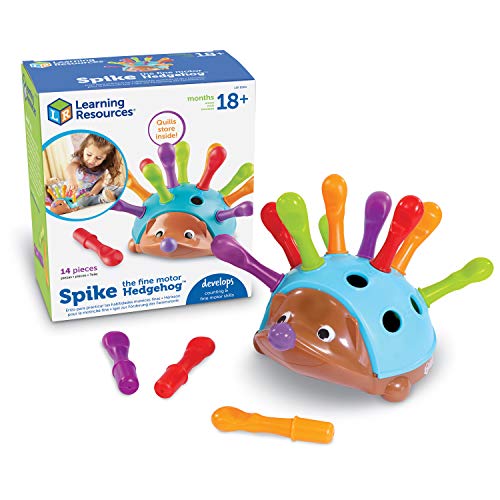
Spike The Fine Motor Hedgehog is designed to develop essential hand muscles and coordination. Children insert and remove quills from the hedgehog’s back, building fine motor strength while engaging in color and shape recognition opportunities embedded in the play pattern. The product targets early manipulatives, gradually expanding to color naming, sequencing, and pattern recognition.
Suitable for ages 18 months and up, the toy is crafted to support growth from simple tactile play to more complex cognitive tasks as a child develops. The easy-grip texture on the quills invites tactile exploration and sustained attention, contributing to focused play sessions. Educators and parents can incorporate color and counting activities to maximize learning outcomes.
As a flexible option, Spike adapts to both individual and small-group play, offering a dependable resource for classrooms, daycare centers, and home use. It encourages exploratory play while aligning with early childhood curricula focusing on fine motor and cognitive development.
oazoxcx Wooden Color Sorting Toy

The oazoxcx color sorting toy is built from lightweight wood to foster motor development and hand-eye coordination. It emphasizes independent play with simple yet engaging color-matching tasks. Large lid openings and smooth edges ensure safe exploration for toddlers. Children can practice matching, sorting, and visual discrimination, strengthening cognitive connections between colors and objects.
Perfect for ages 1 to 3, the toy serves as a practical introduction to early math concepts and problem-solving. The straightforward design allows quick setup and uninterrupted play, helping children gain confidence through repeated successful attempts. Caregivers can extend the activity by posing color-based questions or encouraging kids to name each color as they sort.
As part of a broader learning routine, this toy complements other Montessori-inspired activities and supports a well-rounded cognitive development plan. Its durable construction makes it a reliable long-term addition to a toddler’s play shelf.
Buying Guide: What To Look For In Intellectual Toddler Toys
- Safety and materials: Prioritize non-toxic finishes, splinter-free wood, and rounded edges. Look for toys that meet established safety standards (ASTM, CPSIA, CPC) for peace of mind.
- Age-appropriateness and progression: Choose sets that scale with skill growth, from basic sorting to more complex sequencing, to keep kids challenged without frustration.
- Fine motor and cognitive balance: Effective toys blend hand movements with problem-solving tasks, supporting both dexterity and thinking skills.
- Open-ended play potential: Toys that aren’t overly prescriptive encourage creative exploration and longer engagement.
- Durability and portability: Sturdy construction is essential for toddlers who explore with zeal. Consider sizes and weight that support travel and shared play.
- Educational value vs. entertainment: Seek a balance where play remains fun, but underlying goals include color/shape recognition, counting, or memory skills.
- Multi-sensory engagement: Toys that combine texture, color, sound, and movement tend to boost attention and retention in young children.
- Caregiver strategies: Pick toys that offer simple ways to guide learning, including questions, prompts, and mini-challenges to extend play sessions.
Picking The Right Set For Your Toddler
Consider your child’s current interests and temperament. A child who enjoys bright colors may benefit from color sorting and shape-match kits, while a child who loves sounds may respond well to interactive flash cards or beaded mazes. For families with limited space, stackable or compact sets that combine several activities into one toy can maximize learning while minimizing clutter.
Comparison Snapshot
- Tonberless and YHHYTOY offer foundational color-shape sorting with safe wooden construction for ages 1–3, ideal for early geometry and perception work.
- MTYOKILN emphasizes counting and color matching through a magnetic maze, suitable for 3–5-year-olds yet accessible to younger toddlers with guided play.
- Learning Resources Spike The Hedgehog focuses on fine motor skills with a sensory, pocket-friendly design that supports growing grasping abilities and color recognition.
- oazoxcx provides color sorting with simple, durable construction ideal for independent play and basic color differentiation tasks.
These options present a spectrum of cognitive activities suitable for toddlers developing early intellect. When selecting, align the toy with your child’s current capabilities, but prefer sets that offer room to grow. Regularly rotate activities to sustain curiosity and maximize learning outcomes over time.