Best Tech Toys for 3–5 Years Old: STEM, Learning, and Fun
This article spotlights engaging, age-appropriate technology-inspired toys that support early STEM skills, fine motor development, and imaginative play for children ages 3 to 5. Each selection combines hands-on building, creative exploration, and safe, kid-friendly design to promote confidence and curiosity. The featured products cover construction sets, coding-adjacent play, digital drawing, interactive activities, and active play that still centers learning benefits for preschoolers and kindergartners alike.
| Product | Brand | Key Benefit | Age Range |
|---|---|---|---|
| Laradola Dinosaur Take Apart Kit | Laradola | Hands-on assembly with safety tools | 3-8 |
| Flybar Foam Pogo Jumper | Flybar | Balance, coordination, outdoor activity | 3+ |
| KOKODI LCD Writing Tablet | KOKODI | Mess-free drawing, reusable learning | 3-6 |
| Officygnet Take-Apart Dinosaurs | Officygnet | Motorized assembly, STEM exploration | 3-7 |
| NARRIO Matching Letters Educational Toy | NARRIO | Early literacy through memory and spelling | 3-6 |
These five selections balance active play with educational value, helping kids practice hand-eye coordination, problem solving, and early numeracy or literacy. Each product is designed with age-appropriate components and clear instructions to minimize frustration while maximizing independent or guided play sessions.
Laradola Take-Apart Dinosaur Kit
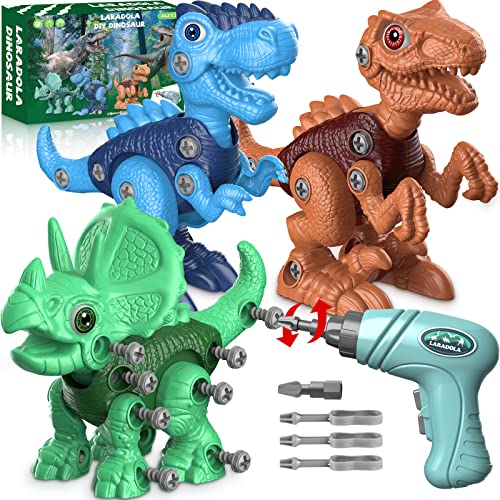
The Laradola set invites young builders to assemble dinosaur figures using a kid-safe, low-speed electric screwdriver. Oversized, chamfered parts reduce hand strain and help children complete builds with less frustration. The kit emphasizes independence and ownership as kids can work through color-coded steps, then proudly present their finished dinos. It also functions as a 3-in-1 STEM activity, blending construction with problem-solving and sequencing skills. This makes it suitable for solo play or parent–child sessions in homes or educator-led centers.
Features highlight safe handling, progress-driven challenges, and durable construction pieces. The kit is designed for ages 5–6 to foster confidence with tools while also engaging younger children through guided, stepwise assembly. It supports broader STEM learning, including planning, fine motor control, and cooperative play when completed in groups. The inclusive 3–8 age range means it adapts as a child grows more able to tackle complex builds.
Flybar My First Foam Pogo Jumper

The Flybar foam pogo jumper delivers active play with a kid-friendly design. Its foam construction reduces impact on floors and joints while providing a safe, energetic outlet for preschoolers. The toy’s bouncy action supports gross motor development, balance, and hand-eye coordination as children hop indoors or outdoors. The cheerful squeaks and bright color scheme add sensory appeal, keeping kids engaged during extended play sessions. This product is well-suited for 3-year-olds and up, offering a gentle introduction to balance and climbing skills in a manageable, non-intimidating way.
Durability and portability are notable advantages; the jumper is built to withstand repeated use and easy storage when not in use. It can be an excellent choice for family playtime, daycare activities, or activity centers that emphasize physical activity as part of a well-rounded early education. The design avoids small detachable parts that could pose choking hazards, focusing on safe, active exploration.
KOKODI LCD Writing Tablet

The KOKODI LCD Writing Tablet offers a mess-free drawing experience with a 10-inch color display and pressure-sensitive technology. Children can doodle freely, erase with a single button, and reuse the screen thousands of times. The device emphasizes environmental sustainability by reducing paper waste and battery life is designed for long-term use, with a replaceable battery to extend life across many sessions. Safety features include a secured battery compartment and non-toxic construction suitable for early learners.
Educational value arises from practicing letters, shapes, and basic drawing through repetition. The tablet is well-suited for travel or quiet corners, supporting focus and independent exploration. It also provides a simple, repeatable activity that can accompany reading time or early math games by drawing numbers or practicing number lines. This makes it a practical, low-cost tool for foundational literacy and creativity.
Officygnet Take-Apart Dinosaurs with Electric Drill

The Officygnet dinosaur set includes four take-apart figures with moveable joints and a low-speed electric drill for assembly. The colorfully painted dinosaurs foster imagination while teaching basic engineering concepts such as cause and effect, sequencing, and spatial reasoning. With multiple dinosaurs in the kit, children can experiment with different build orders and poses, strengthening memory and problem-solving skills. Clear assembly instructions support independent play while also enabling cooperative, shared tasks among siblings or classmates.
Young builders benefit from the variety of tools provided, including both a drill and manual screwdrivers, which introduces tool handling and safety awareness. The kit’s design emphasizes hands-on learning and social play, promoting collaboration as children cooperate to complete each dinosaur. The set is a strong option for 4- to 7-year-olds, but it remains accessible to younger children with adult guidance.
NARRIO Matching Letters Educational Toy

The NARRIO matching letters set targets early literacy through interactive word-building activities. The kit includes flash cards, letter cubes, and a tray to support memory, spelling, and vocabulary development. Children engage in picture-to-word matching, learning to recognize letters and sounds in a playful context. The competitive edge—who can spell the most words correctly—adds motivation for interactive learning with peers or family. This design fosters cognitive development, focus, and social skills like turn-taking during shared play.
Educational value emerges from combining visual cards with tactile letter blocks, encouraging both recognition and recall. The kit is adaptable for different learning paces, making it suitable for 3- to 6-year-olds and a helpful tool for parents and teachers aiming to build foundational reading and spelling skills in a structured, enjoyable way.
Buying Guide: Key Considerations for Tech-Inspired Toys
- Age appropriateness: Look for clear age ranges and component sizes suitable for 3–5-year-olds to minimize choking hazards and frustration.
- Safety and materials: Prioritize non-toxic plastics, rounded edges, and low-speed or manual tools for younger children. Check for safety certifications where available.
- Learning goals: Match toys with developmental aims—fine motor skills, early literacy, problem solving, or physical activity—to align with a child’s strengths and interests.
- Durability and repairability: Choose toys with sturdy construction and replaceable parts to extend play life and reduce waste.
- Guided vs. open-ended play: Some sets provide structured steps, while others encourage open-ended exploration and creativity. A mix helps balance learning and imagination.
- Maintenance and batteries: Consider battery life, ease of replacement, and whether electronics require frequent charging, particularly for travel or daycare use.
- Storage and portability: Toys with compact storage or modular components travel well and fit into small play areas or classrooms.
- Multi-child suitability: If used in group settings, select options that support cooperative play and social interaction.
- Budget and value: Compare build quality, included tools, and learning features to determine long-term value beyond initial price.