Best Science Kits for 13-Year-Olds: Engaging, Hands-on Projects for Curious Minds
Exploring science is most exciting when curiosity meets hands-on experimentation. The following five science kits are carefully chosen for teens around 13 years old who crave interactive, educational challenges. Each kit offers a unique angle—chemistry, Earth science, explosive-style experiments, solar-powered robotics, and creative food science—to help young learners build STEM skills, critical thinking, and problem-solving in a safe, guided format.
| Product | Focus | Key Benefit | Amazon Link |
|---|---|---|---|
| National Geographic Amazing Chemistry Set | Chemistry Experiments | 100+ experiments, crystal growing, colorful reactions | View |
| National Geographic Earth Science Kit | Earth Science & Geology | 100+ activities, crystal growing, volcano, rock collection | View |
| Playz Mega Kaboom! 150+ Explosive Experiments | Chemistry & Reactions | 150+ experiments, large variety, safety-focused | View |
| Lucky Doug Solar Power Kits | Solar Power & Robotics | 12-in-1 solar robots, renewable energy concepts | View |
| Playz Edible Candy Making Kit | Food Science & Chemistry | 40 candy-making experiments, tasty exploration of chemistry | View |
National Geographic Amazing Chemistry Set

The National Geographic Amazing Chemistry Set offers a broad palette of chemistry experiments designed to captivate teens. With more than 100 experiments, students can create bubbling and color-changing solutions, glowing test tubes, and even a colorful bouncy ball. The kit includes all essential materials for 15 introductory experiments and a bonus guide that expands options with 85 additional activities using common household items. This blend of vivid demonstrations and practical experimentation supports inquiry-based learning, observation, and hypothesis testing—core skills in any STEM curriculum.
What makes this kit stand out for 13-year-olds is its balance between guided activities and open-ended exploration. The included learning guide explains the science behind each reaction, helping teens connect hands-on results with underlying concepts such as acids, bases, chemical reactions, and color changes. The wide range of projects also accommodates different pacing, whether a student prefers short experiments or longer, multistep investigations.
National Geographic Earth Science Kit

The National Geographic Earth Science Kit invites curious minds to uncover geological processes and planetary science. With more than 15 experiments, activities include dueling water tornadoes, building an erupting volcano, growing crystals, and digging for rocks. This kit is well-suited for collaborative play, enabling siblings or friends to share discoveries while fostering communication and teamwork. A detailed, full-color Learning Guide explains the science behind each activity, helping teens connect hands-on experiments with topics in Earth science, geology, and environmental science.
For 13-year-olds, the comprehensive approach—tangible experiments paired with clear explanations—bolsters critical thinking and the ability to interpret data. The versatility of projects makes it easy to extend learning into group demonstrations, school projects, or science fair ideas, while maintaining safety and accessibility through age-appropriate instructions.
Playz Mega Kaboom! 150+ Explosive Science Experiments

The Mega Kaboom! kit from Playz stacks a large catalog of science experiments into a single, high-energy package. With 150+ experiments and 75 guided experiments, this kit emphasizes exploration, experimentation, and experimentation design. It’s designed to be engaging for older tweens and teens, offering experiments that explore chemical reactions, gas production, color changes, and other dynamic phenomena. The inclusion of guided activities helps maintain safety while delivering a high-density science experience that can sustain curiosity over weeks or months.
As a teen-focused option, Kaboom! supports independent work or small group challenges, providing a platform to develop hypotheses, test outcomes, and document results. Its breadth makes it suitable for science clubs, classroom demonstrations, or at-home learning where a teen wants to push beyond basics without needing advanced equipment.
Lucky Doug Solar Power Kits
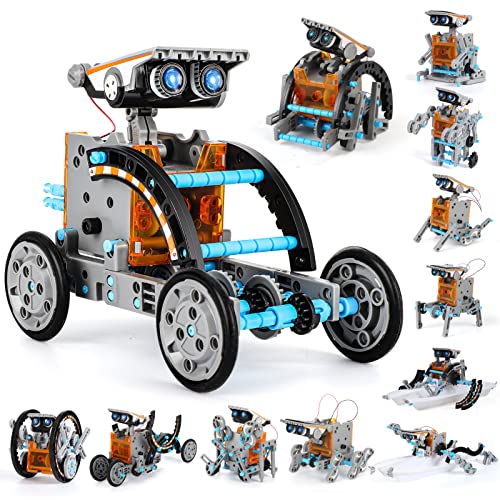
The Lucky Doug Solar Power Kits introduce teens to renewable energy through solar-powered robotics. The 12-in-1 kit enables learners to build various robots, including crawlers and delivery bots, all powered by solar energy. The emphasis on solar technology helps students understand sustainable engineering concepts and the practical limits of solar power in real-world applications. Clear, step-by-step instructions guide assembly, and the parts can be disassembled to try new configurations, reinforcing problem-solving and experimental iteration.
For 13-year-olds exploring STEM careers or simply curious about how machines respond to sunlight, this kit provides a tangible link between theory and practice. It also encourages hands-on experimentation with variables such as light intensity, angle, and weather conditions, fostering a scientific mindset about energy efficiency and environmental impact.
Playz Edible Candy Making Kit

The Playz Edible Candy Making Kit blends science with tasty experimentation. Teens can explore food science concepts as they craft candies, jelly candies, crystal rock candy, chocolates, and lollipops. The kit includes a kid-friendly lab guide that presents scientific information in engaging, visually appealing formats. Students learn about dissolving, crystallization, sugar chemistry, and measurement while creating delicious treats. This kit is especially appealing to teens who enjoy hands-on culinary experimentation and want to see practical results from scientific principles.
As a supplementary option, Edible Candy Making supports cross-disciplinary learning by combining chemistry, creativity, and art. It’s well-suited for a classroom activity, a science fair project, or an engaging at-home challenge that culminates in a shareable edible product.
Buying Guide
- Age appropriateness: Choose kits labeled for tweens and teens in the 12–14 range to ensure complexity aligns with a 13-year-old’s skills and curiosity.
- Learning goals: If the student prefers experimentation, chemistry-focused kits offer broad topics and safe, observable reactions. For hands-on engineering, robotics and solar kits build systems thinking.
- Depth of content: Look for kits with a detailed guide or learning booklet that explains the science behind each activity, as this reinforces concepts beyond step-by-step instructions.
- Safety and materials: Prefer kits with kid-friendly safety guidance, non-toxic materials, and clearly labeled contents. Kits that reuse common household items for bonus experiments add value.
- Collaborative potential: Some kits are suitable for group projects, science clubs, or family activities, which can enhance communication and teamwork.
- Expandability: Consider kits with bonus experiments or compatible expansion sets to extend learning over months and support project-based learning or science fairs.
- Storage and organization: Kits that include well-organized components or labeled bags help maintain order and facilitate repeat experiments without misplacing parts.
- Engagement factors: Visual guides, colorful experiments, and dramatic demonstrations (like volcanoes or glowing reactions) can sustain interest and motivation for ongoing exploration.
- Learning style alignment: Some teens prefer independent work, while others benefit from guided activities. Choose based on whether the student thrives with explicit instructions or exploratory play.
- Teacher or parent support: If guidance is needed, pick kits that offer online resources, safety tips, and troubleshooting ideas to help caregivers facilitate learning.