Best Chemistry Set for 5-Year-Olds: Safe, Engaging Science Kits
Inspiring curiosity early with age-appropriate, safe chemistry sets helps kids develop scientific thinking and fine-tune their motor skills. Below you’ll find five well-suited options for young learners, spanning beginner lab virtually designed for little hands to beginner-friendly kits that introduce core chemistry ideas through hands-on play.
| Product | Brand | Why It Works For 5-Year-Olds | Key Feature |
|---|---|---|---|
| Thames & Kosmos Kids First Science Kit | Thames & Kosmos | Safe, introductory chemistry concepts with age-appropriate tools. | 12+ experiments; durable, kid-friendly station. |
| Learning Resources Primary Science Lab Activity Set | Learning Resources | Real tools sized for small hands; durable for classroom or home use. | 22 pieces; test tubes, goggles, and activity cards. |
| UNGLINGA 150 Experiments Science Kit | UNGLINGA | Extensive experiments with simple, illustrated instructions. | 150 experiments; kid-friendly tools and materials. |
| Japace 100+ Experiments Science Kit | Japace | Engaging variety; supports pretend play and foundational science ideas. | 100+ experiments; includes beakers, goggles, and more. |
| Old Nobby Organic Chemistry Set | Old Nobby | 3D models help visualize basic chemistry and bonds. | 425 pieces; atoms, bonds, and model tools. |
The following sections highlight five top choices for young learners, with concise details on what makes each kit suitable for children around five years old and their caregivers.
Thames & Kosmos Kids First Science Kit

The Thames & Kosmos Kids First Science Kit introduces early chemistry concepts through safe, hands-on activities. This introductory lab station is designed for young learners to explore basic science with 12+ experiments. Children can observe reactions, learn about states of matter, and practice following simple instructions. The kit emphasizes safe handling, with age-appropriate tools that build confidence in a supervised setting. It’s a structured way to begin building curiosity about chemistry in a playful format.
Key features include a dozen experiments that cover foundational topics, plus a durable, kid-friendly lab station. While it’s suitable for a 5-year-old with adult supervision, older siblings or classroom use can extend the learning experience. The set’s focus on basic chemistry concepts helps establish a solid baseline for future STEM exploration.
Learning Resources Primary Science Lab Activity Set
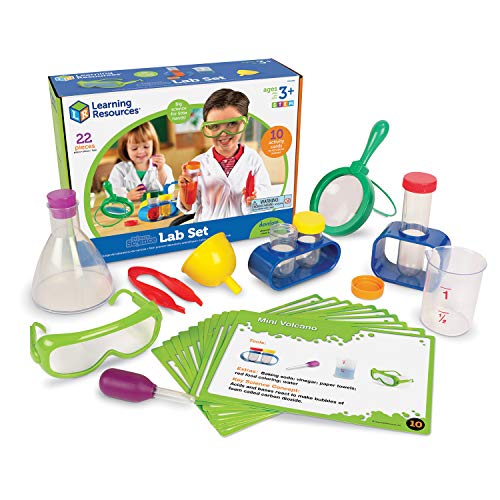
This set is crafted for early science exploration with sturdy, thick plastic components that withstand enthusiastic play. It includes essential tools sized for small hands, such as a flask, beaker, magnifying glass, eyedropper, and test tube accessories. Ten double-sided activity cards guide kids through simple experiments, fostering curiosity while teaching safety and basic measurement concepts. The kit supports pretend play and classroom-style discovery, making it a practical option for home use or preschool environments.
References to the included pieces emphasize durability and ease of use, enabling repeated exploration. The kit’s design supports guided discovery, which helps caregivers introduce basic chemical ideas without overwhelming young learners. It’s a reliable foundation for early STEM engagement and a popular choice for parents seeking a safe first chemistry experience.
UNGLINGA 150 Experiments Science Kit

With 150 experiments, UNGLINGA’s science kit offers a broad range of activities that span earth science, chemistry, and physics. The included, kid-friendly manuals present step-by-step instructions with clear visuals, making it accessible for beginners. The kit also provides high-quality lab tools and child-safe materials to facilitate hands-on learning. Accessories such as goggles help emphasize safety, while the variety of projects fosters curiosity and long-term engagement in scientific exploration.
Although many experiments are designed for broad age ranges, the clear instructions and simple setup make it suitable for a five-year-old when paired with adult supervision. This option is ideal for families wanting a versatile, expansive science kit that can grow with the child as their interest deepens.
Japace 100+ Experiments Science Kit

Japace offers a 100+ experiments science kit that emphasizes engaging, kid-friendly projects. The set includes core lab tools like beakers, measuring cups, test tubes, droppers, and goggles, plus easy-to-follow, illustrated instructions. The breadth of activities supports curious minds, ranging from fizzy reactions to crystal growth and underwater experiments. The kit is designed to be approachable for young children when guided by an adult, helping to establish a foundation in basic scientific thinking and problem solving.
For caregivers seeking variety and creativity, Japace delivers a broad portfolio of experiments that can be explored through play, while introducing basic scientific vocabulary and concepts. It’s a practical option for busy households wanting multiple project ideas in one box.
Old Nobby Organic Chemistry Set

Old Nobby’s 425-piece molecular model kit emphasizes 3D visualization of atoms and bonds. This comprehensive set suits learners who want to understand organic and inorganic chemistry through hands-on assembly. It’s designed to be user-friendly, with snap-together components that reduce strain during long sessions. While some content may be more advanced, the model-building approach provides a tangible way to grasp chemical structures and bonding concepts early, especially when oriented by a teacher or parent.
This kit is best for families or classrooms aiming to introduce more detailed molecular modeling as a child grows, acting as a bridge to more formal chemistry studies. It emphasizes visual learning and connection to real-world chemical representations, which can be empowering for young scientists.
Buying Guide: Key Purchase Considerations
When selecting a chemistry-focused kit for a five-year-old, consider safety, supervision needs, and learning goals. These kits differ in complexity, included tools, and instructional style. Look for items with non-toxic materials, age-appropriate components, and clear, simple instructions to build confidence without frustration. A balance between guided activities and open-ended exploration often works best for young learners.
Safety and supervision: Choose kits with sturdy, child-safe build quality. Parental or guardian involvement is common and beneficial, especially for the first experiments. Look for safety goggles and clear handling guidelines to reduce risk during play and exploration.
Learning style and support: Some kits emphasize structured experiments and downloadable guides; others offer a large catalog of activities that can grow with the child. Hands-on kits with visual instructions tend to help early readers and pre-readers alike, while more advanced projects can engage a curious five-year-old when supported by an adult.
Durability and future use: Consider whether the kit will last as a child’s interest expands. Durable plastic tools and securely closing containers can withstand repeated use and classroom-style exploration. A kit that scales to newer topics—like solids, liquids, and basic reactions—offers long-term value.
Age appropriateness: Even within “for ages 5+,” the complexity can vary. Prefer sets labeled for early elementary learners or those designed to be used with adult guidance. Visual, color-coded components and simple language help new scientists understand concepts without feeling overwhelmed.
Budget and portability: If you plan to travel or move between rooms, a kit with compact storage and a reasonable price point is practical. Consider whether a larger kit with many experiments is worth the extra cost or if a smaller starter set fits your goals and space.