Best Educational Presents for 5-Year-Olds: Top Learning Toys
Finding engaging, educational gifts for active five-year-olds can boost early literacy, math skills, and curiosity. The following selections are designed to mix play with practical learning, offering hands-on activities that fit both classroom-inspired goals and home exploration. Each option supports fine motor development, critical thinking, and vocabulary while keeping kids entertained. Below is a quick overview of five standout picks and how they help young learners thrive.
| Product | Brand | Key Benefit | Age Range |
|---|---|---|---|
| LIWIN LET’S GO! Learning Games for Kids | LIWIN LET’S GO! | Letter recognition, memory, spelling | 3–8 |
| GeoSafari Jr. Talking Kids Microscope | Educational Insights | Science exploration, listening & vocabulary | 3+ |
| NARRIO Educational Toys for 4-5 Year Olds | NARRIO | Letter matching, word building, memory | 4–8 |
| MOTREE Preschool Learning Toys | MOTREE | Early math, counting, number sense | 2–5 |
| Soyee Diamond Magnetic Building Blocks | Soyee | Creative design, spatial thinking, collaboration | 3–8 |
LIWIN LET’S GO! Learning Games
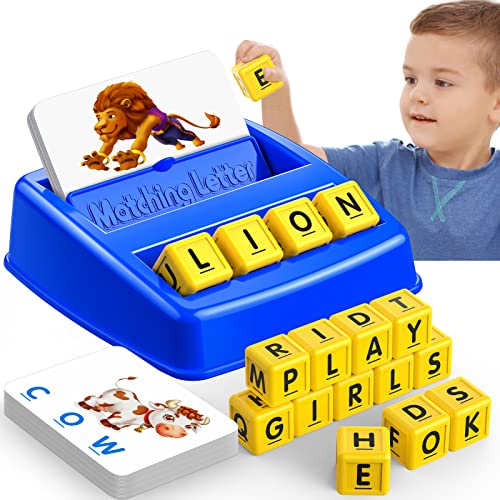
LIWIN LET’S GO! offers a set of educational games focused on matching letters to build foundational literacy. Designed for children aged 3–8, the game strengthens memory skills, spelling, and word recognition while encouraging strategic thinking and social interaction. The activities are suitable for parent-child play, making it easier for families to integrate learning into daily routines. The included cards emphasize letter recognition and vocabulary expansion, helping kids assemble words from a visual and verbal cue system. The game also supports turn-taking and cooperative play, which can enhance communication and listening skills during group sessions.
GeoSafari Jr. Talking Microscope

Educational Insights GeoSafari Jr. Talking Kids Microscope combines science exploration with engaging audio narration by wildlife advocate Bindi Irwin. This preschool-friendly microscope offers up-close visuals, encouraging curiosity about plants, animals, and the natural world. The talking feature reinforces comprehension as children observe and describe what they see, building vocabulary and science literacy. The device is designed for ease of use, making it a dependable entry point into hands-on STEM learning. Color variations may occur due to product transitions, but the educational value remains consistent.
NARRIO Matching Letter Game

NARRIO’s educational set centers on early literacy through a comprehensive matching-letter approach. With 30 flash cards, 60 words, 8 letter cubes, and a storage tray, the kit supports letter recognition, word-building, and competitive or cooperative play. Children can practice spelling by assembling words that correspond to images, reinforcing memory and cognitive connections. The learning journey is designed to be interactive, inviting kids to narrate their thought process as they find matches, which can boost verbal fluency and reading readiness.
MOTREE Preschool Learning Toys

MOTREE offers a Montessori-inspired math manipulative set designed for early learners. The kit includes wooden blocks and counting resources to help kids visualize addition and subtraction within ten. By engaging with tactile counting tools, children develop number sense, boost fine motor coordination, and learn basic arithmetic operations through hands-on exploration. The design supports self-guided discovery and cooperative play, which can enhance concentration and problem-solving skills in an age-appropriate way.
Soyee Diamond Magnetic Building Blocks
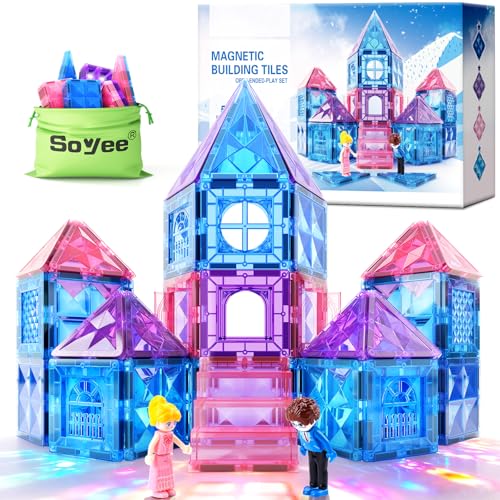
Soyee Diamond Magnetic Building Blocks encourage constructional play and imaginative storytelling. The magnetic tiles come in a princess-themed set designed to support creative world-building—think castles, kingdoms, and fantasy scenarios. Made from durable, child-safe materials, these tiles are compatible with other magnetic sets and can be used for cooperative play with siblings or friends. The open-ended nature of the toys helps develop spatial awareness, planning, and collaborative problem-solving as children design their own structures and narratives.
Buying Guide
- Learning goals: Choose toys that target core skills such as literacy, early math, science inquiry, and fine motor development. For five-year-olds, a mix of letter work, counting, and simple science fosters well-rounded growth.
- Age appropriateness: Confirm the recommended age range and assess whether the complexity matches a child’s current abilities. Toys labeled 3–8 often scale well for 5-year-olds, but look for adjustable challenges or multiple activities within one set.
- Hands-on vs. screen time: Prioritize tactile, manipulatives-based toys for stronger engagement and muscle memory, while occasional educational STEM toys can introduce basic experiments and observation skills.
- Safety and materials: Opt for durable, non-toxic materials with smooth edges. Wooden toys and ABS-plastic components tend to offer longevity and kid-friendly safety.
- Social play: Games that involve turn-taking, cooperative goals, or family participation support communication, patience, and shared problem-solving.
- Versatility and expandability: Pieces that mix with other sets or can be used in multiple ways extend play value and learning duration.
- Maintenance: Check for easy cleanup, especially for younger children who may handle materials with less care. Storage trays and organizers help keep activity time efficient.
- Budget considerations: Group similar items by learning outcome and feature sets. A balanced mix of core literacy and math tools can often deliver the best educational return for the price.
All selections above offer evidence-based benefits for early learners, emphasizing language development, numerical literacy, scientific curiosity, and imaginative thinking. When choosing gifts, consider a blend of preferred play styles (competitive vs. collaborative), the child’s current skill level, and the family’s learning goals to maximize educational impact.