Best Weather Stations for Kids: Learn Weather With Hands-on STEM Tools
Children explore science by observing the sky, air, and temperature. The following weather stations and kits are designed for curious kids, blending learning with hands-on play. Each option helps young learners track temperature, wind, precipitation, and forecast trends using real instruments and kid-friendly designs. Below is a quick guide to five strong picks, followed by a buying guide to help parents choose the right fit.
| Product | Brand | Highlights |
|---|---|---|
| Thames & Kosmos Weather & Climate Lab | Thames & Kosmos | 5-in-1 station; wind vane; rain gauge; anemometer; thermometer; outdoor stake |
| AcuRite What-to-Wear Weather Station | AcuRite | Hyperlocal forecast; wearable dressing guidance; alarm clock |
| Newentor Weather Station | Newentor | Color display; 7–10 day forecast; 3 remote sensors |
| SMARTLAB Storm Watcher Weather Lab | SMARTLAB | 18 experiments; weather instruments; illustrated guide |
| 4M Weather Science Kit | 4M | Desktop observatory; clouds and wind experiments; rain/greenhouse ideas |
Note: The selections emphasize kid-friendly interfaces, durability for indoor or outdoor use, and clear data collection to foster scientific thinking. Each product is suitable for ages roughly 6 and up, though parents may want to review complexity for younger children.
Thames & Kosmos Weather & Climate Lab

This compact 5-in-1 weather station provides hands-on tools to investigate weather phenomena and Earth’s climate system. The built-in stake allows outdoor use for real-time data collection. Instruments include a wind vane, compass, rain gauge, anemometer, and thermometer to observe, measure, and record weather data. The kit’s design emphasizes durable outdoor setup and straightforward measurement tasks suitable for classroom or home science projects.
AcuRite What-to-Wear Weather Station

This weather station teaches kids to respond to local forecasts with practical outfit planning. It features a hyperlocal forecast based on data from a wireless outdoor sensor, plus an alarm clock and date/time display. The “What-to-Wear” guidance helps children translate weather information into everyday decisions, combining meteorology with everyday life skills in a kid-friendly interface.
Newentor Weather Station

This wireless indoor/outdoor station features a large color LCD that displays inside and outside temperature and humidity, with high/low records and barometric pressure. The system supports up to three remote sensors, enabling monitoring across multiple locations. It also provides a forecast for the next 12–24 hours and 7–10 days with calibration to improve local accuracy, making it a strong all-in-one educational tool for weather observation at home.
SMARTLAB Storm Watcher Weather Lab
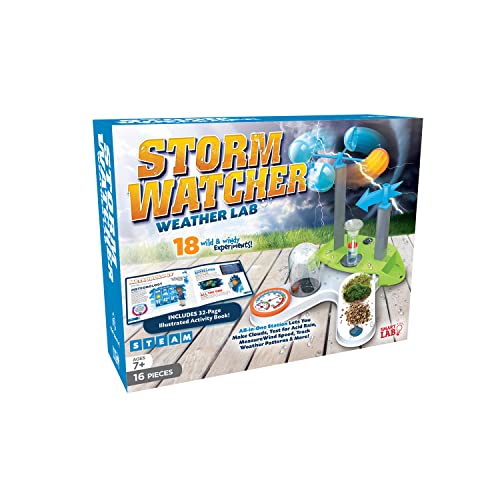
The Storm Watcher kit encourages exploration through 18 experiments and a full weather station setup. It includes a weather vane, rain gauge, anemometer, compass, thermometer with hygrometer, lab station, and a 32-page illustrated activity book. Children learn about weather patterns, clouds, barometers, and even weather-extreme phenomena, making it ideal for deeper STEM engagement at home or in a classroom.
4M Weather Science Kit
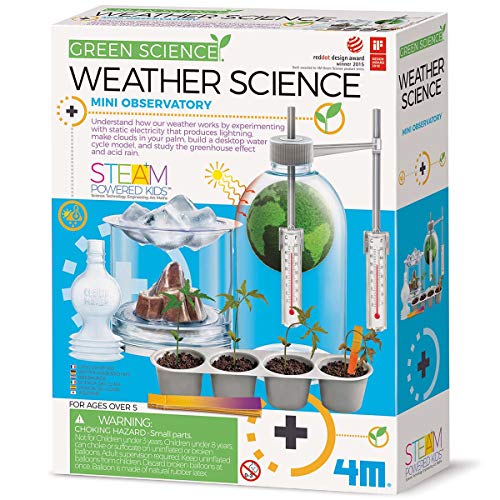
4M’s Weather Science Kit offers activities to understand how weather works, including static electricity for lightning, a desktop water cycle model, and cloud formation in your hand. It also explores wind patterns and the greenhouse effect, plus acid rain. This kit blends hands-on experiments with foundational meteorology concepts, suitable for curious kids who enjoy building and observing phenomena.
Buying Guide: Key Purchase Considerations
- Age and safety: Check recommended age ranges and include adult supervision for small parts or outdoor use.
- Learning goals: Decide whether the focus is on basic weather observation, data collection, or more advanced meteorology concepts (cloud formation, barometric pressure, wind speed).
- Sensor accuracy and range: For hyperlocal learning, prioritize stations with reliable outdoor sensors and clear internal displays.
- Ease of use: User-friendly interfaces, simple instructions, and visually engaging data helps maintain interest in younger kids.
- Durability and weather resistance: Outdoor setups require sturdy stakes and weatherproof materials; indoor stations should be safe around children and pets.
- Data logging and display options: Color displays, large numbers, and the ability to log daily data can enhance engagement and learning outcomes.
- Expandability: Some systems support additional sensors or compatible accessories, useful as a child’s understanding deepens.
- Cross-curricular value: Look for kits that tie weather science to geography, math (data interpretation), or science writing (journaling observations).
- Maintenance: Consider battery life, sensor calibration needs, and parts availability for ongoing use.
How to Use a Kid-Friendly Weather Station
- Set a regular observation time, e.g., every morning or after school, to build routines and data records.
- Encourage kids to record observations in a weather journal, noting conditions, mood, and any notable events (rain shower, wind gusts).
- Compare daily forecasts with actual outcomes to discuss forecast accuracy and limitations of models.
- As kids grow, introduce concepts like dew point, humidity trends, and barometric pressure changes.
- Extend learning with simple experiments from the included guides or supplemental activities.
These options provide a range of educational tones—from classroom-grade experiments to home-friendly gadgets—helping children develop scientific curiosity and data literacy through hands-on weather study.