Best Toys for Kids With Sensory Issues for Calm and Focus
Choosing toys that support focus, self-regulation, and calm in children with sensory needs can reduce anxiety and improve engagement at home or in the classroom. The following selections offer a mix of tactile, visual, and auditory stimulation designed to be soothing and engaging. Each product is chosen for safety, accessibility, and proven sensory benefits, with details drawn from their listed features.
| Product | Brand | Key Benefit |
|---|---|---|
| Scientoy Fidget Toy Set, 35 Pcs | Scientoy | Comprehensive sensory play pack for anxiety relief and focus |
| Sensory Marble Maze | Demilong | Gel-filled, quiet, tactile maze for calming engagement |
| BUNMO Pop Tubes – Large 4-Pack | BUNMO | Fine-motor practice and open-ended STEM play |
| Liquid Motion Bubbler | Super Z Outlet | Soothing visual drops and rhythm for visual tracking |
| UIIKOLB Sensory Spinning Chair | UIIKOLB | Vestibular stimulation to support balance and body awareness |
Note: Each product is designed to offer safe, non-disruptive options suitable for kids with autism, ADHD, OCD, or heightened stress. The list includes a mix of tactile, visual, and proprioceptive tools to address diverse sensory preferences.
Scientoy Fidget Toy Set: 35 Pcs Sensory Tools
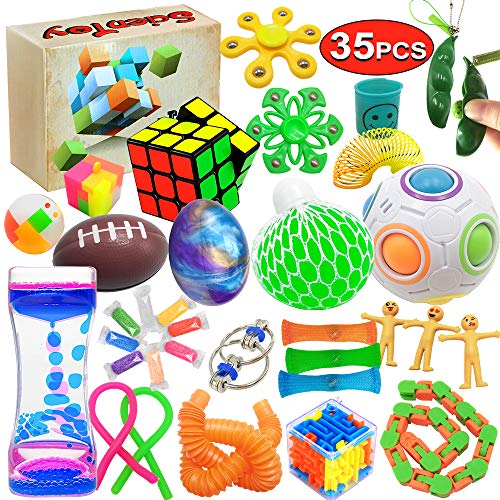
The Scientoy 35-piece fidget toy set provides a broad range of textures and actions to support sensory engagement. With items including a rainbow magic ball, liquid motion timer, squeeze grape ball, maze puzzle, mesh and marble toys, foam putties, a pop tube, foam football, and egg slime putty, the assortment offers multiple ways to interact. Materials are described as high-quality ABS or similar plastics, non-toxic and odorless, with safety standards aligned to Europe and America Toy Safety Standards (ASTM/CPC/EN71). This breadth supports varied preferences—squeezing, stretching, flipping, and rolling—to help focus attention and ease anxiety. The included gift box makes it a ready-made present for children ages 3 and up.
Using a wide variety of fidget interactions can help address sensory seeking and sensory avoiding behaviors by providing predictable, soothing stimuli. The set emphasizes safe use for children with autism or ADHD and adults seeking stress relief, while encouraging calm, repetitive play that may reduce overstimulation in busy environments.
Sensory Marble Maze: Gel Filled Calm Toys

The Sensory Marble Maze offers a gel-filled, soft-touch experience with rubber marbles that glide through a maze. The tactile beads and the smooth gel surface provide a calming sensory pathway, which can help children regain self-control during emotional moments. Its quiet operation means it is unobtrusive in classrooms or shared spaces, supporting a calm environment while providing a sensory distraction that can improve focus. The design is aimed at addressing autism, ADHD, OCD, and ADD by offering a tactile, visual, and proprioceptive loop that reduces overstimulation and promotes sustained engagement.
As a classroom-friendly option, this maze emphasizes discreet, gentle interaction. The bright colors and soft textures can be enticing without creating noise or disruption, making it suitable as a calm-down corner tool or a reward-based activity. Parents and educators can use it to help guide breathing, focus, and regulation strategies during transitions or challenging tasks.
BUNMO Pop Tubes – Large 4-Pack

BUNMO Pop Tubes provide a hands-on STEM activity that also serves as a sensory tool. Kids can stretch, bend, connect, and shape the tubes into letters, numbers, or spirals, promoting open-ended exploration. The action of pulling and popping helps build fine motor skills, bilateral coordination, and cause-and-effect understanding. The 4-pack is especially suitable for small-group activities, classroom centers, or solo play. Their bright colors and durable construction make them accessible for daily use, while the tactile feedback supports sensory processing and focused engagement during quiet time or structured tasks.
Because the tubes are large and easy to handle, they can be helpful for kids who need more substantial proprioceptive input. The open-ended nature encourages collaborative play or supports independent exploration, making them versatile for varied learning environments.
Liquid Motion Bubbler

The Super Z Outlet Liquid Motion Bubbler creates a soothing visual display as colored droplets move slowly downward. This rhythmic, gravity-guided motion can improve visual tracking and provide a calming, predictable pattern that supports self-regulation. The sounds are minimal, and the motion is smooth, making it a suitable sensory toy for kiddos who prefer quiet, non-disruptive stimulation. It may be used as a transition aid, a focus tool during tasks, or a stress-relief option in a sensory corner. The toy is designed to be reset easily by flipping it over and starting again.
Users should supervise younger children to ensure safety with small components and to prevent chipping or breakage. The motion aspect can also support mindfulness exercises, encouraging slow breathing and steady concentration during challenging moments.
UIIKOLB Sensory Spinning Chair

The UIIKOLB Sensory Spinning Chair provides 360-degree rotation to stimulate the vestibular system, aiding balance, spatial awareness, and body control. The toy is designed for flexible use—kids can spin while seated, kneeling, or lying on their stomachs—offering varied postures to explore movement. The chair emphasizes durability with a sturdy metal base, and a non-slip surface ensures safety during indoor and outdoor play. This type of vestibular input can help children organize sensory information and may contribute to improved focus during seated tasks, transitions, or at-seat learning activities.
As a larger, dynamic tool, it can serve as a preferred sensory break option for students needing movement before or during classroom tasks. Careful supervision and weight/height considerations should be observed to ensure safe use, especially with younger children or smaller spaces.
Buying Guide: Key Purchase Considerations
- Sensory needs and settings: Match toys to the child’s primary sensory profile (tactile, visual, vestibular, proprioceptive). Consider where the toy will be used (home, classroom, therapy) and how much space is available.
- Safety and materials: Look for non-toxic materials, rounded edges, and compliance with safety standards (ASTM, EN71). Check for small parts that could be choking hazards for younger children.
- Durability and cleaning: Repeated handling requires durable plastics or fabrics, and easy-to-clean surfaces are beneficial in classroom-use items like stress toys and sensory bins.
- Portability and storage: Consider size and weight, especially for classroom centers or travel. Storage bins or gift-ready packaging can help with organization.
- Variety versus consistency: A mix of diverse textures and motions can address multiple sensory needs. For some children, a small set of high-quality items used consistently may yield better regulation outcomes.
- Discreet versus high-engagement options: In school settings, discreet tools (quiet fidget toys, calm-down mazes) minimize disruption, while at home, more interactive items (poppers, mazes) can support longer engagement and practice.
- Budget and value: A larger set with varied textures offers breadth, but consider whether the individual child will fully use each item. Occasionally, focused, high-use items may provide greater outcomes.
- Age appropriateness: Check recommended ages and adjust for individual development. Some items are suitable for a wide age range, while others are more oriented toward younger children.
- Teacher and caregiver guidance: For school use, align toy choices with classroom routines, therapy goals, and staff training to maximize effectiveness and consistency.
Across these products, the focus is on safe, structured sensory experiences designed to reduce anxiety, improve attention, and support self-regulation. When selecting toys, consider the child’s unique needs, environment, and preferred sensory inputs to create an effective, calm-focused play routine.