Best Toys for 2.5 Year Olds: Educational and Fun Picks
Choosing toys for a 2.5-year-old means balancing safety, learning, and imaginative play. The following selections emphasize fine motor skills, early math concepts, language development, and creativity. Each item below highlights engaging activities suitable for toddlers, while offering durable materials and easy clean-up for busy households.
| Product | Brand | Key Benefit |
|---|---|---|
| Zeoddler Magnetic Animals Train Set | Zeoddler | Montessori-style learning with animals and basic counting |
| HopeRock Whack A Frog Game | HopeRock | Fine motor play with multi-mode activities |
| Airbition Talking Flash Cards | Airbition | Language exposure and early vocabulary building |
| Teriph LCD Writing Tablet | Teriph | Mess-free drawing and writing practice |
| TOP BRIGHT Magnetic Bird Feeding Game | TOP BRIGHT | Fine motor skills and color recognition |
Zeoddler Magnetic Animals Train Set

The Zeoddler Magnetic Animals Train Set combines natural wood construction with double-sided printing to create a Montessori-inspired activity. The 11-piece train includes an engine and cars featuring animal figures, promoting hand-eye coordination as toddlers connect magnets. A storage bag supports portability for learning on the go. The set emphasizes early counting, color recognition, and problem-solving as children arrange the train and attach animals.
HopeRock Whack A Frog Game

The HopeRock Frog Game offers multiple modes (Pass, Competitive, Memory, Play, and Piano) with 45 increasing levels, encouraging memory, timing, and coordination. The light-up frogs provide visual cues that aid discovery, while a two-player mode supports interactive play with a parent or sibling. An upgraded spray feature adds dynamic engagement, helping sustain attention and turn-taking as children aim for higher scores.
Airbition Talking Flash Cards

This 224-card set introduces animals, vehicles, foods, fruits, and vegetables with audio, supporting vocabulary growth and cognitive development. The reader offers a standard American accent, a repeat button, and five-volume control for age-appropriate exposure. Designed as a Montessori-style learning tool, it can support language development, early literacy, and sensory engagement, including for children benefiting from autism-friendly supports.
Teriph LCD Writing Tablet

The Teriph LCD Writing Tablet is a mess-free drawing tool that supports writing, drawing, math practice, and note-taking with a stylus. The 8.5-inch screen uses a pressure-sensitive LCD and a one-button erase function, reducing frustrations for young artists. A child-safe ABS shell and eye-friendly display minimize hazards while encouraging creativity, concentration, and early literacy through independent exploration.
TOP BRIGHT Magnetic Bird Feeding Game

In this two-mode wooden toy, children fish for worms with a mother bird and feed the hatchling. It emphasizes fine motor precision as kids manipulate magnets and worms, while encouraging imaginative play and hand-eye coordination. The setup offers two play styles—upright and upside-down—enhancing engagement and promoting problem-solving through interactive exploration in a nature-inspired setting.
VTech Drill and Learn Toolbox
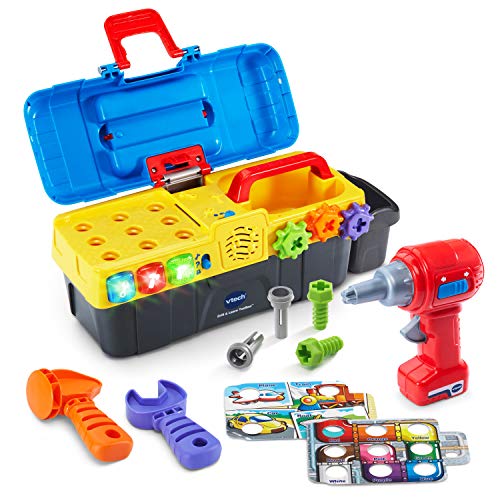
The VTech Drill and Learn Toolbox introduces role-play and fine motor skills through a working toy drill, hammer, wrench, nails, and screws. The electronic tray provides music and sounds as gears turn, reinforcing cause-and-effect. Light-up buttons offer additional learning cues about tools and their uses, making it a versatile choice for imaginative construction play and early STEM exposure.
Buying Guide
When selecting toys for a 2.5-year-old, consider safety, durability, and developmental fit. Look for sturdy wood or BPA-free plastics, rounded edges, and non-toxic finishes. Toys should support multiple learning domains, such as motor skills, language, math readiness, and creativity, without overwhelming the child. Portability and ease of cleaning are practical bonuses for busy households. In addition, consider versatility: can a toy adapt to the child’s growing abilities? Finally, assess cognitive load—simple, open-ended options often support longer engagement and better transfer to real-world play.
- Safety first: age-appropriate choking hazard warnings and non-toxic materials.
- Motor development: items that promote grasping, stacking, twisting, and releasing.
- Language and cognitive development: toys with storytelling prompts, sounds, or memory challenges.
- Durability: washable surfaces, strong magnets, and sturdy construction.
- Storage and portability: easy-to-store kits with included bags or containers.
- Educational balance: tools that blend play with foundational math, letters, or science concepts.