Best Toys for 1.5 Year Olds: Engaging Montessori and Building Sets
Choosing toys for toddlers around 18 months blends simplicity with discovery. The following selections emphasize fine motor skills, early language development, color and shape recognition, and guided exploration. All items are appropriate for curious 1.5-year-olds and encourage safe, hands-on learning through play.
| Product | Why It Works For 18 Months |
|---|---|
| Zeoddler 11 Magnetic Wooden Animals Train Set | Magnetic connections; wooden, durable design; supports hand-eye coordination and pretend play. |
| Learning Resources Spike The Fine Motor Hedgehog | Colorful quills build fine motor skills and introduce colors, counting, and patterns as children grow. |
| LeapFrog Learning Friends 100 Words Book | Hundreds of words with interactive pages; enhances vocabulary and auditory learning. |
| MEGA BLOKS First Builders Toddler Blocks | Large, easy-to-grip pieces promote stacking, spatial awareness, and early engineering play. |
| PEBIRA Montessori Sorting & Stacking Toys | Color and shape differentiation; portable and kid-friendly for on-the-go learning. |
Zeoddler Magnetic Animals Train Set

The Zeoddler Magnetic Animals Train Set combines a natural wooden build with magnetic connectors, designed to entertain toddlers while supporting early learning. The set includes 11 pieces—an engine and multiple animal train cars—that connect via magnets, making it easy for small hands to manipulate. The Montessori-inspired design encourages pretend play, storytelling, and sequence building. The double-sided printing on the wood adds visual interest, aiding color recognition and memory as children match animals to train cars. Its durable construction is suited to frequent handling and outdoors use, helping children explore and learn through active play.
Learning Resources Spike The Fine Motor Hedgehog
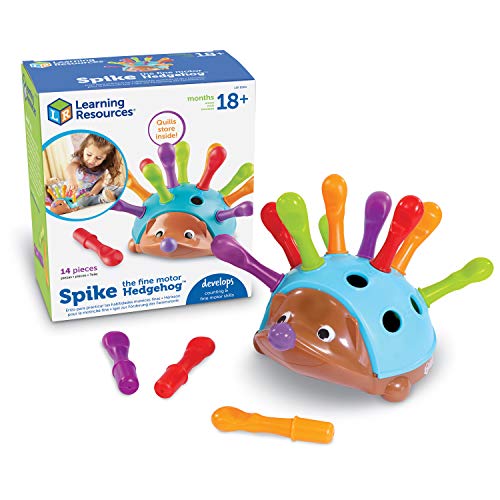
Spike The Fine Motor Hedgehog is a versatile STEM toy aimed at 18 months and older. The hedgehog’s back holds multiple colorful quills that children remove and reinsert, promoting precise finger movements and grip strength. This activity supports the development of hand-eye coordination while introducing early concepts of colors, counting, and pattern recognition as children explore which quills fit where. The toy’s simple, open-ended design also invites toddlers to experiment with stacking and sorting, fostering cognitive growth alongside tactile exploration.
LeapFrog Learning Friends 100 Words Book
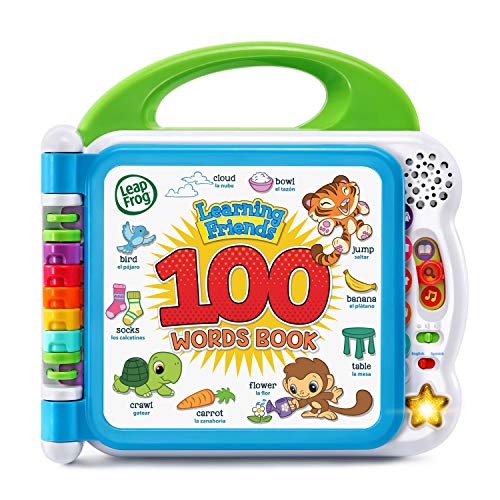
The LeapFrog Learning Friends 100 Words Book introduces a broad vocabulary through interactive pages featuring Turtle, Tiger, and Monkey. Each touch-triggered word category includes pets, animals, food, colors, activities, opposites, and more. When a child taps a word, the book plays the word aloud, triggers sound effects, and offers fun facts, enriching language exposure. A light-up star button plays the Learning Friends theme song and a favorite word, reinforcing memory through music and repetition. This format supports early language development while engaging little listeners with familiar, relatable content.
MEGA BLOKS First Builders Toddler Blocks

MEGA BLOKS First Builders offers a sturdy set of 60 blocks in 10 shapes and 9 vivid colors, sized for little hands. The oversized blocks are easy to grip, promote simple stacking and pulling apart, and introduce early construction concepts. For toddlers around 18 months, this set supports fine motor development, color and shape recognition, and basic problem-solving as children experiment with building structures. The included bag makes clean-up quick and travel-friendly, encouraging creative play in various environments.
PEBIRA Montessori Sorting & Stacking Toys

PEBIRA’s wooden sorting and stacking toy introduces essential early math and geometry concepts. The set includes 20 pieces—blocks in five colors and five geometric shapes—designed to help toddlers differentiate colors, shapes, and sizes. Children can sort by color, shape, or count the number of holes for pegs, encouraging cognitive development and hand-eye coordination. The smooth-edged wood and compact size fit small hands well, making these toys portable for travel and easy for parents to supervise during playtime. It’s a thoughtful option for developing spatial awareness and early problem-solving skills.
Buying Guide: Key Purchase Considerations
- Age appropriateness: Ensure toys are labeled for 18 months or older and have no small parts that could pose choking hazards.
- Skill development: Look for tools that promote fine motor skills, color and shape recognition, language development, and problem solving.
- Material and safety: Prioritize wood or non-toxic plastics with smooth finishes; verify that paints and coatings are certified safe for children.
- Durability and cleanliness: Toys should tolerate rough handling and easy cleaning, especially for toddlers who explore with hands and mouths.
- Portability and storage: Consider compact, travel-friendly designs and included storage solutions to reduce clutter.
- Guided vs. open-ended play: Balance toys that offer structured activities with those that encourage imaginative, open-ended exploration.
- Language support: For vocabulary development, choose activities with sound, word, or music cues that engage auditory learning.
- Growth potential: Items that scale with a child’s development—beginning with simple actions and progressing to more complex matching or counting—provide longer use.
- Maintenance: Check for easy-to-replace parts or simple washing instructions to maintain hygiene over time.
Alternative choices within this selection emphasize building blocks, shape sorters, and language-rich interactions that align with the developmental stage of a 1.5-year-old. When selecting, consider child interests, safety standards, and how each toy supports a gradual progression in skills from basic manipulation to more complex problem-solving.