Best Toys for One-Year-Olds: Safe, Engaging Picks for Toddlers
Choosing toys for a one-year-old means prioritizing safety, simple actions, and activities that support early development. The following selections include Press & Go cars, balance bikes, interactive learning chairs, word books, and busy boards—each chosen for durability, age-appropriate challenges, and encouraging curiosity. Explore how these options help with gross motor skills, fine motor control, language growth, and sensory exploration, all while keeping playtime safe and engaging.
| Product | Brand | Key Benefit |
|---|---|---|
| iPlay, iLearn Press to Go Car Toys for Toddlers 1-3 | iPlay, iLearn | Press-to-go action, visually stimulating, safe materials |
| SEREED Baby Balance Bike for 1-2 Year Olds | SEREED | Balance and coordination building, pedal-free |
| Fisher-Price Laugh & Learn Smart Stages Chair | Fisher-Price | Interactive music and learning stages |
| LeapFrog Learning Friends 100 Words Book | LeapFrog | Word-rich language exposure and sound effects |
| Iabedi Busy Board, Montessori Toy | Iabedi | Fine motor and sensory exploration |
iPlay, iLearn Press to Go Car Toys for Toddlers

The Press & Go Car Toy from iPlay, iLearn is designed with safety and simplicity in mind. Its rounded edges and smooth surfaces reduce choking and snag hazards, while high-quality ABS construction ensures durability during rough toddler play. The toy requires no batteries—children simply press the head of the car to watch it roll forward, reinforcing cause-and-effect understanding and gross motor movement. The bright colors and cheerful cartoon design stimulate visual tracking, attention, and early color recognition. This option supports independent play and toddler confidence as they master pushing, coordinating steps, and exploring speed at their own pace.
Features align with critical early developmental milestones: safe handling for curious little hands, non-toxic materials, and a non-slip surface that helps toddlers transition between crawling and standing. The friction-driven action invites steady exploration, while the absence of small parts reduces choking concerns. As a first push-toy, it provides a tangible sense of accomplishment and encourages persistent play—key factors in building curiosity and fine motor control during the 12- to 18-month window.
SEREED Baby Balance Bike for 1-2 Year Olds
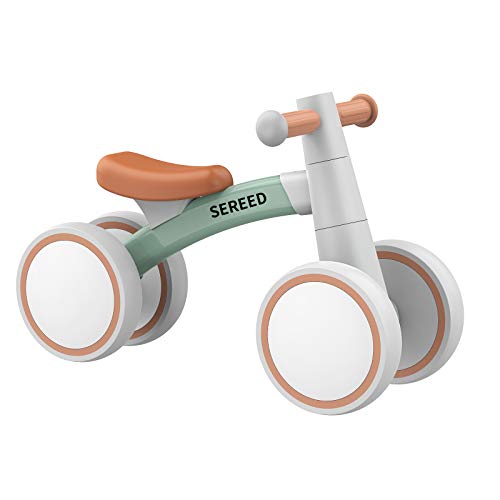
The SEREED balance bike is designed for early walkers and new riders aged 12–24 months. Its pedal-free design helps babies learn balance and steering without the complexity of pedaling, fostering confidence as they shift weight and test stability. A widened closed wheel arrangement reduces the risk of clamping tiny feet, while a 135-degree turning limit and gravity-based steering provide safer maneuvering indoors or outdoors. The frame uses a sturdy aluminum alloy, and the non-slip TPU handles paired with a softly cushioned seat support a comfortable ride. This bike is well-suited for families seeking a transitional ride-on option that grows with a toddler’s balance skills.
Parents should note assembly needs and ensure a flat, even play surface during initial sessions. The design emphasizes safety and independence, offering a step toward more complex cycling as toddlers mature. The absence of pedals means less top-heavy wobble and fewer fall risks, making it a practical gift for early motor development and spatial awareness in the first years of life.
Fisher-Price Laugh & Learn Smart Stages Chair

Fisher-Price’s Laugh & Learn Smart Stages Chair delivers interactive learning through music, lights, and guided phrases. With 120-plus songs, sounds, and phrases, this chair activates content when a child sits, stands, or engages with the seat. The Smart Stages technology introduces colors, shapes, numbers, counting, and opposites in a progression that adapts to growing abilities. The chair’s built-in activities and responsive design support language development, early math concepts, and auditory discrimination. The combination of motion, sound, and touch makes this an engaging centerpiece for toddlers while remaining sturdy and stable for little explorers.
Consider how a single piece can support multiple developmental areas—gross motor engagement through physical interaction, fine motor access to buttons, and cognitive growth via progressive content. Its size makes it suitable for most play areas, and its durability helps withstand frequent use as a child experiments with cause and effect in everyday routines.
LeapFrog Learning Friends 100 Words Book
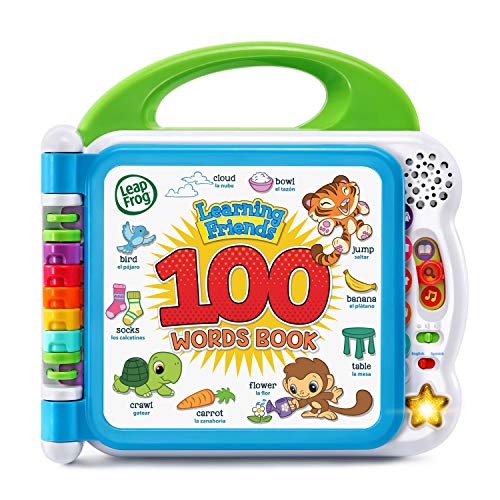
The LeapFrog Learning Friends 100 Words Book blends tactile learning with auditory feedback. Featuring Turtle, Tiger, and Monkey characters, the book introduces more than 100 words across categories such as pets, animals, mealtime, colors, and activities. Each touch-activated word triggers the appropriate sound effects and the Learning Friends theme, reinforcing word recognition and memory through interactive play. The combination of verbs, nouns, and everyday objects helps early language development, making it an appealing option for parents seeking a compact, screen-free learning tool.
Users should consider the book’s portability and how the interactive pages translate to language exposure beyond the page. The device-friendly design supports early literacy skills, including listening comprehension, vocabulary expansion, and the association between words and real-world objects. This toy is well-suited for reading routines, car rides, or quiet time.
Iabedi Busy Board Montessori Toy

The Iabedi Busy Board provides rich tactile and cognitive stimulation with 10 separate switches and LED lights. The master switch enables turning off all LEDs to save power, while each switch triggers different colors or lighting effects. This Montessori-inspired toy supports color and size recognition, hand-eye coordination, and problem-solving through exploratory play. The compact size makes it a strong travel companion, ideal for home, car, or airplane use. Batteries are a requirement, so caregivers can factor in simple setup before first use. The board encourages independent exploration while developing fine motor precision and sequencing.
Umatoll Colorful Lighting Baby Balance Bike

The Umatoll balance bike emphasizes visual appeal and safety for 12–24 month-olds. Its rear wheel lights glow without batteries, simply by spinning, creating instant engagement for curious toddlers. A 135° steering limiter helps prevent tipping, while fully enclosed wheels avoid foot clamping. The TPU handlebar grips support a firm hold as babies practice steering and balance. The seat is adjustable across three positions to accommodate growing children, enabling extended use as motor skills develop. This toy blends entertainment with essential early-mobility training and safe exploration in various environments.
MINGKIDS Montessori Toys for 1 Year Old

The MINGKIDS 6-piece set focuses on multi-sensory shape matching and exploration. The six chunky blocks feature different textures, supporting tactile discrimination and color/shape recognition. The ABS plastic frame with rounded edges ensures a safe play experience for small hands while encouraging kids to push shapes through elastic bands—an activity that strengthens finger dexterity, hand-eye coordination, and problem-solving skills. The bright colors and distinct textures invite repeated play to reinforce cognitive development, color perception, and early math concepts through sorting and matching tasks.
Buying Guide
- Safety first: Look for rounded edges, non-toxic materials, and durable construction. Avoid toys with small detachable parts for one-year-olds.
- Age appropriateness: Choose toys designed for ages 12–24 months to match fine motor and cognitive development stages.
- Motor skill development: Balance bikes and press-toy vehicles support gross motor skills; busy boards and shape toys boost fine motor precision.
- Language and cognitive growth: Books with words, interactive chairs, and multi-sensory toys help with vocabulary, listening, and concept recognition.
- Durability and maintenance: Washable fabrics, easy-clean plastics, and simple battery requirements extend playtime without frequent replacements.
- Portability and space: Compact toys and travel boards suit small living spaces and car rides, while larger items should suit available play areas.
- Battery considerations: Some toys require batteries; consider quick-access battery compartments and safe off-switch options for older siblings or curious toddlers.
- Multi-sensory balance: Toys that combine sight, sound, and touch tend to engage toddlers longer and support holistic development.
- Learning progression: Choose items that offer a gentle progression—simple cause-and-effect to more complex actions—as the child grows.
These selections provide a balanced mix of independent and guided play, aligning with typical development milestones for one-year-olds. Evaluating each toy on safety, motor development, and cognitive engagement helps caregivers choose options that fit family routines and space constraints. When in doubt, prioritize items that support exploration while maintaining a simple setup and durable construction for ongoing use as babies transition into age ranges beyond their first year.