Best Toys for 2 Year Olds to Boost Playtime, Learning, and Confidence
Finding the right toy for a 2-year-old blends safety, engagement, and developmental value. The items below cover balance and gross motor skills, early cognitive and language growth, imaginative play, and fine motor practice. Each selection is designed for toddlers, with features that support independent play, caregiver interaction, and durable construction that withstands curious exploration. From balance bikes to magnetic drawing boards and pretend play sets, these picks offer varied sensory experiences to keep a growing learner motivated.
Summary of selected products
- SEREED Baby Balance Bike for 1-2 Year Olds — Green
- iPlay, iLearn Press to Go Car Toys for Toddlers
- Airbition Talking Flash Cards for Toddlers
- LeapFrog Learning Friends 100 Words Book — Green
- Kikidex Magnetic Drawing Board — Light Blue
SEREED Baby Balance Bike For Toddlers
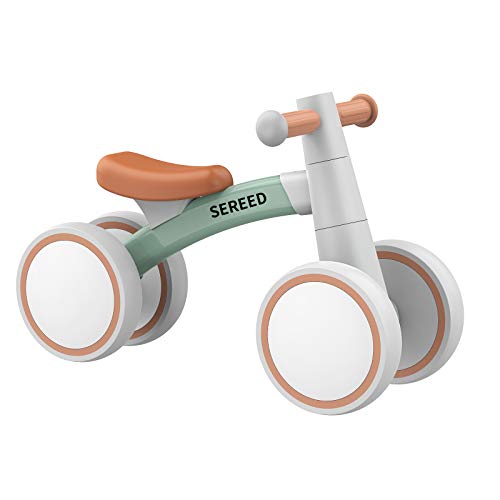
The SEREED balance bike is designed for 12 to 24 months to help infants learn balance and steering without pedaling. Its four-wheel, pedal-free design reduces the risk of feet getting pinched or tangled, while a 135-degree turning limit supports controlled maneuvers on indoor or outdoor surfaces. A gravity-steering mechanism helps prevent tipping, enabling confident first rides as toddlers explore motion and balance in a safe, supervised way.
Construction emphasizes safety and comfort with a sturdy aluminum frame, non-slip TPU handle, and a soft seat. The wheels are designed to be wear-resistant and gentle on floors, making it suitable for home playrooms as well as backyards. This toy supports early physical development, coordination, and spatial awareness, while encouraging independent exploration with parental supervision.
iPlay, iLearn Press To Go Car Toys For Toddlers

This press-to-go car toy is crafted for safe play with rounded edges and smooth surfaces, using high-quality ABS material and no small parts. Toddlers simply press down the car’s head to make it move, offering a battery-free, intuitive early motor activity. The bright colors and cartoon designs also support visual attention, color recognition, and cognitive engagement, making it a simple, durable option for 1- to 2-year-olds who enjoy cause-and-effect play.
Airbition Talking Flash Cards For Toddlers

Airbition’s 224-card talking set blends language-building and sensory experiences. Cards feature diverse illustrations—animals, vehicles, foods, and more—paired with sounds to support vocabulary expansion and cognitive development. It’s positioned as beneficial for speech therapy and autism-related needs, as the audio-visual pairing aids engagement. A simple on/off switch, a reader with animal sounds, a repeat button, and a five-level volume control make it adaptable to different environments and listening preferences.
LeapFrog Learning Friends 100 Words Book
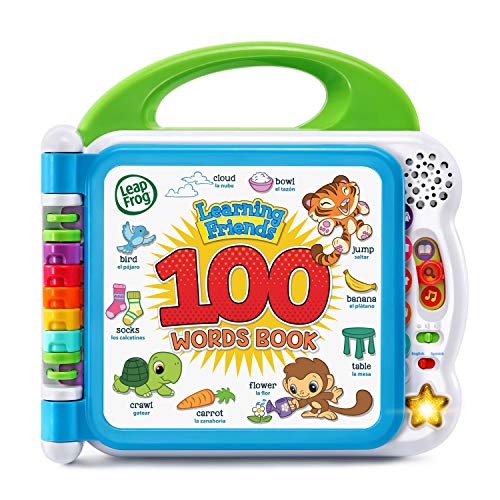
The LeapFrog 100 Words Book introduces more than 100 age-appropriate words through interactive pages featuring learning friends Turtle, Tiger, and Monkey. Each page invites touch-to-play interactions, triggering words, sound effects, and the Learning Friends theme song. The book covers categories like pets, colors, foods, and activities, supporting vocabulary growth, memory, and early literacy. It’s designed for shared reading and independent exploration, with user-friendly responses for young learners.
Kikidex Magnetic Drawing Board

This magnetic drawing board provides a mess-free way for toddlers to doodle and practice basic drawing. With adjustable-height legs and a sturdy build, it supports repeated use without wobble. The board encourages early literacy and numeracy concepts as children experiment with shapes, letters, and numbers while strengthening hand-eye coordination and fine motor skills. It’s a practical, budget-friendly option for ongoing creative play and learning.
POTATO HEAD Family Set

The Potato Head Family Set provides 44 parts to mix and match, enabling imaginative play and family storytelling. Kids can create multiple family configurations, combining parents and a child or other combinations to spark pretend role-play. The set promotes fine motor skills through manipulation of small pieces, plus social and language development as children describe characters and scenarios during play.
Teriph LCD Writing Tablet

The Teriph LCD Writing Tablet offers a no-mess drawing experience with a pressure-sensitive LCD screen. Kids can doodle, write, and erase with one button, which is useful for practicing letters, shapes, and early math concepts. The device is designed with eye-friendly, no-backlight technology and non-toxic materials, pairing safety with creativity. Its portable 8.5-inch size makes it easy to take on trips or store when not in use.
Melissa & Doug Take-Along Wooden Barn

This portable wooden barn toy set includes 11 pieces with farm animals, a tractor, and a farmer. The built-in handle and flip-up roof design make it easy to carry for on-the-go play. The set supports sorting, stacking, and pretend play, aligning with Montessori-inspired activities that help children recognize animal names, shapes, and problem-solving sequences. It’s well-suited for family storytelling and cooperative play.
Buying Guide
Key purchase considerations for toy selections aimed at 2-year-olds include safety, age-appropriateness, and developmental value. Look for toys labeled for ages 1-3 with sturdy materials, rounded edges, and non-toxic finishes. Consider how a toy supports gross motor skills (pushing, balancing, climbing), fine motor skills (grasping, turning, scribbling), language development (naming objects, storytelling), and cognitive skills (cause-and-effect, problem-solving).
Balance between screen-free play and interactive learning can guide choices. Items like magnetic drawing boards, wooden barns, and push-toy cars offer hands-on experiences, while talking flash cards and read-aloud books support vocabulary. Durability matters at this stage; toys should withstand rough handling and frequent repositioning. Portability and storage features are helpful for families on the move, as seen with take-along barn sets and compact tablets.
Caregivers should assess space and safety in the home environment. Indoor living spaces may benefit from balance bikes with soft, floor-friendly wheels or compact ride-on options. Outdoor play should prioritize weather-resistant construction and stability on uneven ground. For language development, pairing visual illustrations with sounds—via flash cards or interactive books—can reinforce learning through multi-sensory engagement.
Multisensory play plans can maximize developmental gains. Rotate toys to maintain interest and structure playtime around predictable routines to build confidence and autonomy. When selecting from the list above, consider the child’s current interests—construction, animals, vehicles, or drawing—and choose complementary options to broaden experiences without overwhelming a toddler.