Best Space Toys for 8-Year-Olds to Inspire Exploration
Parents and educators seek engaging space-themed toys that blend learning with play. This guide highlights five highly relevant picks that support curiosity about astronomy, engineering, and space exploration for 8-year-olds. Each product offers hands-on activities, age-appropriate challenges, and vivid visuals to spark creativity without a screen. Read on to compare features and find the ideal space toy for a curious young explorer.
| Product | Brand | Main Appeal | Approximate Use |
|---|---|---|---|
| NASA Lunar Telescope for Kids | Blue Marble | Hands-on stargazing and lunar detail | Beginner astronomy |
| Infinity Cube Fidget Toy | Luaxkpi | Portable, tactile brain teasers | Travel or classroom |
| LEGO Creator 3-in-1 Space Robot | LEGO | Creative building with multiple models | Imaginative play |
| COBFDHA STEM Robot Kit | COBFDHA | Hands-on robotics and solar power | STEM exploration |
| iPlay, iLearn Rocket Set | iPlay, iLearn | Assembly and interactive features | Engineering play |
NASA Lunar Telescope For Kids
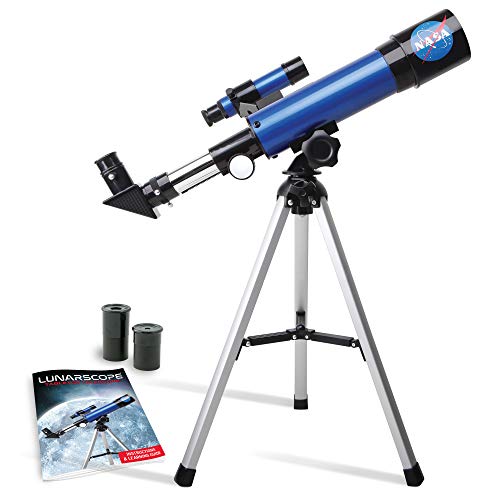
The NASA Lunar Telescope for Kids by Blue Marble introduces young stargazers to real lunar viewing. With 90x magnification, the instrument includes two eyepieces, a finder scope, and a tabletop tripod, helping beginners locate lunar features and then zoom in for closer inspection. The design emphasizes stability and ease of use, allowing children to explore the Moon’s texture, craters, and maria from a safe, kid-friendly setup. This toy supports early science skills like observation, measurement, and communication through simple, guided sessions.
Key features align with typical early astronomy goals: clear optics, a basic mount system for smooth movement, and a compact footprint suitable for desks, shelves, or a small learning nook. As a gateway into space science, it encourages questions about orbital paths, lunar phases, and how light reveals detail on celestial bodies. It’s well-suited for classroom demonstrations at home, science fairs, or weekend astronomy sessions.
For caregivers, this telescope offers an approachable entry point into space exploration, with a focus on safe assembly and straightforward operation. It is designed to captivate without overwhelming, making it an appealing gift for aspiring astronomers who are just beginning to explore the night sky.
Infinity Cube Fidget Toy

The Luaxkpi Infinity Cube is a 2-in-1 fidget toy designed for boys and girls ages 8-12. This compact gadget folds between cube, rectangle, and star shapes, offering endless shape-shifting play. The toy can help improve focus and fine motor skills while reducing screen time. Its tactile appeal and portable size make it suitable for car rides, classroom breaks, or quiet time at home. The postures and transitions encourage spatial thinking as children visualize how to transform one form into another.
Educationally, the Infinity Cube can support attention, problem-solving, and creativity. It serves as a sensory tool that pairs well with story-driven space play or as a standalone brain-teaser. Because it’s travel-friendly, it also doubles as an everyday toy that keeps curious hands occupied during family trips or waiting periods.
Designed for durability, the cube’s bright colors and simple mechanisms invite experimentation. Parents can set light challenges, such as completing a sequence of shapes or timing how quickly a child can transform modes, to add a motivation layer without introducing competition.
LEGO Creator 3-in-1 Space Robot

The LEGO Creator 3-in-1 Space Robot set provides versatile building play with three distinct models: a space robot, a space dog, and a space rocket. This 8-year-old-friendly kit uses common bricks to encourage reassembly, fostering engineering thinking and spatial planning. Children can explore cause-and-effect as they switch between configurations, testing balance, gear interaction, and poseability. The set includes posable limbs and rotating heads to simulate action scenes and exploratory missions in space.
Educational benefits include fine motor development, planning, and creative storytelling. By rebuilding models, kids practice sequencing, trial-and-error problem solving, and design thinking. It also aligns well with language skills as children describe their builds, narrate missions, and share ideas with peers or family members. The open-ended nature supports extended play beyond a single mission, encouraging ongoing curiosity about space habitats and technologies.
COBFDHA STEM Space Robots Kit
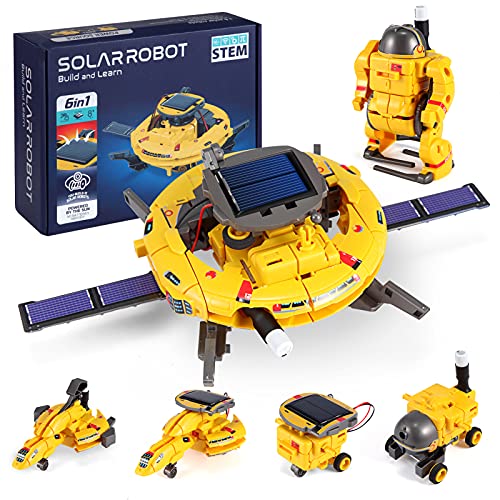
The COBFDHA STEM Projects kit offers a robust introduction to robotics and solar energy. With six different building robots, children can explore locomotion on land and experiment with solar-powered and battery-driven modes. The kit provides hands-on design challenges that promote curiosity about energy sources, circuitry, and mechanics. It’s a practical bridge between science concepts and tangible construction, ideal for independent play or guided classroom-style activities at home or in clubs.
Educational outcomes include improved manual dexterity, problem-solving, and logical thinking. The solar power element adds real-world context about sustainable energy, while battery-driven modes enable reliable indoor play. The kits support collaborative learning when kids work in pairs or small groups to brainstorm improvements, test ideas, and compare outcomes. The varied robots keep sessions fresh, reducing the chance of boredom while reinforcing STEM fundamentals.
Glow in The Dark Galaxy Space Blanket

The Boulou Glow in The Dark Galaxy Space Blanket combines cozy comfort with space-themed decor. Made from soft polyester fleece, this blanket features a glow-in-the-dark universe pattern suitable for kids and adults who enjoy starry visuals. It serves as a decorative bedtime accessory that can double as a space-themed costume prop or a portable play mat for quiet-time storytelling. The blanket’s warmth and softness make it a practical gift for birthday parties, sleepovers, or holiday occasions.
From a learning perspective, such blankets can inspire discussions about constellations, planets, and space travel during routine bedtime routines. The glow-in-the-dark feature provides a visual anchor that can prompt questions about light, color, and the night sky. Durability and washing considerations are important for ongoing use, but the blanket’s size and comfortable texture appeal to a broad age range, making it a versatile addition to a space-loving child’s collection.
iPlay, iLearn Rocket Set

The iPlay, iLearn Rocket Set offers an interactive space exploration experience with a space shuttle, an electric drill, two astronauts, and accompanying assembly instructions. This STEM-focused kit encourages kids to assemble a rocket, learning in a hands-on manner while developing fine motor skills and basic engineering concepts. The set’s lights and sounds enhance immersion, making the play more engaging as children simulate space missions and perform step-by-step assembly tasks.
Educational merit includes comprehension of mechanical components, sequential thinking, and creative storytelling as children role-play missions. The toy supports constructive play that blends science with imaginative exploration, helping children understand launch sequences, modular construction, and how different parts contribute to a functioning spacecraft. It’s well-suited for hands-on learning at home or school and pairs nicely with classroom-style demonstrations or space-themed storytelling sessions.
Buying Guide: Key Purchase Considerations
- Age appropriateness: Ensure each toy aligns with an 8-year-old’s developmental level, including safety and complexity.
- Educational objectives: Look for toys that reinforce science, tech, engineering, and math concepts through hands-on play.
- Open-ended vs. guided play: Choose a mix of toys that encourage exploration (open-ended) and structured activities (guided) to balance curiosity and skill-building.
- Durability and safety: Prioritize sturdy materials and non-toxic components, especially for small parts and children who explore with hands-on intensity.
- Screen-free engagement: Consider how the toy reduces screen time while promoting critical thinking and creativity.
- Portability and space: Assess the available play area; compact items are ideal for desks, shelves, car trips, and classroom corners.
- Expansion potential: Some sets offer multiple configurations or future add-ons, enabling longer-lasting play value.
- Learning outcomes: Look for toys that encourage observation, measurement, hypothesis testing, and problem-solving to support science literacy.
In choosing space-themed toys for 8-year-olds, consider how each item complements a learning plan. A telescope introduces real-world observation, LEGO and robot kits develop design thinking, and sensory or themed blankets add context for imaginative storytelling. The best selections balance immediate engagement with opportunities for extended exploration, helping to cultivate a lifelong interest in space and science.