Best Smart Toys for Toddlers to Learn and Play
Smart toys for toddlers blend learning with interactive play, helping little ones develop language, numbers, colors, and fine motor skills. This guide highlights five engaging options that combine educational content with hands-on fun, keeping toddlers engaged while parents observe progress. Each product below links to its Amazon listing, includes an image, and summarizes key features to help you compare at a glance.
| Product | Brand | Key Benefit |
|---|---|---|
| Airbition Talking Flash Cards for Toddlers | Airbition | Vocabulary boost and sensory cues |
| LeapFrog Learning Friends 100 Words Book | LeapFrog | Over 100 words with interactive sounds |
| LeapFrog 2-in-1 LeapTop Touch | LeapFrog | Role-play laptop and tablet modes for early literacy |
| Fisher-Price Baby to Toddler Laugh & Learn Smartwatch | Fisher-Price | Imaginative pretend play with lights and music |
| Fisher-Price Laugh & Learn Smart Stages Tablet | Fisher-Price | Interactive tablet with songs and activities |
Airbition Talking Flash Cards For Toddlers

This Montessori-inspired device features 224 colorful illustrations and sounds, covering animals, vehicles, foods, and more. It supports vocabulary expansion and cognitive development while playing. The system is designed to assist communication and interaction, with a standard American accent voice and an adjustable volume option. A repeat feature helps reinforce learning, and the device is easy to operate for young children.
LeapFrog Learning Friends 100 Words Book
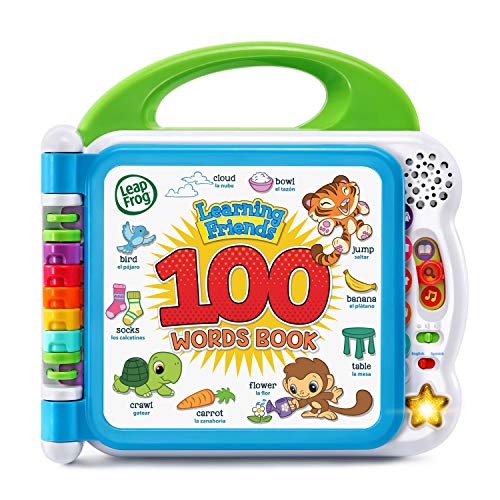
This interactive book introduces more than 100 words with learning friends Turtle, Tiger, and Monkey. Topics cover pets, animals, food, colors, activities, opposites, and more. Children touch words on the pages to trigger sounds, music, and fun facts. A light-up star button plays the Learning Friends theme and helps kids engage with new vocabulary in a playful format.
LeapFrog 2-in-1 LeapTop Touch

This versatile learning laptop converts into a tablet for varied play. The keyboard shows A-Z letters with numbers 1-10, and you can switch to touch tablet mode for interactive activities. Kids can imagine real-world scenarios, such as emailing or creating practice spells with your child’s name, while parents can customize experiences to reinforce spelling and literacy skills.
PEBIRA Montessori Toys Sorting & Stacking

This wooden sorting set includes 20 pieces in five colors and five geometric shapes, designed to build color recognition, shape differentiation, and early math concepts. It emphasizes hand-eye coordination and spatial awareness with smooth-edged pieces suitable for travel. The bright colors and varied shapes make it a strong option for toddlers exploring order, color, and size.
JOYIN Monster Truck Toy

Note: This listing offers a three-pack of motion-activated, light-up monster trucks. Each vehicle includes LED wheel lights and a “Press & Go” feature for quick, engaging play. While primarily a toy, its bright, interactive design aligns with the smart-toy category by promoting cause-and-effect understanding and fine motor actions through simple, responsive play.
Buying Guide
Key considerations when selecting smart toys for toddlers include educational value, age appropriateness, durability, and safety. Look for toys with clear learning goals, such as vocabulary expansion, early math concepts, or language development, and ensure they match your child’s current skill level. Durability matters for ongoing, hands-on exploration; choose sturdy materials and well-secured components. Safety features to review include non-toxic finishes, rounded edges, and no small parts that could pose choking risks for younger toddlers.
Versatility vs. focused learning: Some toys offer broad entertainment with multiple modes (tablet, smartwatch, interactive book), while others emphasize a single skill (color recognition, storytelling). A mix can be effective: toys that encourage pretend play (smartwatches, laptops) alongside those that teach specific concepts (color sorting, vocabulary cards) create a balanced learning environment.
Engagement and accessibility: Toys should be easy to operate with intuitive controls, engaging visuals, and appropriate audio/visual feedback. Adjustable volumes, simple on/off switches, and clear instructions help caregivers support learning. Consider whether the toy allows solo play or guided activities with a caregiver, as both formats support development in different contexts.
Accessibility and inclusivity: Choose products with inclusive content and adaptive features, such as adjustable audio levels and language options that accommodate diverse households. For children who benefit from multisensory input, devices combining sight, sound, and tactile interaction can be particularly effective.
Budget and longevity: Some smart toys offer long-term value through expanding content, upgradable features, or durable construction that withstands frequent handling. Consider whether you prefer a device with replaceable cards or learning cards to extend its life as your child grows.