Best Sensory Toys for 6 Year Olds: Engage, Focus, and Play
Parents and caregivers seek toys that combine calm, focus, and active engagement. The following selections are designed to help 6-year-olds explore textures, sounds, lights, and motion while supporting fine motor skills, concentration, and stress relief. Each product below is kid-safe, age-appropriate, and chosen for a balance of tactile, visual, and interactive play.
| Product | Brand | Key Benefit |
|---|---|---|
| Flybar My First Foam Pogo Jumper | Flybar | Balance and gross motor skills with a soft, durable design |
| Scientoy Fidget Toy Set | Scientoy | Versatile sensory tools for focus and anxiety relief |
| Squishy Toys Sensory Fidget Pack | LESONG | Multi-sensory squeeze and squeeze-through maze play |
| Lite-Brite Touch | Lite Brite | Light-based art and interactive animation play |
| Montessori Magnetic Wooden Toys | TMGOT | Color matching, fine motor, and problem-solving activities |
Flybar My First Foam Pogo Jumper

The Flybar My First Foam Pogo Jumper is a foam-bodied pogo stick designed for indoor and outdoor use. It features a squeaky sound with each jump and supports active play while helping kids develop balance, coordination, and gross motor skills. Suitable for ages 3 and up, its durable foam construction aims to withstand frequent use and rough handling.
Scientoy Fidget Toy Set
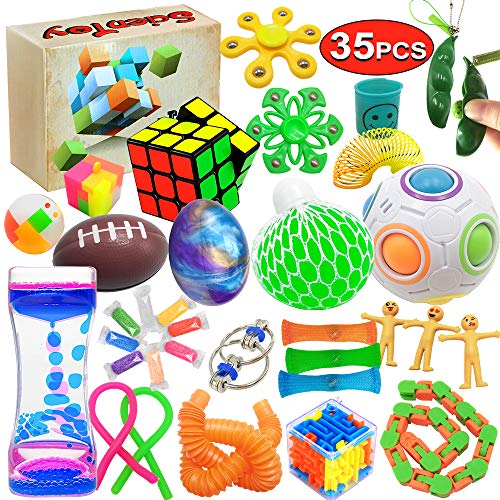
The Scientoy sensory fidget set includes 35 pieces, ranging from liquid motion timers to squeeze balls and mesh marble fidgets. Built with non-toxic ABS and designed to meet safety standards, this kit supports focus, anxiety relief, and calming play for children with sensory needs or high stress. It offers multiple ways to squeeze, twist, and manipulate objects for varied sensory feedback.
Squishy Toys Sensory Fidget Pack

LESONG’s squishy sensory maze toys provide four maze shapes filled with gels and balls. The set emphasizes multi-sensory engagement—tactile squeezing, visual color stimulation, and calming, repetitive motion through navigating the maze. It’s suitable for classrooms or quiet corners at home and can be used to help manage anxiety and improve concentration.
Montessori Magnetic Wooden Toys

These wooden magnetic color-matching puzzles support critical thinking, fine motor skills, and color recognition. With double-sided cards and a magnetic pen, children match pieces to patterns, practicing hand-eye coordination and problem solving. The compact size makes it portable for travel and classroom use, and it is designed to be durable for extended play and repeated use.
Lite-Brite Touch

Lite-Brite Touch offers light-based play and creative expression. The device includes art guides and three game modes, plus animations that illuminate as children build or trace pictures with light. This toy supports visual learning and imaginative play while providing a gentle, engaging sensory experience through color and light.
Buying Guide
When selecting sensory toys for a 6-year-old, consider the following:
- Sensory goals: Determine whether the child benefits more from tactile, visual, or proprioceptive input, or a combination of these.
- Safety and age suitability: Check for non-toxic materials, choking-hazard considerations, and age-appropriate design to prevent frustration or injury.
- Motor skills and cognitive load: Choose toys that challenge fine motor skills without causing excessive frustration, supporting gradual progression in skills.
- Durability and upkeep: Look for well-constructed products that withstand repeated use, cleaning, and handling by active kids.
- Portability and space: Consider whether the child will use the toy at home, school, or on the go; select portable options if travel is common.
- Multi-sensory variety: A mix of tactile, visual, and auditory or kinesthetic elements can support broader development and engagement.
- Safety standards: Favor toys meeting ASTM or equivalent safety standards for peace of mind in shared environments.
Buying the right mix of sensory tools can support attention, emotional regulation, and hands-on exploration. For shared spaces, rotate items to keep novelty high and prevent overstimulation. Always supervise younger children with small parts and align selections with the child’s individual needs and preferences.