Best Scooter and Balance Bikes for Kids: Top Picks
Choosing the right ride-on toy for kids blends safety, fun, and developmental benefits. The following curated selections cover balance bikes, three-wheel scooters, and electric ride-ons that encourage balance, coordination, and active play. Each product is evaluated on design, durability, and ease of use for children aged roughly 2–14 years old. The summary table below highlights key details for quick comparison.
| Product | Type | Age Range | Key Benefit |
|---|---|---|---|
| Bobike Toddler Balance Bike | Balance Bike | 2–5 | Builds balance and early riding skills |
| EzyRoller Classic Ride-On | Three-Wheel Scooter | 4+ | Coordinated motion with leg pushes |
| HEIMILI Kids Electric Motorcycle | Electric Ride-On | 3–6 | Three-wheel stability with music features |
| SereneLife 3 Wheel Scooter | 3-Wheel Scooter | 18 months–7 years | Seated and standing modes with LED wheels |
| JOYSTAR Kick Scooter | Kick Scooter | 5–9 | Large wheels, height-adjustable handlebars |
Bobike Toddler Balance Bike For 2–5 Year Olds

The Bobike toddler balance bike is designed for early balance training and walking confidence. The two-wheeled design mirrors bicycle motion while minimizing pedaling. Suitable for ages 2 to 5, it emphasizes balance before introducing pedals, helping kids transition to a traditional bike more smoothly.
Construction relies on a sturdy carbon steel frame that can endure typical childhood use. An adjustable seat and handlebar extend the bike’s usefulness as your child grows, reducing the need for frequent replacements. Assembly is straightforward and quick, with minimal tools required.
Beyond basic balance, the bike encourages independent maneuvering and confidence on two wheels. Its compact size makes it ideal for indoor practice or yard play, while the bright green finish appeals to young riders and parents seeking durable gear.
EzyRoller Classic Ride-On Scooter

The EzyRoller Classic Ride-On Scooter offers a unique snake-like propulsion. Kids sit low to the ground and push a foot bar back and forth to generate motion. This design encourages leg coordination and core engagement while providing a fun, fluid riding experience that can feel different from a standard scooter.
Extendable design grows with your child, from younger riders to older kids. The lightweight build allows easy transport and indoor or outdoor use. Its non-marking wheels help prevent scuffs on floors or polished surfaces, making it suitable for homes and playrooms with varied flooring.
Carving through turns relies on coordinated pedal-like movements, which can enhance motor planning and balance. It’s a strong option for families seeking a non-traditional scooter that still emphasizes active play and exercise.
HEIMILI Kids Electric Motorcycle, 3-Wheel 12V
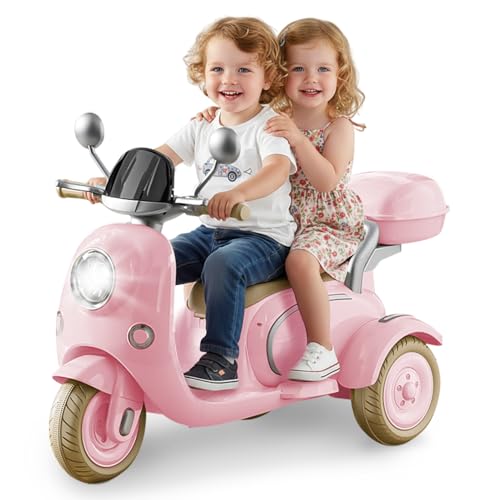
The HEIMILI three-wheel electric motorcycle offers a stable ride with a 12V system designed for young riders. The three-wheel configuration helps with balance, and the vehicle includes storage compartments for toys or small treasures, which adds a practical element to playtime.
Features include an MP3/Bluetooth connection to play music, enhancing the riding experience and keeping kids engaged. Installation is straightforward—just secure the three wheels and connect the power unit. The design prioritizes stability, with an emphasis on safe operation for younger riders.
Three speed settings provide scalable fun and control as a rider’s confidence grows. Parental supervision is advised, and safety gear is recommended to accompany motorized play.
SereneLife 3 Wheel Scooter With Foldable Seat

This SereneLife 3 Wheel Scooter is designed for versatile use, adapting between a seated toddler scooter and a stand-up ride for older kids. The foldable seat works for younger children, while the standing mode accommodates more confident riders up to 110 lbs. LED wheels add visual appeal for kids and parents alike.
Lean-to-steer technology helps with intuitive turning, and the adjustable T-bar extends from about 24.4″ to 28.34″ to fit growing children. A wide, anti-slip deck enhances safety and balance, while the rear foot brake supports controlled stops, making it a practical choice for families seeking long-term use.
JOYSTAR Kick Scooter With Big Wheels

The JOYSTAR Kick Scooter is designed with older kids in mind, offering a larger wheel set and adjustable handlebars. It’s a fit for ages 5–9 and supports riders up to 220 pounds, making it versatile for pre-teens as well. The design emphasizes a high balance point and stability for confident cruising to school or neighborhood trips.
Safety is reinforced by a wide, non-slip deck and a dependable rear drum brake. The scooter’s build supports longer ride times, with the ability to adjust height as children grow, ensuring continued usability and reducing the need for multiple purchases.
Lil’ Rider Wiggle Car Ride-On

The Wiggle Car is a no-pedals ride-on toy that uses twisting motion to propel itself. Its simple operation supports early motor skill development—gross motor control, balance, and steering—while providing an engaging undefined play surface that can be used indoors or outdoors on flat surfaces.
Lightweight and easy to maneuver, the Wiggle Car encourages independent play and active movement. Parents can expect quiet operation and minimal maintenance, making it suitable for everyday use without complex setup or parts.
Gotrax KS1 Kids Kick Scooter

The Gotrax KS1 offers glowing LED wheels and three adjustable handlebar heights, making it adaptable for growing kids. It uses Lean-to-Steer technology to help kids learn balance and control, while the three wheels provide stability for younger learners. The ability to disassemble the stem quickly is a practical feature for travel and storage.
With a light overall weight and a compact form, this scooter is well-suited for kids who want a dynamic and visually engaging ride. The adjustable heights ensure continued usability as children mature and their riding preferences evolve.
Okay Run Kids 24V Electric Motorcycle

The Okay Run two-wheel electric motorcycle targets older children (8–14) with a 24V system and multiple speed settings. It’s designed to build strength, balance, and coordination through powered, engaging play. The design prioritizes safety with a sturdy frame and wide tires for stability, while soft-start technology reduces abrupt acceleration.
Product dimensions provide a sizable ride footprint, and a clear emphasis on safe operation includes helmet use and adult supervision as required. This ride-on option adds a motorized element that can captivate children who crave more dynamic movement and longer play sessions.
Buying Guide: Key Purchase Considerations
- Age and skill level: Match the product to your child’s age range and current motor development. Balance bikes work well for 2–5-year-olds, while older kids may benefit from larger kick scooters or light electric options.
- Stability vs. challenge: Three-wheel designs emphasize stability, while two-wheel balance bikes encourage early balance training. Consider your child’s confidence level and safe-use environment.
- Adjustability and growth: Look for adjustable seats, handlebars, and stems. Items with adjustable features extend usability as your child grows.
- Safety features: Anti-slip decks, protective brakes, sturdy frames, and age-appropriate speed controls are essential. Parental supervision is advised for motorized options.
- Portability and storage: Removable or foldable parts aid in travel and storage, especially for households with limited space.
- Indoor vs. outdoor use: Some models are designed with non-marking wheels for indoor use, while others are optimized for outdoor surfaces and rougher terrain.
- Durability and materials: Steel frames tend to offer strength, while lightweight plastics help with ease of use. Consider the typical wear and tear your child will impose.
- Maintenance: Check tool-free assembly, simple wheel or brake adjustments, and availability of replacement parts if needed.
- Engagement features: For electric models, consider battery life, safety certifications, audio features, and ease of learning control for first-time riders.
- Budget and longevity: Higher upfront costs often deliver longer-term usability through multiple growth stages; balance price with expected lifespan.