Best Science Kits for 10-Year-Old Explorers: 5 Hands-on STEM Sets
Discover engaging science kits that spark curiosity and build real-world skills for 10-year-olds. The following selections offer a mix of biology, chemistry, physics, and engineering projects designed to entertain while educating. Each kit is chosen for hands-on experimentation, clear instructions, and age-appropriate challenges that align with middle-grade science interests.
| Product | Brand |
|---|---|
| National Geographic Gross Science Kit – 45 Gross Science Experiments | Blue Marble |
| NATIONAL GEOGRAPHIC Science Magic Kit – 100+ Experiments | Blue Marble |
| Thames & Kosmos Mega Cyborg Hand STEM Kit | Thames & Kosmos |
| Doctor Jupiter Ultimate Science Kit | Doctor Jupiter |
| National Geographic Amazing Chemistry Set | Blue Marble |
The following five kits have been selected for their broad appeal, clear learning paths, and a balance of experiments that cover chemistry, physics, and engineering concepts suited to a 10-year-old’s growing curiosity.
National Geographic Gross Science Kit

This kit emphasizes gross-out science to engage reluctant learners and curious minds alike. It includes 45 gross-out experiments, such as making slime and other gooey demonstrations, plus a bonus booklet with 30 additional household-item experiments. Instructions are kid-friendly with illustrations to guide each step, helping young scientists gain confidence while learning core scientific concepts like states of matter, chemical reactions, and measurement accuracy. The set is designed to be educational, entertaining, and accessible for hands-on exploration at home or in the classroom.
NATIONAL GEOGRAPHIC Science Magic Kit

Bridging science and wonder, this kit offers 100+ science experiments paired with magic tricks. Kids can bend metal with water, create vanishing effects, and float coins, all while learning the science behind these tricks. The included wand and gloves make performances more engaging, and the experiments come with complete materials to perform 20 magic tricks, encouraging kids to demonstrate, explain, and repeat the demonstrations to peers and family. It’s a great option for kids who enjoy stagecraft and curiosity about physical science and chemistry principles.
Thames & Kosmos Mega Cyborg Hand STEM Kit

This ambitious kit lets kids build a bigger, working hydraulic hand controlled by the user’s fingers. No motors or batteries are required; the mechanism relies on compressed air and water power to open and close fingers, with adjustable joints for precision. It’s an excellent entry into pneumatics, engineering design, and problem-solving, providing hands-on insight into how force transfer and leverage work in real-world tools and devices. The project scales with the child’s curiosity as they modify joints and grip capabilities.
Doctor Jupiter Ultimate Science Kit

With over 135 experiments, this kit offers a comprehensive, STEM-focused experience. Activities range from color changes and glowing liquids to underwater volcanoes, crystal growth, and potions. The kit emphasizes hands-on exploration and elephant-level planning that supports scientific thinking, hypothesis testing, and data recording. Clear, kid-friendly instructions help young scientists navigate diverse topics, while the breadth of activities keeps learners engaged over multiple play sessions, making it a strong long-term educational tool.
National Geographic Magic Chemistry Set
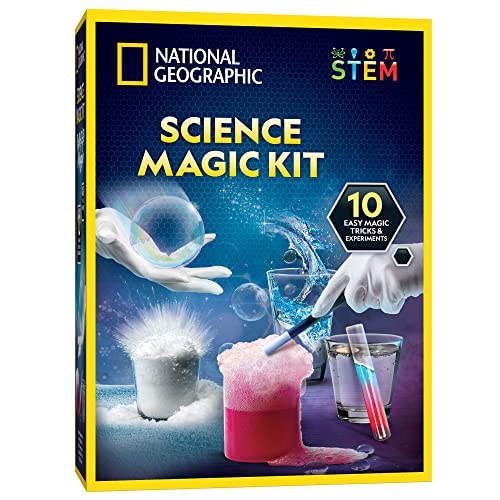
This chemistry-focused kit blends science with spectacular demonstrations. It includes 10 magical science tricks and a well-structured experiment guide that shows the science behind the magic. Children learn chemistry fundamentals, such as color changes, precipitation, and reaction rates, through entertaining effects that also build a foundation for critical thinking and scientific explanation. The combination of visual appeal and hands-on activities makes it a strong pick for curious minds and budding chemists.
National Geographic Amazing Chemistry Set

This chemistry kit offers a broad range of experiments—more than 45—covering crystal growth, color-changing solutions, glowing tests, and more. It includes a bonus guide with 30 additional activities using household items, expanding opportunities for at-home science play. With illustrated instructions and kid-friendly explanations, the set supports independence and confidence as children investigate chemical reactions, mixtures, and measurement practices in a safe, engaging way.
Buying Guide
- Age-appropriateness: Look for kits labeled for ages 8–12 or 9–14 to ensure activities match cognitive and motor skills without becoming overwhelming.
- Experiment variety: A broad range—from chemistry and physics to biology and engineering—keeps interest high and builds a well-rounded science foundation.
- Instructions and safety: Clear, illustrated, step-by-step guides reduce frustration and improve safety, especially with chemistry sets and loose materials.
- Materials quality and inclusions: Some kits offer all essential components; others require household items. Prefer kits that minimize sharp parts or hazardous materials for younger kids.
- Learning outcomes: Choose kits that explicitly connect activities to scientific concepts (e.g., states of matter, chemical reactions, pneumatics) to reinforce classroom learning.
- Project flexibility: Kits that allow modifications or multiple experiments per component help extend playtime and deepen understanding.
- Storage and organization: Consider kits with resealable containers or organizers to keep parts together and promote responsible reuse.
- Value and longevity: High-content kits with 100+ experiments or multiple project types tend to offer longer-term engagement and educational return on investment.
- Gender-neutral design: Many science kits are suitable for all kids; look for options that emphasize curiosity and problem-solving rather than gendered themes.
- Parental involvement: Some experiments benefit from adult supervision or assistance. If your child enjoys guided projects, select kits offering structured support.
When selecting a science kit for a 10-year-old, consider the child’s interests, whether they prefer hands-on building, magical demonstrations, or chemistry-based experiments. A balanced choice that combines clear instructions with compelling, age-appropriate challenges can foster science literacy, critical thinking, and long-term curiosity.