Best RC Gliders for Beginners: Easy-to-Fly Options for New Pilots
RC gliders and mini planes make great entry points for new pilots. This guide highlights beginner-friendly models with stable flight characteristics, durable construction, and helpful features like gyro stabilization and multiple flight modes. Each entry includes essential specs and a quick comparison to help you choose the right starter plane for learning and fun.
| Product | Aircraft Type | Flight Modes | Key Benefit |
|---|---|---|---|
| VOLANTEXRC New Version RC Plane | 4-Channel RC Plane | 3 flight modes | Stable, beginner-friendly control with stunts option |
| TOIBUS RC Plane | 2-CH RC Plane / Glider | Two takeoff modes | Lightweight build with easy handling and LED visibility |
| VOLANTEXRC RC Glider Plane 4CH | 4-Channel Glider | 3 flight modes | Balanced for beginners with gyro stabilization |
| MATHSLICE RC Airplane | 2-Channel RTF | 2 channels | Simple, lightweight for effortless learning |
| DEERC RC Plane | 2-Channel Glider | 2.4 GHz control | Durable and stable for new flyers |
Choosing the right beginner-friendly RC plane involves balance between stability, ease of control, and resilience to bumps. The models below were selected for straightforward handling, reliable gyro or stabilizing systems, and flight-mode options that grow with your skill level. Each entry includes a concise overview of what makes it suitable for newcomers and how it supports progressive learning.
VOLANTEXRC New Version RC Plane

The Ranger600 RC glider offers a four-channel remote to manage ascent, descent, turns, and aerobatics. A foam construction provides a durable yet lightweight airframe, with a propeller protection system that reduces impact damage. It includes three flight modes designed to accommodate beginners through professionals, helping learners advance with confidence as they practice controls and maneuvers.
TOIBUS RC Plane
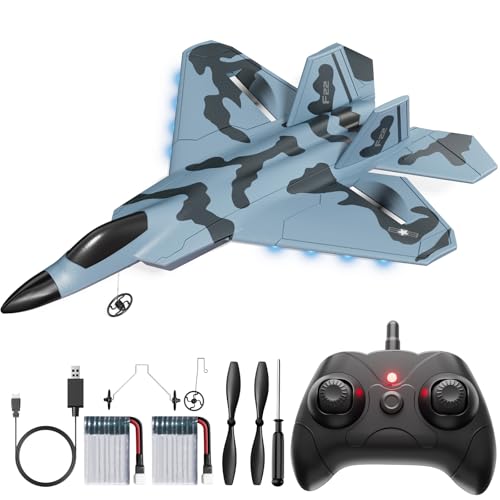
The TOIBUS F-22 style RC plane is designed for kids and beginners, featuring two-channel operation and 2.4 GHz control. It is constructed from lightweight EPP foam and includes bright LED lights for nighttime visibility. Two rechargeable batteries extend flight time, offering up to about 30 minutes total depending on operation. A 6-gyro stabilization system aids balance, enhancing stability for new pilots.
VOLANTEXRC RC Glider Plane 4CH
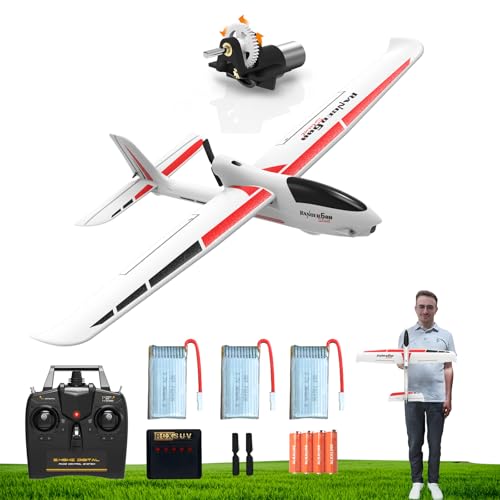
This 4CH glider pairs a gyro stabilizer with three flight modes to support beginners progressing toward more complex flying. The design emphasizes reduced nose resistance, protecting propellers and electronics during takeoffs and landings. With multiple battery options, pilots can extend sessions while gaining confidence in steering, climbs, and controlled descents.
MATHSLICE RC Airplane

Designed for simplicity, this 2-channel RTF model uses light weight and EPP materials to keep handling easy and forgiving. It weighs about 35–38 grams, with flight times typically in the range of 10–20 minutes depending on conditions. The compact size and straightforward controls make it ideal for first flights and short practice sessions.
DEERC RC Plane

The DEERC plane offers a 2.4 GHz radio control system with a 164 ft range and 6-axis gyro stabilization, making it accessible for beginners while providing reliable stability. The airframe uses durable EPP material to absorb impacts during learning flights and rough landings, supporting steady progress as pilots gain confidence and precision in control.
VOLANTEXRC Ranger600 Stunt

Ranger600 Stunt is built for outdoor adventures with an Xpilot stabilizer to maintain stable flight in light wind. It features three flight-control levels to support beginners learning to fly, transitioning from full assist to manual control as skills grow. The 2.4 GHz radio interface delivers a wide control range, enabling learners to practice precise steering and aerobatics as confidence builds.
Buying Guide: Key Purchase Considerations For Beginner RC Gliders
When selecting an RC glider as a beginner, focus on stability, ease of use, and durability. A gyro stabilizer or multi-axis stabilization helps keep the plane steady in gusty conditions and during initial takeoffs. Look for planes with multiple flight modes that scale with your skill, so you can grow from assisted to more independent flight gradually. The construction material matters; foam airframes often strike a good balance between lightness and resilience, helping cushion landings and reduce damage from inevitable bumps.
Power and control range are also important. Beginners benefit from longer flight times with extra batteries or a simple, forgiving propulsion system that provides reliable lift without abrupt thrust. A bright LED lighting system can improve orientation during dusk or indoor flights. If possible, choose a model with ground or hand-launch options to practice different takeoff methods and improve piloting skills in a controlled environment.
Size matters for beginners too. Start with a smaller, more forgiving airframe to minimize risk and maximize confidence. As comfort grows, you can advance to larger models with more advanced control surfaces and aerobatic capabilities. Finally, consider how easy it is to replace parts or find spares. A common foam airframe with readily available spare parts reduces downtime between practice sessions and helps maintain a steady learning curve.
Overall, the best beginner RC gliders combine three elements: stability through stabilization technology, a modular flight mode set that grows with you, and a robust, affordable build that can withstand repeated practice flights. The options above are widely regarded as reliable starter planes with features designed to ease new pilots into the hobby.