Best RC Airplane Kits for Beginners to Start Flying
Getting into RC aviation as a beginner is exciting but can be overwhelming with so many options. This guide highlights accessible, beginner-friendly RC airplane kits that emphasize stability, easy handling, and safety. Each selection features reliable build materials, basic control schemes, and generous flight times to help new pilots build confidence quickly while learning essential maneuvers.
Summary of chosen products
| Product | Brand | Key Benefit | Flight Style |
|---|---|---|---|
| MATHSLICE RC Airplane | MATHSLICE | Lightweight EPP, 2-channel stability for beginners | Casual gliding and gentle training flights |
| VOLANTEXRC New Version RC Plane | rcxsuv | 4-channel control with three flight modes | Progressive aerobatics and learning curve |
| TOIBUS RC Plane | TOIBUS | 2 batteries, auto balance, bright LEDs | Family-friendly night flights and stability |
| Remote Control Airplane (Dosumik) | dosumik | 6-axis gyro, stable hovering, 2.4Ghz | Beginner-friendly hover and loops |
| 4DRC Foam RC Plane | 4DRC | Two takeoff modes, extended flight time | Beginner to intermediate, easy control |
MATHSLICE RC Airplane, Lightweight Beginner Model

The MATHSLICE RC Airplane is a lightweight, two-channel RC aircraft designed for beginners. It uses 2.4GHz radio control and an easy-to-fly gyroscopic stabilization system to help new pilots achieve smooth takeoffs and stable hover. Constructed from durable EPP foam, the plane weighs around 35–38 grams, promoting gentle flight behavior. The kit includes a simple charging cycle, with a typical flight time of 15–20 minutes per charge and an overall flight experience suitable for first-time flyers seeking dependable, straightforward operation. Two extra batteries extend practice sessions and help learners focus on control rather than setup.
Key features include: light weight, EPP material, 2-channel control, 10-minute indoor/outdoor hover play, and 40-minute charging time. This model emphasizes ease of use over advanced aerobatics, making it suitable for beginners focusing on basic pitch, roll, and gentle navigational practice.
VOLANTEXRC New Version RC Plane

The VOLANTEXRC 4-channel RC Plane builds on beginner-friendly foundations with advanced maneuverability for learners ready to progress. The durable foam construction offers resilience during training flights, and a propeller protection system adds safety against impact. With three flight modes, pilots can start in the simplest setting and graduate to more challenging controls as confidence grows. This model is well-suited to hobbyists who want a stable trainer that introduces more complex controls without sacrificing safety or durability.
Notable specifications include a comprehensive accessories kit and a relatively large wingspan that supports stable flight in mild outdoor conditions. The combination of robust design and adjustable flight modes helps beginners master ascent, descent, turns, and controlled aerobatics in a measured progression.
TOIBUS RC Plane With LED Lights
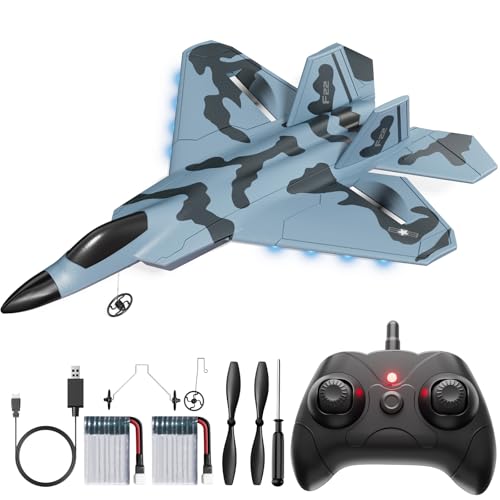
TOIBUS offers a kid- and beginner-friendly F-22 style RC plane that emphasizes stability and prolonged flight time. It includes two rechargeable batteries, enabling extended sessions of up to about 30 minutes of flight time. The 6-gyro stabilization system helps beginners maintain balance during takeoff, hovering, and gentle maneuvers. Ground takeoff and hand-launch options add versatility for training in different environments, while bright LED lights aid visibility for dusk or indoor flights. The aircraft’s light EPP foam construction provides durability against typical beginner crashes.
Key aspects include: dual batteries for longer play, auto balance, LED cues for night flights, and a safe, straightforward control experience suitable for children and adults alike seeking a forgiving trainer plane.
Remote Control Airplane From Dosumik
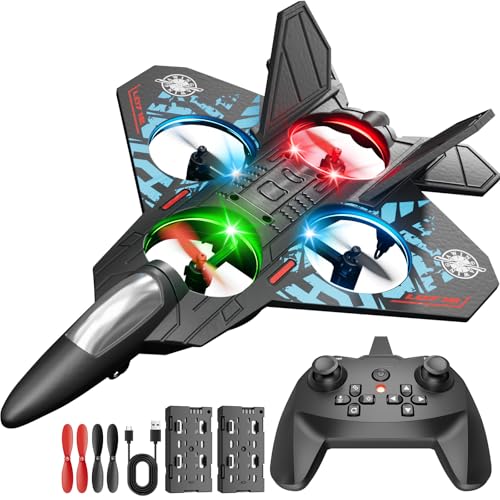
The Dosumik RC Plane emphasizes stable hovering enabled by a 6-axis gyro, making it approachable for beginners who want to achieve level flight quickly. The 2.4GHz remote offers solid anti-interference performance, supporting simultaneous play with others up to a practical 50-meter range. The aircraft supports 360° flips and circle flight, adding a touch of excitement without complex controls. The combination of stable hover and simple one-button stunts makes it a strong option for families and new pilots seeking quick-win confidence while practicing basic aerial maneuvers.
Important points include: robust stability features, a comfortable control range, and a focus on easy-to-learn flight dynamics that help reduce beginner frustration during first flights.
4DRC Foam RC Plane For Beginners

The 4DRC Foam RC Plane is designed for beginners and casual flyers, borrowing inspiration from a well-known military jet silhouette. It includes two takeoff modes—hand-throw and ground launch—and a flight range up to 150 meters, offering a broad practice area for learners. The model ships with two batteries, extending flight sessions to around 30 minutes. Its foam construction provides durability during inevitable beginner crashes, while a smart gyroscope helps keep the fuselage balanced for stable flight. This plane strikes a balance between ease of use and the possibility for more dynamic flight control as skills improve.
Summary of advantages: forgiving foam material, dual takeoff options, extended playtime, and gyro-assisted stability that supports steady flight for newcomers.
Viloga Piper Cub J3 RC Kit

The Viloga Piper Cub J3 is a laser-cut, unassembled wooden kit designed for hobbyists who want a hands-on building experience. The kit uses high-quality balsa wood and plywood, offering a precise fit and light weight. It includes molded components and a comprehensive hardware pack to facilitate realistic assembly, delivering a highly authentic model after completion. This option is suited for experienced beginners who are ready to commit to a build process that enhances scale modeling skills and provides a satisfying, tangible result once the plane is finished and flown.
Key considerations include: choosing between pre-built ease versus a detailed kit build, the need for a suitable workspace, and patience required to complete the model before first flight. It appeals to learners who value authenticity and precision in their RC aviation experience.
Buying Guide
When shopping for beginner-friendly RC airplane kits, consider the following factors to choose a model that matches skill level, environment, and future goals:
- Stability and ease of use: Look for models with gyro stabilization, foam construction, and simple control schemes (2-channel or 3-4-channel with assist modes). These features reduce crash frequency and build confidence quickly.
- Durability and materials: Foam and EPP are forgiving for beginners, while balsa wood kits offer a hands-on building experience but require more careful handling and maintenance.
- Flight time and battery life: Longer flight times minimize downtime between flights and maximize practice. Check battery availability, compatibility, and charging times to plan sessions efficiently.
- Control range and interference: A robust 2.4GHz radio provides reliable connectivity and reduces the chance of control dropouts during practice sessions.
- Takeoff and landing options: Ground launches, hand launches, or auto-balance features help learners choose the best approach for their local environment (indoor gym, backyard, or park).
- Maintenance and spare parts: Availability of replacement parts (propellers, batteries, foams) ensures minimal downtime and a smoother learning curve.
- Expansion potential: Some models offer additional flight modes or upgrade paths (e.g., more channels, aerobatic capabilities) to grow with your skills.
- Skill progression: For beginners, a model with adjustable flight modes or a gradual learning curve helps build competence from basic yaw and pitch to more advanced maneuvers.
- Age suitability and supervision: Choose models appropriate for the user’s age and ensure proper supervision for younger pilots, especially during first flights.
These considerations help balance immediate ease of use with the opportunity to advance toward more complex flying techniques. Always start in a safe, open space away from people and obstacles, and follow manufacturer guidelines for setup, charging, and flight scheduling.