Best Problem-Solving Toys for Toddlers to Build Skills
Parents and caregivers seek engaging, developmentally appropriate toys that cultivate critical thinking, fine motor control, and early math and reading readiness. The following handpicked problem-solving toys for toddlers emphasize hands-on exploration, sensory delight, and Montessori-inspired learning. Each product supports active play, quiet concentration, and screen-free experiential learning suitable for ages 18 months and up. Use the brief product table below as a quick reference as you read through detailed sections.
| Product | Brand | Key Focus | Link |
|---|---|---|---|
| Joyreal Montessori Busy Board Wooden Sensory Toys | Joyreal | Fine motor, sensory, travel-friendly | Amazon |
| TOP BRIGHT Preschool Learning Toys | TOP BRIGHT | Early math, counting, Montessori-inspired | Amazon |
| Learning Resources Spike The Fine Motor Hedgehog | Learning Resources | Fine motor, color & pattern recognition | Amazon |
| Yetonamr Wooden Toddler Puzzles | Yetonamr | Shape recognition, problem-solving, vehicle themes | Amazon |
| HABA Busy Board For Toddlers | HABA | Magnetic maze, travel-activity, fine motor | Amazon |
Joyreal Busy Board Montessori Sensory Toy

The Joyreal Busy Board combines a wooden, child-safe surface with 10 varied switches and 19 LED bulbs that respond to the switches. The setup encourages children to match actions with outcomes, fostering cause-and-effect reasoning and fine motor precision. Designed for toddlers 18 months and older, it also supports tactile exploration and color differentiation through its light-based feedback. While it requires two AAA batteries (not included), the quiet operation makes it suitable for travel and quiet at-home play. This Montessori-inspired toy supports repeated cycles of problem solving as kids discover which switch triggers which light.
TOP BRIGHT Math Manipulatives For Toddlers

TOP BRIGHT’s Preschool Learning Toys present a hands-on approach to early math concepts. The wooden finger board and colorful number blocks enable simple addition and subtraction within 10, helping young learners build number recognition, counting fluency, and a solid math foundation. The design echoes Montessori principles by promoting manipulation and tactile feedback, rather than abstract instruction. Parents and teachers can use this set in homeschooling or preschool settings to introduce counting, ordering, and problem-solving within a low-pressure, joyful context. The blocks are sized for small hands and are durable for classroom or family use.
Learning Resources Spike The Fine Motor Hedgehog
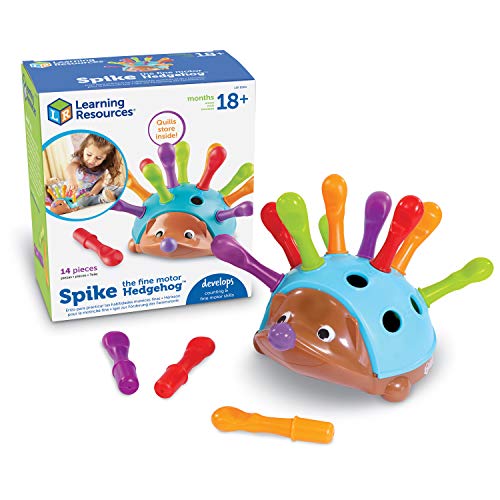
Spike The Fine Motor Hedgehog emphasizes dexterity through engaging, tactile play. Toddlers insert and remove colorful quills, strengthening hand muscles and improving hand-eye coordination. The toy grows with your child from simple fine motor exploration to more complex color matching, counting, and pattern recognition as preschoolers develop. Its safe design features smooth edges and a compelling sensory texture that captivates attention, encouraging focused play for extended periods. This toy is well-suited for quiet, concentrated sessions, classroom centers, or family playtime focused on fine motor mastery.
Yetonamr Wooden Toddler Puzzles

Yetonamr offers chunky, vehicle-themed wooden puzzles designed for ages 1-3. The thick pieces are easy for little hands to grasp, promoting confident manipulation and spatial reasoning. Children match shapes to cutouts, build early problem-solving skills, and begin naming colors and vehicle types. The edges are rounded for safety, and the pieces are durable enough to withstand frequent use. This set provides a practical foundation for problem solving through play, with multiple vehicle designs that keep learning fun and varied.
HABA Busy Board For Toddlers Town Magnetic Maze

HABA’s Busy Board transforms travel time into an interactive, magnetic maze experience. Designed for toddlers aged 3-5, this activity promotes fine motor skills, hand-eye coordination, and problem-solving through guided exploration of magnetic pathways. The maze layout is compact and sturdy, making it ideal for car rides or flights. The magnetic elements encourage experimentation with causes and effects as children maneuver pieces through the maze, reinforcing sequential thinking and spatial awareness while keeping hands busy and minds engaged during long trips or quiet days at home.
Coodoo Upgraded Magnetic Blocks Starter Set

Note: This section features an additional magnet-based option that complements the core five selections with a STEM focus. Coodoo magnetic blocks offer durable construction, compatibility with other brands, and opportunities to explore spatial reasoning, geometry, and collaborative problem solving. While not among the chosen five, this set demonstrates how magnetic play can scale from individual skills to group construction challenges, which is valuable for multi-child play or classroom settings. The design emphasizes safety and modular expansion to support evolving problem-solving abilities.
Magnetic Drawing Board By Daisiki

The magnetic drawing board offers a portable, mess-free space for early doodling and practice with coarse line control. Its anti-lost magnetic pen, assorted stamps, and easy erase feature support iterative attempts at drawing shapes and letters, bridging drawing with early literacy and numeracy concepts. For problem-solving play, kids can plan, draw, erase, and redraw, refining spatial thinking and planning as they experiment with size, shape, and symmetry. The lightweight, compact design ensures it travels well and remains accessible during short trips or in waiting rooms.
Buying Guide: Key Purchase Considerations
- Age appropriateness: Look for toys labeled for 18 months and up to ensure safety, durability, and developmentally suitable challenges. Accessories and small parts should be minimized to reduce choking hazards.
- Skill development focus: Choose toys that align with your child’s current development—fine motor control, hand-eye coordination, shape recognition, early math, or problem-solving strategies.
- Montessori and hands-on elements: Toys that require manipulation, sequencing, and building—rather than passive play—tend to foster deeper cognitive engagement and longer play sessions.
- Portability and travel usability: For families on the go, select compact, quiet, and durable options that won’t disturb travel routines while still offering stimulating challenges.
- Durability and materials: Look for wood, non-toxic finishes, and robust construction that withstands rough handling and frequent use by toddlers.
- Open-ended play: Favor toys that invite multiple solutions and creative exploration, not just one correct answer, to promote divergent thinking.
- Cleanability and safety features: Easy-to-clean surfaces and rounded edges reduce maintenance time and safety risks during play.
- Future-proofing: Some sets scale with age, offering additional pieces or expansions. Consider whether you want to grow a single set over time.
Additional Considerations: How To Use These Toys Effectively
To maximize learning, integrate problem-solving toys into daily routines with short, focused play intervals. Start with guided exploration, demonstrating how actions relate to results, then gradually shift to independent play as your child gains confidence. Pair toys with simple prompts—“Which switch makes the light blink?” or “Can you put the shapes in this tray?”—to encourage verbal labeling and memory recall. Rotate different toys weekly to maintain novelty and prevent overstimulation while reinforcing core skills through varied challenges.
Balanced Approach Across Play Types
Combining tactile, magnetic, and puzzle-based toys offers a well-rounded approach to early cognitive development. Some days may emphasize fine motor precision with busy boards or puzzles; others may focus on spatial reasoning through magnetic play or sequencing with age-appropriate sorting toys. A balanced mix helps children transfer skills across activities, preparing them for more advanced tasks in preschool and beyond.