Best Model Rocket Kits for Beginners: Easy Starts for Young Scientists
Model rocket kits provide a safe, hands-on gateway to basic physics, aerodynamics, and space exploration. Designed for beginners, these sets combine prebuilt or easy-to-assemble parts with launch equipment to deliver quick, rewarding flights. The following selections from Estes cover beginner to intermediate play, with built-in guidance and compatible engines for a smooth learning curve. Each kit emphasizes clear assembly steps, straightforward operation, and reliable launches—perfect for classrooms, outdoor learning, or family science time.
Summary of chosen products:
| Product | Age Range | Key Features | Projected Altitude Range |
|---|---|---|---|
| Estes 1469 Tandem X Launch Set | 10+ | Two rocket options, Porta Pad II, Electron Beam Controller compatibility | Up to 1500 ft (depending on engine) |
| Estes 1441 Journey Launch Set | 10+ | Launch pad, controller, easy assembly, 1100 ft target | Up to 1100 ft |
| Estes 1491 Taser Launch Set | 10+ | Easy-to-assemble, Porta-Pad II, Electron Beam Controller | Up to 1100 ft |
| Estes 2483 Phantom Blue Kit | 10+ | Precolored parts, quick assembly, Porta Pad II compatibility | Up to 1150 ft |
| Estes 2008 Generic E2X Kit | 10+ | Customizable body, ready-to-build, diverse engine compatibility | Up to 1100 ft |
These selections emphasize hands-on building, safe launch gear, and scalable altitude targets so beginners can graduate to more advanced models without leaving the learning curve behind. The variety also supports different interests—from colorful precolored bodies to customizable designs—while keeping safety, assembly time, and educational value in focus.
Estes Tandem X Launch Set: A Dual-Model Beginner Kit

The Tandem X bundle combines two beginner-flying models with a shared launch ecosystem. The 30-inch Amazon model offers a higher altitude potential with the right engine choice, while the 15.6-inch Crossfire ISX provides a more compact, quick-to-assemble option. The kit includes buildable parts, decals, decals, and a Porta Pad II Launch Pad. To operate, you’ll need rocket engines, starers, recovery wadding, and four AA batteries (sold separately). The dual configuration helps new rocketeers compare aerodynamics and stability across different designs, expanding early STEM exploration.
Key considerations for this kit include the balance of complexity and speed to flight. The Amazon model introduces larger scale building and potentially longer flight times, while the Crossfire ISX emphasizes precision and aerodynamic refinement. This combination supports a gentle progression from simple to more involved assembly, ideal for families or classrooms testing different design approaches.
Estes Journey Launch Set: Easy Start to Outer Space

The Journey Launch Set is crafted for new enthusiasts who want a straightforward, rewarding first flight experience. It includes a launch pad, a dependable controller, decals, and a ready-to-build rocket with simple assembly steps. When powered by a C6-7 engine, the Journey can soar toward 1,100 feet, making it exciting without overwhelming beginners. Compatibility with other engine types expands future options as skills grow. The kit’s clear instructions and durable parts support a focused, safe introduction to rocketry principles.
Educational value arises from timing your launches, observing ascent and descent, and documenting flight performance. Students can explore acceleration, gravity, and air resistance with minimal setup changes. The Journey’s balance of accessibility and capability makes it well-suited for instruction time or weekend projects with family involvement.
Estes Taser Launch Set: Quick Build, Real Flight
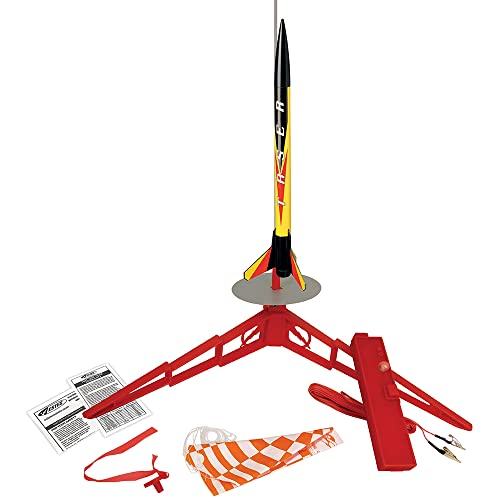
The 1491 Taser emphasizes easy assembly and rapid flight readiness, ideal for newcomers who want to see results quickly. It includes a Porta-Pad II Launch Pad, Electron Beam Controller, and a 15-inch recovery parachute. With optimal engines (sold separately) such as the C6-7, flights can reach up to 1,100 feet. The three-fin design adds stable flight characteristics, while the E2X branding suggests a focus on ready-to-build simplicity with room for experimentation as confidence grows.
Educational opportunities include comparing different fin configurations, testing stability across engine types, and evaluating how recovery systems affect flight recovery. For instructors, the Taser offers a predictable, repeatable platform suitable for demonstrations and structured labs on impulse, thrust, and drag.
Estes Phantom Blue Kit: Quick Build, Big Potential

The Phantom Blue kit is designed for fast assembly and an impactful launch. It features precolored parts and decals for a polished look, with a 19.4-inch height that supports impressive altitude with the right engine. The kit supports a broad engine range, including A8-3, B4-4, and C6-5, enabling progression as skills advance. A Porta Pad II Launch Pad and Electron Beam Controller are compatible options for a streamlined launch setup, though batteries and other launch components are sold separately.
From a learning perspective, students can explore surface design, aerodynamics of larger fins, and how propellant choice influences ascent. The Phantom Blue serves well in classrooms seeking a balance of aesthetics, ease, and educational value, ensuring steady, repeatable flights for practice sessions and skill-building exercises.
Estes Generic E2X Kit: Customizable, Beginner-Friendly

The 2008 Generic E2X kit offers a highly customizable platform for beginners who want to add personal touches. This kit includes rocket parts, decals, a recovery parachute, and clear instructions, with engine compatibility that supports a range of common Estes engines. It soars up to about 1,100 feet with a C6-7 engine. The kit’s open-ended design invites experimentation—perfect for students who want to design their own look and test small aerodynamic adjustments in a controlled environment.
Educators and learners can use the Generic E2X as a starting point for projects on model rocket design, design iteration, and the impact of weight distribution on stability. Pairing this kit with a Porta Pad II Launch Pad and Electron Beam Launch Controller further enhances hands-on practice and independent exploration.
Estes 2435 3 Bandits Kit: Multiple Mini-Flyers

The 2435 Bandits kit provides three mini-engine-powered rockets, offering a quick, varied flight experience. Each model is designed for straightforward assembly and reliable flight, with decals and parachutes included. Engines sold separately, with compatibility across A10-3T, 1/2A3-4T, or A3-4T options, allows experimentation with different thrust levels. The trio format gives beginners a chance to compare performance and flight timing across multiple shapes within a single project.
Educational value lies in parallel testing and data collection: observe flight times, altitudes, and stability across three configurations. This kit supports collaborative learning, where students can hypothesize which design performs best under specific wind conditions or engine types, then test and record outcomes in a structured format.
Buying Guide: Key Purchase Considerations And Comparisons
When selecting a model rocket kit for beginners, consider the following factors to align with goals, safety, and learning outcomes:
- Ease of assembly: Choose kits labeled as beginner or E2X for a smoother start and faster results, with fewer parts to manage during initial builds.
- Altitude potential: If the aim is quick feedback, select sets with modest altitude targets (roughly 500–1100 ft) and engines suitable for beginners. Advanced kits can offer higher flights as skills grow.
- Launch equipment: Look for bundles that include a launch pad and controller, as this provides a complete experience out of the box and reduces extra purchases.
- Engine compatibility: Most Estes kits use common engine sizes (A, B, C) with a wide ecosystem. Check which engines are sold separately and how easily you can upgrade to more powerful engines later.
- Educational value: Some kits emphasize design customization, decals, or multiple models. These features support STEM learning through experimentation and data collection.
- Safety and supervision: Outdoor use with proper supervision is essential. Ensure space is sufficient and that participants follow safety guidelines for handling propellant devices and launch gear.
- Durability and reusability: Precolored bodies and sturdy components reduce the likelihood of damage during first flights, while reusable launch pads support ongoing experimentation.
- Expansion potential: If you anticipate growing interest, choose kits with additional rockets and compatible launch systems to extend learning over time.
In summary, beginner-friendly Estes sets provide a structured pathway from simple builds to more varied, multi-model flights. The right kit blends clear instructions, reliable flight performance, and opportunities for practical science exploration, making it a strong foundation for STEM learning at home or in the classroom.