Best Mini Robots for Kids: Fun, Safe Learning Robots for Young Minds
Discover the best mini robots for kids that blend interactive play with simple STEM learning. This guide highlights five engaging options that cover remote control, gesture sensing, coding basics, and sensory play. Each picks emphasizes durability, age-appropriate features, and educational value, helping children explore technology through hands-on fun. Whether a beginner toy or a budding coder, these mini robots offer safe, screen-light experiences that foster curiosity and coordination in kids of various ages.
| Product | Brand | Key Feature | Age Range |
|---|---|---|---|
| Hamourd Robot Toys | Hamourd | RC movement, dancing, LED eyes, 2.4 GHz remote | 4+ |
| Limpskys 4Pcs Suction Cup Robot Toy | Limpskys | Sensory pops, attaches to smooth surfaces | 3-7 |
| BAZOLOTA Robot Toys for Kids | BAZOLOTA | Gesture sensing, long-range control, singing/dancing | 3-12 |
| Sphero Mini (Blue) | Sphero | Programmable coding ball with apps and games | 8+ |
| KingsDragon RC Robot Toys | KingsDragon | Gesture and infrared control with programming options | 3-8 |
Hamourd Remote Control Robot Toy
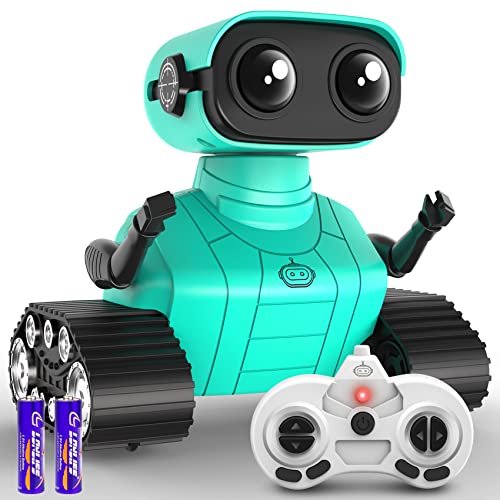
Hamourd’s multifunctional robot blends entertainment with motor skills development. The LED eyes light up, and the robot can blink or close them via the remote control. It features a smart voice function that speaks and sings, with songs switchable through the controller. A built-in tank-style track enables forward, backward, left, and right movement, while the demo mode triggers 360-degree spins and dancing with flexible arms and head motions. The robot is designed in three parts, combining a cute upper unit with a tank-like base for a distinctive look that appeals to kids. The included 2.4 GHz remote is designed for entry-level play, allowing one or more robots to run simultaneously with minimal interference, encouraging cooperative play.
This toy emphasizes safe operation and easy control, making it suitable for younger children while offering enough variety to maintain interest. Parents can use the auto-dance demonstration as a low-effort play option, and the light-up eyes add an engaging visual cue during performances. The combination of sounds, motion, and interactive features supports fine motor skills, sequencing, and cause-and-effect learning in a playful format.
Limpskys Suction Cup Robot Toy (4-Pack)

Limpskys offers a set of suction cup robot toys designed as age-appropriate sensory tools. Each figure uses stretchy tubes to create popping sounds when pulled, twisted, or stretched, providing a satisfying tactile experience. The base suction cups allow attachment to smooth surfaces like mirrors or tiles, encouraging kids to explore angles, perspectives, and spatial relationships. These toys are marketed as autism-friendly sensory options and can be used to support self-regulation through engaging, repetitive motion. The soft wrapping of the tube-end helps ensure safe handling while promoting fine motor development and imaginative play across several age ranges.
With portability and simple manipulation, Limpskys robots support exploratory play in various environments—home, classroom, or car trips. The sensory feedback from popping sounds and the ability to attach to vertical or horizontal surfaces adds a level of physical exploration that complements classroom-based activities and independent play sessions alike.
BAZOLOTA GestureSensing RC Robot
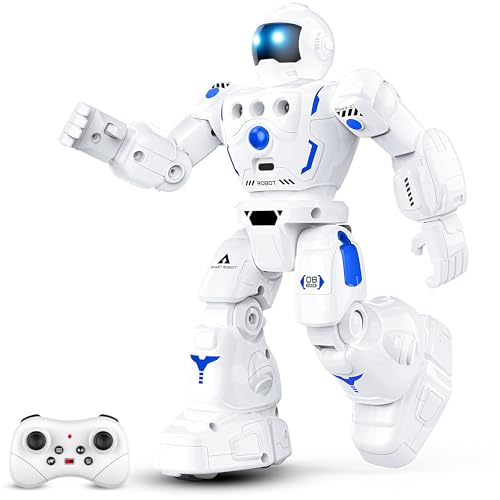
BAZOLOTA presents a programmable kid-friendly robot with gesture-sensing control. Simple hand gestures direct the robot to slide forward, backward, left, or right within a substantial 164-foot range. The robot doubles as a performance partner, capable of singing and dancing when commanded via the remote. It also offers adjustable volume to protect hearing in different environments. This robot suits curious children who want to experiment with remote-controlled motion and basic programming concepts through guided routines and user-generated actions, fostering early STEM confidence.
The device supports learning through observation and repetition—children can practice sequencing steps to create custom routines. The long-range control expands play possibilities outdoors or in larger indoor spaces, while the built-in speaker and gesture commands invite creative storytelling and interactive play scenarios.
Sphero Mini Blue — Coding Robot Ball
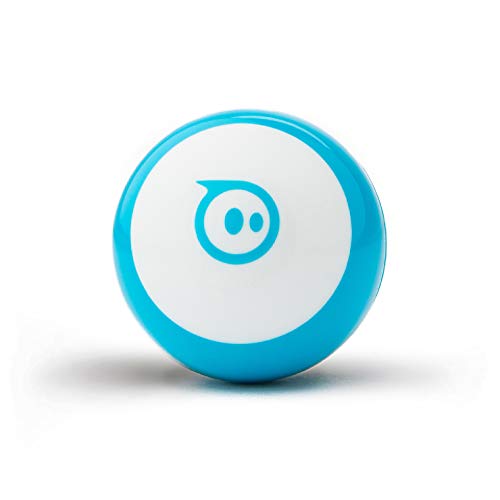
Sphero Mini packs a compact coding powerhouse into a ball-sized robot. It features a gyroscope, accelerometer, and colorful LEDs to support interactive play. The Mini is primarily an educational tool, accessible via the free Sphero Edu app, enabling kids to draw code, drag-and-drop blocks, or write JavaScript to control the robot. Driving modes include Joystick, Slingshot, and Tilt, creating a versatile platform for beginners to explore robotics concepts through games and challenges. The kit often includes obstacle-course items like cones and pins to jump right into hands-on learning.
As an entry point to robotics, Sphero Mini offers safe, screen-based coding experiences without requiring a full computer setup. Its small size makes it a portable classroom companion or a desk-side coding buddy, making it ideal for short practice sessions and quick STEM breaks throughout the day.
KingsDragon RC Robot Toys

KingsDragon combines infrared remote control with gesture sensing for intuitive operation at various ages. The robot offers auto display modes and obstacle avoidance, enhancing interactive play and safe exploration in dynamic environments. Its eyes light up with blue LEDs as it moves, providing a visual cue for kids learning about cause and effect. The robot’s design includes a multi-joint structure with sturdy wheels, enabling complex moves such as turning and patrolling. A programming feature allows children to create and replay sequences, introducing basic concepts of planning and sequencing in a kid-friendly format.
This option suits children who enjoy interactive storytelling and longer play sequences, as it blends quick-response controls with programmable routines. The combination of gesture and infrared control helps develop motor skills, spatial awareness, and early computational thinking in a hands-on, entertaining way.
Buying Guide: Key Purchase Considerations
When selecting a mini robot for a child, consider the intended age, safety features, and learning goals. Look for durable construction, non-toxic materials, and age-appropriate controls. If the aim is coding introduction, prioritize robots with app-based or on-device programming, clear tutorials, and a gentle learning curve. For sensory-focused play, choose toys with tactile feedback, adjustable volume, and surface-friendly finishes. Gesture sensing adds intuitive play but may require higher initial complexity; ensure it matches the child’s comfort level. Battery life, charging methods, and the availability of replacement parts are practical factors for ongoing use. Finally, examine content variety—some robots emphasize music and dancing, while others focus on storytelling and problem-solving—to align with a child’s interests and developmental goals.
From a perspective of safety and value, parents should balance screen-free play benefits with accessible STEM concepts. Remote control toys offer immediate feedback and coordination skills, while programmable balls and gesture-driven robots introduce foundational logic and sequencing. Group play features, such as multi-robot compatibility, can encourage collaboration. For caregivers seeking long-term engagement, robots with expandable apps or additional assets provide continuing learning opportunities beyond initial playtime.
In summary, the five selected options provide a spectrum of interactive experiences: from simple remote-control fun to hands-on coding and gesture-driven learning. Each product supports motor development, problem-solving, and curiosity in safe, age-appropriate ways, helping children build confidence as they explore the basics of robotics and technology.