Best Keyboard Pianos for Kids: Fun, Safe, and Easy to Learn
Choosing a kid-friendly keyboard piano blends playful design with learning-friendly features. This guide highlights five kid-focused options that balance size, sound, learning aids, and portability. Whether a toddler explores sounds or a school-age child builds early music skills, these keyboards offer engaging ways to practice, perform, and enjoy music at home or on the go.
The table summarizes the selected products, focusing on key learning features, key count, and standout extras to help parents compare quickly.
| Product | Key Count | Learning Aids | Special Features |
|---|---|---|---|
| RockJam 49 Key Keyboard Piano | 49 | Sheet music stand, piano note stickers, Simply Piano lessons | Compact learning setup, ready-to-play with included lessons |
| BIGFUN Kid Keyboard Piano (Purple) | 37 | Multifunction modes, 8 tones, 8 rhythms, demo songs | USB power, multiple play modes, kid-friendly design |
| BIGFUN Kid Keyboard Piano (Blue) | 37 | Multifunction modes, 8 tones, 8 rhythms, demo songs | Similar to purple variant with bright blue finish |
| WOSTOO Kids Keyboard Piano (61 Keys) | 61 | Detachable microphone, music stand, 100 rhythms, 50 demo songs | Rechargeable battery, portable and versatile |
| Donner 61 Key Keyboard Piano Kit | 61 | Includes stand, bench, microphone, and power adapter | All-in-one kit with accessories for a complete setup |
RockJam 49 Key Keyboard Piano
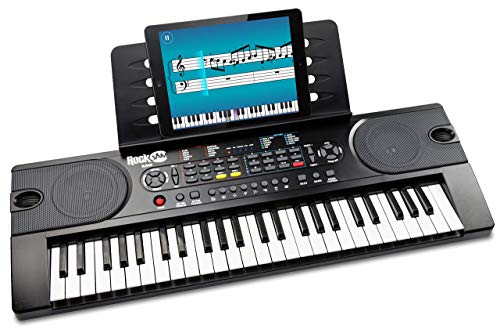
The RockJam 49 Key Keyboard Piano combines compact size with a learning-forward package. It features 49 full-sized keys suitable for beginners and young players, plus a power supply that keeps exploration focused on playing rather than battery management. A sheet music stand is included to encourage reading and performance practice, while piano note stickers aid quick note recognition. Simply Piano lessons provide structured, step-by-step guidance, making this model a solid entry point for kids starting their musical journey. The combination of a friendly design and practical learning tools supports steady progress in early music education.
Key factors for this model include its emphasis on early literacy in music and a ready-to-use learning ecosystem. The keyboard’s compact footprint makes it easy to position in bedrooms or play spaces, and the learning aids help reduce frustration for first-time players. The included lessons can guide a child through basic scales, melodies, and rhythm practices, while the worksheet-style notes promote independent practice. Parents should note that the 49-key layout is smaller than a full piano, but it is ample for core skills development and simple songs.
BIGFUN Kid Keyboard Piano — Purple
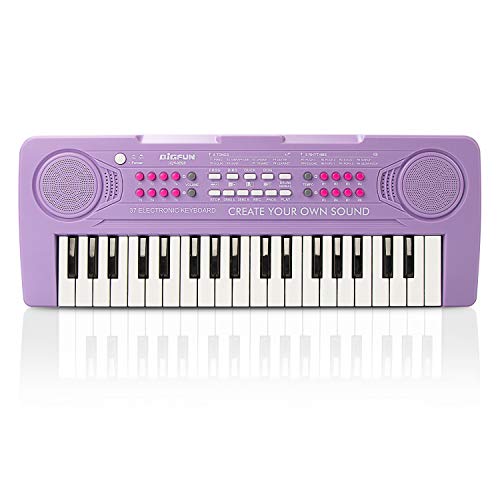
The BIGFUN 37-key kid keyboard in purple offers a compact, kid-friendly instrument with multiple functions designed for playful learning. It includes dual speakers, ensemble mode, and a variety of tones and rhythms to broaden exploratory play. The device supports easy setup via USB power, allowing flexible use in classrooms, playrooms, or travel scenarios. Record playback and several demo songs give kids opportunities to hear their efforts and observe progress. The small keyboard size is ideal for younger children who are just discovering musical ideas and want a tactile, interactive experience.
In terms of educational value, the 37-key layout supports early melody work while still offering enough versatility to explore rhythm and simple chords. The fun colors and accessible controls reduce intimidation for new players. Safety considerations are addressed with materials suitable for children, and the USB power option simplifies use without frequent battery changes. Parents should consider whether a 37-key layout is sufficient for the child’s age and long-term goals, as a larger keyboard can become relevant as skills grow.
BIGFUN Kid Keyboard Piano — Blue

The blue variant mirrors the purple BIGFUN model with identical feature sets, including 37 keys, dual speakers, and a range of tones and rhythms. The blue design offers an appealing visual option for kids who prefer different colors or personalities to reflect their preferences. As with the purple version, USB power makes setup straightforward, and the keyboard’s modes support interactive learning and creative play. This model is a practical option for siblings or friends who want similar devices with a distinct color choice.
Educationally, the blue version supports the same introductory pathways offered by its purple counterpart: basic melodies, rhythm exploration, and demo songs that help children imitate and groove along. The compact size keeps it accessible on small tables or desks, while the included versatility encourages experimentation with different sounds. Parents should check for age suitability and future needs, as some kids may eventually outgrow a 37-key keyboard and benefit from more keys or advanced features on a larger model.
WOSTOO Kids Keyboard Piano (61 Keys)

The WOSTOO 61-key keyboard provides a larger playing surface, which can be advantageous as children progress beyond basic tunes. This model includes a detachable microphone, a music stand, and a sizeable library of rhythms and demo songs (100 rhythms, 50 demos). It also supports recording and playback, enabling kids to layer melody ideas and review their performances. A rechargeable Lithium-ion battery adds portability, expanding its use beyond the immediate home environment to classrooms or travel scenarios. The 61-key layout supports more complex melodies and beginner-friendly teaching opportunities.
From an educational perspective, the extended key count allows for more piano-style playing and introduction to scales or simple chord progressions. The inclusion of a microphone offers opportunities for singing along, which can enhance musical expression and listening skills. Battery-powered operation is a practical perk for busy families who travel or have limited access to outlets. Users should evaluate whether they need handheld portability or if a steady power source is readily available for longer practice sessions.
Donner 61 Key Keyboard Piano Kit

The Donner DEK-610S kit combines a 61-key beginner keyboard with a complete setup for new players: a stand, a stool, a microphone, and a power adapter. With 249 voices and 249 rhythms, this model emphasizes versatility and experimentation, supporting a broad range of play styles and genres. An LCD display helps users navigate functions, rhythms, and demo songs. The all-in-one approach is ideal for families seeking a single purchase that covers the basics and encourages varied musical exploration, from simple piano textures to more layered performances.
Educationally, the Donner kit offers breadth: multiple voices, rhythms, and teaching features that can accommodate a growing child’s curiosity. The included stand and bench contribute to a more traditional practice setup, while the microphone invites singing and performance practice. Parents should consider the overall footprint and whether the bundle value justifies the investment, especially if a child’s interest evolves toward more advanced keyboards later on.
Buying Guide: Key Purchase Considerations
- Age and skill level: For very young beginners, smaller key layouts (37 keys) with engaging demos and learning aids are often best. As kids grow, 61-key keyboards offer more piano-like experiences and room to practice scales and melodies.
- Learning aids: Look for built-in lessons, sheet music stands, quick-start guides, or included apps. Features like recording, playback, and demo songs can boost motivation and track progress.
- Portability and power: Battery-powered options or USB-powered designs support practice in different locations. Heavier kits with stands and stools are better for a dedicated practice space but less portable.
- Durability and safety: Kid-focused models should use sturdy materials, rounded edges, and child-safe construction. Check for RoHS/CPC safety certifications where available.
- Expansion potential: Some sets include . . . stands, stools, or microphones. If the goal is a long-term learning pathway, consider kits that can evolve with the child’s skill level.
- Sound and feature variety: A range of tones, rhythms, and demo songs keeps children engaged. Balanced sound quality helps with listening development and musical recognition.
- Longevity and value: Bundled kits that include accessories may offer better value for beginners, reducing the need for immediate additional purchases.
These considerations help balance affordability with a product’s potential to foster curiosity, consistent practice, and early musical literacy. Parents should align device choice with their child’s interests, available practice space, and long-term learning goals to maximize the benefits of a keyboard piano for kids.