Best Interactive Musical Books for Toddlers to Spark Song and Story
For parents seeking engaging early literacy tools, interactive musical books combine vivid pictures, playful sounds, and simple activities to nurture language, memory, and coordination. Below are five top choices that suit toddlers and preschoolers while fitting a variety of learning styles. Each option emphasizes age-appropriate music, storytelling, and hands-on interaction to encourage repeat reading and joyful exploration.
| Product | Brand | Key Features |
|---|---|---|
| VTech Musical Rhymes Book, Red | VTech | Nursery rhymes, twist-and-slide pages, learning and music modes |
| ABC & 123 Learning Songs: Interactive Children’s Sound Book | Cottage Door Press | Wooden inlay, 11-button sound book, singing favorite tunes |
| LEARNING BUGS Fun Favorite Nursery Rhymes | LEARNING BUGS | 28 songs, 28 buttons, interactive learning through music |
| Learning Songs: Musical Toys & Interactive Sound Book | Astro Learns English | Real mom-sung lullabies, supports early language development |
The following sections spotlight five products most relevant to interactive musical books for toddlers, detailing what each offers and how it supports early learning. Consider your child’s interests—rhythm, familiar tunes, or language games—and the durability of the book when choosing a favorite.
VTech Musical Rhymes Book, Red
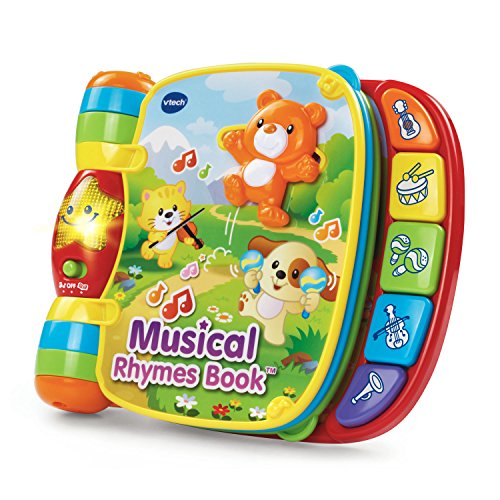
The VTech book engages toddlers with easy-to-turn pages that showcase cheerful pictures and classic nursery rhymes. Its twist-and-slide pieces on colorful pages invite hands-on exploration, supporting fine motor skills. Educational modes introduce age-appropriate vocabulary and musical instrument sounds, fostering listening, recognition, and early literacy in a compact, durable format suitable for travel and daily routines.
ABC & 123 Learning Songs: Interactive Children’s Sound Book

This book emphasizes a sturdy wooden inlay and durable construction, ideal for active toddlers. Little ones can press buttons to hear songs while following along with printed lyrics on each page, making it suitable for shared reading and independent play. Songs like Apples and Bananas and If You’re Happy and You Know It help reinforce memory, rhythm, and early math concepts through repetition and movement.
LEARNING BUGS Fun Favorite Nursery Rhymes

Designed for toddlers aged 1-3, this 28-song sound book invites kids to press buttons to hear a wide selection of nursery rhymes, with printed lyrics on every page for sing-along participation. The combination of sound, touch, and vibrant illustrations provides a rich sensory experience, supporting language development, cognitive skills, and motor coordination through interactive play.
Learning Songs: Musical Toys & Interactive Sound Book

Learning Songs blends soothing, mom-sung lullabies with interactive play, offering a calm listening experience alongside engaging activities. Marketed toward babies and toddlers, it emphasizes early language development, number recognition, and basic vocabulary. The voice quality and pacing aim to resemble a natural singing environment, making it approachable for daily routines such as bedtime or quiet afternoons.
Buying Guide
- Age and development: Choose books aligned with your child’s age (1-3 years is common for interactive sound books). Look for features that support vocabulary growth, memory, and motor skills.
- Durability and design: Prioritize sturdy construction, chew-safe materials, and easy-to-turn pages for toddlers who explore with hands and mouth.
- Sound options: Consider books with a simple set of buttons and clear volume control. Fewer, high-quality sounds prevent overstimulation and help kids focus on the music and words.
- Content variety: A mix of familiar nursery rhymes and original songs can enhance engagement and broaden language exposure. Some books also offer educational modes that introduce basic concepts like numbers or letters.
- Language development: Books that encourage singing along with printed lyrics or narrative prompts support pronunciation, rhythm, and expressive language.
- Accessibility: Look for large, colorful illustrations and intuitive layouts. Wooden or sturdy materials often last longer for rough toddler handling.
- Pairing with reading routines: Use these books to complement daily activities—morning circles, car rides, or bedtime stories—to reinforce consistency and learning.
When selecting, balance your child’s preferences with practical factors such as portability and washability. If possible, sample a few pages to gauge button responsiveness and audio clarity. For households with multiple children, consider a book with independent play options alongside shared reading prompts to maximize engagement across ages.