Best Fine Motor Toys for 1 Year Olds to Support Early Skill Building
Parents and caregivers look for toys that help little hands grow confident and curious. The following curated picks focus on fine motor development, hand-eye coordination, and sensory exploration—perfect for 12–18 month olds and beyond. Each item is designed to be engaging, safe, and durable, offering multiple play avenues as your child grows. Below you’ll find a quick comparison, followed by detailed highlights for each product.
| Product | Brand | Key Benefit |
|---|---|---|
| Spike The Fine Motor Hedgehog | Learning Resources | Colorful quills for pinching, removing, placing |
| Ball Drop Tower | Kidoozie | Cause-and-effect play with sounds and levels |
| 3-in-1 Montessori Wooden Toy | SMALL FISH | Color sorting and fine motor practice |
| Montessori Wooden Sensory Toy | MuMua | Safe wood, non-toxic finish, multi-sensory |
| MINGKIDS 6-Piece Sensory Shapes | MINGKIDS | Textured shapes for placement and exploration |
Note: All products feature durable construction and simple, age-appropriate activities that encourage concentration, dexterity, and early problem-solving. Use alongside supervised play for best results.
Learning Resources Spike The Fine Motor Hedgehog
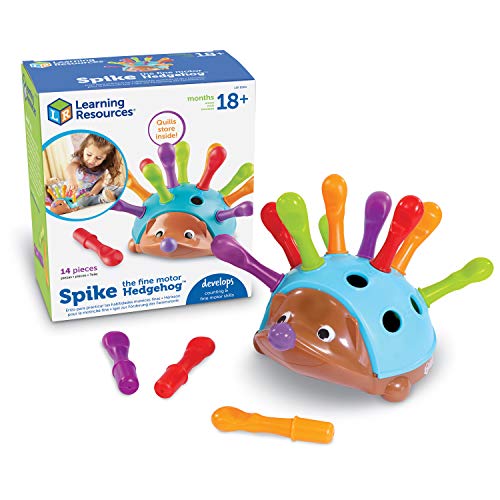
The Spike The Fine Motor Hedgehog targets essential hand strength and dexterity. Quills are color-coded and designed for easy grasp, encouraging toddlers to remove and replace pieces along the hedgehog’s back. This action builds pincer grip and finger isolation, foundational skills for future writing and manipulating tiny objects. The toy is age-appropriate for children starting around 18 months, yet it also scales with your child as they gain more complex skills in colors, counting, and pattern recognition. The tactile quills provide engaging sensory input to sustain attention and focus during play.
Kidoozie Ball Drop Tower

The Kidoozie Ball Drop Tower blends fun with early cognitive development. With six levels, each drop reveals a different ramp and color, helping toddlers explore cause and effect. The added sound effects from the falling balls enhance auditory processing and sustained engagement. Fine motor skills are exercised as little ones push, drop, and manipulate the balls through the tower. This toy offers a clear opportunity to practice hand-eye coordination while enjoying a multisensory experience—visuals, movement, and gentle rattles that captivate curious minds.
3-in-1 Montessori Wooden Toy

This wooden, 3-in-1 Montessori toy focuses on color sorting and shape recognition through inserting sticks into holes, rotating wrists, and exploring slots. The kit includes multiple components that promote color cognition, spatial awareness, and fine motor control. Designed with beech wood and a safe, water-based finish, it emphasizes durable, kid-friendly construction. The toy encourages independent exploration while also offering opportunities for guided learning, making it suitable for both individual and collaborative play sessions as your child grows.
MuMua Montessori Wooden Sensory Toy

MuMua’s wooden sensory set emphasizes safe, non-toxic materials with a smooth finish and rounded edges. The unit is designed for infants and toddlers experimenting with textures, shapes, and motion. Fine motor development is supported by manipulating pieces, while the natural wood aesthetic invites long, exploratory play. As a multi-sensory experience, it helps children refine grip strength, finger dexterity, and hand-eye coordination, all essential for early handwriting and everyday tasks.
MINGKIDS 6-Piece Sensory Shapes

The MINGKIDS shape set offers six chunky, textured blocks that invite tactile exploration and problem-solving. The elastic-band cube design supports pushing, pulling, and sliding actions that strengthen fine motor skills while encouraging spatial awareness and color/shape recognition. The bright textures are intentionally designed to engage small fingers and stimulate curiosity, making this a versatile option for independent play, caregiver-guided activities, and travel-friendly learning.
Toddlers Montessori Wooden Educational Toys

This collection centers on shape sorting and color recognition through a large assortment of wooden blocks, discs, and a five-sided cart. By guiding pieces into corresponding slots and matching shapes, toddlers refine hand-eye coordination and color identification. The natural wood and non-toxic paints support safe exploration for curious little hands. The tactile experience also promotes memory development as children recall where specific shapes fit, reinforcing cognitive growth and fine motor planning.
Buying Guide: Key Purchase Considerations
- Age-appropriateness: Choose toys labeled for 12–18 months and up to 3 years to ensure gradual skill progression and reduced choking hazards.
- Material and finish: Favor beech or other durable natural woods with non-toxic, water-based finishes for safety and longevity, especially for mouthing children.
- Fine motor focus: Prioritize items that promote pinching, grasping, stacking, sorting, and pincer grip development to support writing readiness later.
- Sensory variety: Look for toys offering multiple textures, colors, and sounds to engage visual, tactile, and auditory senses, which aids attention and learning.
- Portability and storage: Compact, lightweight designs enable travel-friendly play and easy cleanup after sessions.
- Growth potential: Toys that scale from simple to more complex tasks help children progress without needing a new toy too soon.
- Safety and supervision: Always supervise closely; choose rounded edges, large parts, and no small detachable components for this age group.
Comparative Takeaways
- Best for multi-sensory play: MuMua and Kidoozie offer rich sensory input along with motor practice, suitable for short, frequent sessions.
- Best for color and shape recognition: 3-in-1 SMALL FISH and MINGKIDS shapes emphasize sorting, matching, and early geometry.
- Best for durable wooden construction: Wooden Montessori sets from SMALL FISH, MuMua, and KMTJT provide long-lasting play with natural materials.
Incorporate these toys into a regular play routine that alternates between guided activities and free exploration. Short, focused sessions (5–10 minutes) multiple times a day can maximize development without overstimulating a young learner. Always model actions slowly and narrate the activity to reinforce language alongside motor skills.