Best Educational Toys for Kindergarten: Fun Learning at Home
Discover engaging, skill-building toys designed to support early literacy, math, science, and critical thinking for kindergarteners. The following picks offer hands-on exploration, screen-free activities, and durable designs to keep young minds curious. Each option supports foundational concepts—letters, numbers, patterns, shapes, and problem-solving—while encouraging independent play and guided learning with clear, age-appropriate challenges.
Summary of chosen products:
| Product | Brand | Key Benefit |
|---|---|---|
| LeapFrog Mr Pencil’s Scribble Write and Read | LeapFrog | Letter tracing, handwriting practice, and letter-to-animal transformations |
| STEM Explorers Pixel Art Challenge | Learning Resources | Hands-on problem solving with math puzzles and pattern blocks |
| Magnet Movers Magnet Set | Learning Resources | Early physics concepts and magnetism exploration |
| Brainometry 3D Puzzle & Brainteasers | Learning Resources | Critical thinking, pattern recognition, and motor skills |
| Big Time Mini Clock | Learning Resources | Hands-on time-telling practice with color-coded cues |
LeapFrog Mr Pencil’s Scribble Write And Read

The LeapFrog Scribble Write and Read activity uses Mr. Pencil to guide kids through writing uppercase and lowercase letters with step-by-step tracing. As children practice, letters transform into animated animals and objects to reinforce recognition and memory. The toy also provides number tracing with dotted lines that convert into countable objects, helping early numeracy. A customization feature lets a child’s full name be entered for personalized practice, supporting letter formation and name literacy in a playful way.
Learning Resources STEM Explorers Pixel Art Challenge

Pixel Art Challenge blends math and art through 10 double-sided cards offering progressively harder tasks. Children build patterns and solve puzzles using colorful pixel pieces, fostering spatial reasoning and critical thinking. This screen-free activity emphasizes hands-on learning, helping kids grasp foundational STEM concepts while improving fine motor skills as they place pieces precisely to complete designs and patterns.
Learning Resources STEM Explorers Magnet Movers

Magnet Movers introduces basic physics concepts through a 39-piece magnet set. Children explore magnetism with a wand and assorted magnetic pieces, guided by an activity book. Designed for ages 5 and up, this kit supports inquiry, spatial reasoning, and fine motor development as kids experiment with attractions, repulsions, and pattern creation in a hands-on format.
Learning Resources STEM Explorers Brainometry

Brainometry offers 3D puzzles and brainteasers that cultivate logical reasoning and pattern matching. The set includes colorful blocks and 10 double-sided activity cards with increasing difficulty, encouraging problem-solving, spatial awareness, and fine motor precision. This versatile kit grows with a child, supporting math readiness and cognitive development through tactile, constructive play.
Learning Resources Big Time Mini Clock

The Big Time Mini Clock helps children master telling time through a hands-on, interactive clock. Hidden gears maintain the correct time as hands are spun, and color-coded hands align with hour and minute markings for quick recognition. This tool supports early numeracy, sequencing, and time concepts essential for school readiness.
School Zone Go Fish Alphabet Game Cards

Go Fish Alphabet Game Cards combine matching with letter recognition. The cards feature bold uppercase and lowercase letters and animal-themed illustrations to engage preschool and kindergarten learners. The deck supports phonemic awareness, letter-sound association, and word-picture linkage, offering a social, turn-taking activity that reinforces literacy skills in a playful format.
Learning Resources MathLink Cubes
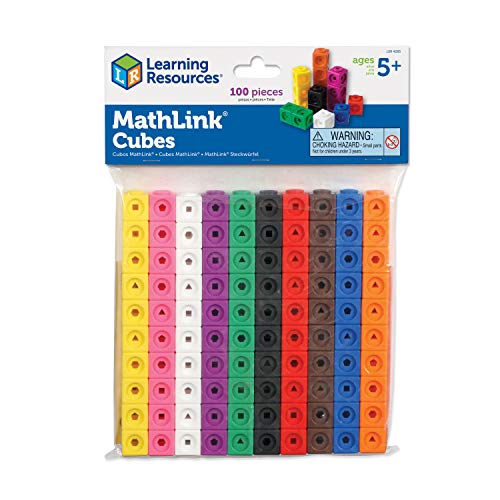
MathLink Cubes provide a versatile set of 100 cubes for early math exploration. They support counting to 100, one-to-one correspondence, patterns, addition and subtraction, skip counting, and measurement concepts. The cubes snap together for patterning and geometric activities, helping children build numeracy, spatial awareness, and fine motor skills through hands-on, constructive play.
Buying Guide
When selecting educational toys for kindergarten, consider the following factors to ensure age-appropriateness, engagement, and educational value:
- Curriculum alignment: Look for toys that reinforce core early literacy and math skills—letter formation, phonemic awareness, number sense, counting, and pattern recognition.
- Hands-on versus screen-time: Prioritize tactile, constructivist kits that promote fine motor skills, spatial reasoning, and critical thinking, while balancing occasional digital or guided activities for varied learning styles.
- Open-ended play: Choose pieces that allow multiple uses and levels of challenge to grow with the child, rather than single-purpose toys.
- Social and emotional learning: Consider games or activities that encourage sharing, turn-taking, and collaborative problem-solving.
- Durability and safety: Ensure durable materials and age-appropriate safety features, especially for small parts and sharp edges.
- Storage and organization: Favor sets with clear containers or labeled components to support independent cleanup and routine, a valuable skill for kindergarten readiness.
- Resource availability: Look for accompanying instruction cards, activity guides, and online or offline support to maximize use and learning depth.
For families with diverse preferences, combining magnetic, manipulatives-based, and card-based activities can address different learning styles and keep children engaged. Evaluate how each toy supports letter recognition, phonics, math foundations, spatial skills, and logical reasoning, and mix products to create a well-rounded kindergarten learning kit.