Best Educational Toys for an 8-Year-Old Boy: STEM Fun That Engages
Finding educational toys that captivate an 8-year-old boy while building essential STEM skills can be a challenge. The right toy blends hands-on exploration, clear instructions, and opportunities for imaginative play. The following selections emphasize practical learning in electronics, mechanics, logic, and science, helping young builders develop problem-solving, planning, and critical thinking. Each choice below is chosen for age-appropriate challenge, durability, and engaging features that promote curiosity beyond screen time.
Summary of selected products
| Product | Brand |
|---|---|
| Snap Circuits Jr. SC-100 Electronics Exploration Kit | Snap Circuits |
| Klutz Lego Gear Bots Science Kit | Klutz |
| ThinkFun Gravity Maze | ThinkFun |
| Smartivity DIY Robotic Mechanical Hand | Smartivity |
| National Geographic Magic Chemistry Set | Blue Marble |
Snap Circuits Jr. Electronics Exploration Kit

The Snap Circuits Jr. kit offers a safe, engaging way for children aged 8 and up to explore basic electronics. With 28 parts and a full-color project manual, kids can build more than 100 projects, from simple circuits to buzzer alarms. The modular pieces snap together easily, encouraging hands-on experimentation and immediate, visible results. This kit supports foundational STEM concepts, including circuits, electricity flow, and problem solving, while providing countless hours of guided and free-build play.
Klutz Lego Gear Bots Science Kit

Klutz combines LEGO Technic bricks with papercraft in a compact, hands-on set for ages 8-12. The kit includes all LEGO elements needed to build eight kinetic creatures, with a 64-page book detailing axles, cams, and cranks. This activity blends engineering concepts with assembly-based learning, encouraging systematic thinking as kids follow instructions and then adapt designs for creative outcomes.
ThinkFun Gravity Maze

Gravity Maze challenges spatial reasoning and strategic planning through marble-based puzzles. The set includes nine towers, three marbles, a game grid, and a target piece, providing a versatile platform for endless problem-solving scenarios. It supports critical thinking by requiring kids to map routes, anticipate consequences, and test multiple solutions, fostering resilience and methodical thinking in a portable format.
Smartivity DIY Robotic Mechanical Hand

This DIY robotic hand introduces mechanical engineering concepts through an engaging build. The step-by-step instructions guide kids aged 8-14 through a rewarding construction project, promoting hands-on learning and patience. The kit emphasizes screen-free play while developing skills in planning, following sequences, and understanding how levers, linkages, and simple machines translate into real-world mechanisms. A lifetime of replacement parts adds long-term value for future projects.
National Geographic Magic Chemistry Set
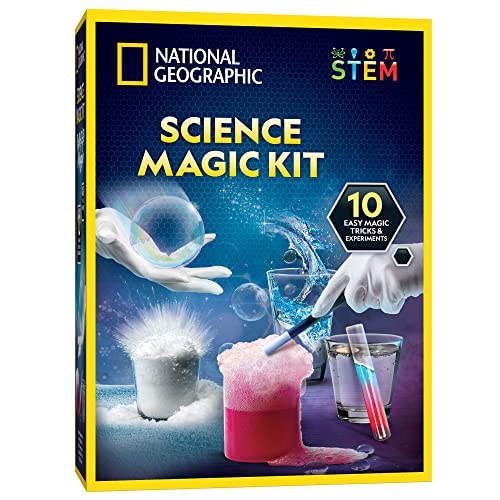
National Geographic’s Magic Chemistry Set combines practical chemistry experiments with magic-style demonstrations. The 10 science tricks, a magic wand, and gloves invite kids to perform eye-catching stunts while learning core chemistry concepts. This kit emphasizes inquiry, observation, and scientific explanations, making it suitable for curious minds who enjoy showing off discoveries to friends and family.
Buying Guide
Key purchase considerations for educational toys for an 8-year-old boy include complexity level, safety, durability, and alignments with learning goals. Look for age-appropriate challenges that introduce core STEM concepts without causing frustration. Durable, snap-together components reduce wear from enthusiastic use and encourage repeated experimentation.
Learning style fit matters: some kids thrive on hands-on building (mechanical and electronics kits), while others prefer problem-solving and logic games. Offering a mix of activities—electronics, engineering, and chemistry—broadens skills and keeps interest high. Consider kits that provide expandability or compatibility with other sets to extend play and learning.
Guidance features, such as clear instructions, visual diagrams, and safety guidelines, support independent exploration and safer experimentation. Check for age ranges and included replacement parts or warranties when available. Finally, portability and storage can influence ongoing engagement; compact sets facilitate practice at home, school, or travel.