Best Dog Toys to Keep Them Busy for Hours
Discover a curated collection of engaging, mentally stimulating dog toys designed to curb boredom and promote healthy play. The following selections focus on treat dispensing, puzzle challenges, and durable chew experiences that can entertain dogs of various sizes and temperaments. Each option offers unique mechanisms to encourage problem solving, slow feeding, and interactive fun.
Summary of chosen products:
| Product | Brand | Key Benefit | Type |
|---|---|---|---|
| PETSTA Dog Puzzle Toys | PETSTA | IQ training and slow feeding | Interactive puzzle |
| BoYoYo Interactive Puzzle Toys | BoYoYo | Treat dispensing with quiet operation | Brain-stimulating feeder |
| HIPPIH Dog Puzzle Toy | HIPPIH | Two sizes for different breeds | Treat-dispensing ball |
| BSISUERM Adjustable Treat Dispenser | BSISUERM | Customizable food distribution | Puzzle feeder |
| WinTour Tough Dog Toy | WinTour | Durable chew with squeaky interaction | Indestructible chew |
PETSTA Puzzle Toys For Mental Stimulation
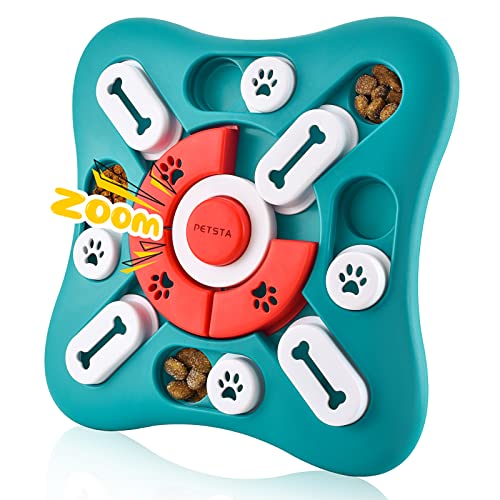
PETSTA offers a 10 by 10 by 1.3 inch puzzle design with a central squeak button to grab dogs’ attention. The three difficulty levels and a 16-hole treat dispenser extend play time beyond 20 minutes, supporting slow feeding. The Spin & Slide and Seek & Hide mechanisms invite dogs to use their sense of smell and paw skills to retrieve rewards, combining mental challenge with physical movement for an engaging, long-lasting play session.
Key features include a multi-stage play path that encourages problem solving, a durable build suitable for interactive use, and a design that appeals to a broad range of dogs and even cats. Users should supervise initial play to ensure proper interaction with the maze and avoid any unintended chewing on non-toy parts.
BoYoYo Interactive Puzzle Toys For Boredom

BoYoYo combines treat dispensing with a rolling, low-noise design to keep large and medium dogs engaged without excessive noise. Made from ABS, nylon, and rubber components, the toy offers adjustable food distribution via two switches to tailor feeding time. Its spiral structure adds a higher level of challenge, making it suitable for dogs who crave intellectual stimulation and enjoy a longer play experience under supervision.
The product emphasizes safety and longevity, with materials chosen to withstand routine interaction. While not ideal for aggressive chewers, it remains a strong option for dogs that enjoy problem solving and slow-release treats. Owners should monitor use to ensure the toy remains intact and safe during play.
HIPPIH Treat Dispensing Ball For IQ Training

HIPPIH offers two sizes: Blue 2.75 inches and Green 3.14 inches, catering to medium and large dogs. The extra-tough rubber construction supports teeth cleaning and teething while providing a strong, interactive challenge. The design aims to capture a dog’s attention and aid in intelligence development and bonding through interactive play, making it suitable for dogs that respond well to puzzle toys and ball-based games.
As a treat-dispensing ball, it can support structured training sessions and help manage boredom. Care should be taken to ensure the toy is not too small for larger dogs and that the mouth size is appropriate to avoid choking hazards during play.
BSISUERM Adjustable Treat Dispenser Ball

BSISUERM’s adjustable dispenser features two ends with differing sphere sizes for variable food release. An adjustable switch on each sphere tailors the amount of kibble or snacks, extending playtime and promoting healthy eating habits. This design integrates mind engagement with physical activity, challenging dogs to push and manipulate the toy to access rewards.
Designed as a versatile trainer’s aid, it encourages problem-solving while rewarding persistent play. As with other puzzle toys, supervision during first uses is recommended to ensure safe interaction and to help dogs learn how to operate the mechanism effectively.
WinTour Tough Dog Toy For Aggressive Chewers

WinTour targets dogs prone to heavy chewing with a rubber-rich, 30% thicker construction and a built-in squeaker for interactive play. The squeaky shark design adds a playful element that motivates chewing as a form of entertainment. The textured surface assists in dental hygiene through mild abrasion, and the overall durability makes it a long-lasting option for 20–80 pound dogs.
While marketed as tough, owners should still supervise aggressive chewers and rotate toys to maintain interest. For dogs that respond well to texture, sound, and scent cues, this toy delivers extended engagement and can help reduce destructive behaviors by satisfying the urge to chew in a controlled, positive way.
QGI Random Path Electric Moving Ball

QGI’s interactive ball adds a motion-activated mechanism with irregular rolling and a rope attachment, amplifying engagement for dogs of various sizes. The toy emphasizes safety with chew-resistant materials and provides two speed modes to match a dog’s energy level—fast for high-energy dogs and slow for smaller or timid pets. It’s designed for extended play and enrichment, though not intended for severe chewers.
The combination of movement, texture, and rope increases fetch-like play while challenging dogs to anticipate the ball’s path. Supervision during initial use ensures dogs learn how to interact with the toy and prevents accidental chewing on non-toy components.
Jeefome Indestructible Chew Toy
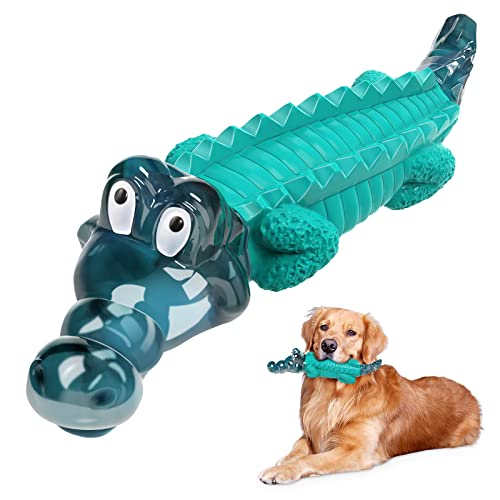
Jeefome touts a tough, alligator-shaped chew toy designed for aggressive chewers across small to large breeds. The milk-flavored surface is intended to attract dogs and extend play sessions, while the raised texture helps clean teeth and promote dental health. The toy’s rugged design targets high-energy dogs that need a durable outlet for chewing and extended playtime.
Dogs with strong chewing impulses can benefit from this option as part of a rotation strategy to reduce boredom. Owners should assess mouth size and chewing style to ensure compatibility and safety during use.
Buying Guide: Key Purchase Considerations And Comparisons
When choosing dog toys to keep a pup occupied for hours, consider a few core factors. First is durability and material safety; tougher toys suit aggressive chewers, while gentler chews benefit younger or smaller dogs. Second, assess the type of stimulation: puzzle feeders, treat-dispensing balls, and motion-activated toys can target intelligence, problem-solving, and physical activity. Third, size compatibility matters: select a toy appropriate for the dog’s jaw size, pulling power, and energy level. Finally, supervision and rotation are essential to maximize engagement and safety.
Durability vs. mental challenge: Some dogs need ultra-durable chew toys that resist damage, while others thrive on complex puzzles that demand more thinking than force. For these, a combination of puzzle feeders and slow-feeder toys can balance brain work with physical play.
Size variety and adaptability: Many brands offer multiple sizes or adjustable features. Use this to tailor play time to your dog’s needs, aging, and bite strength. Rotating toys weekly or biweekly can prevent boredom and maintain high interest in each option.
Safety and supervision: Always supervise initial uses of new toys, especially for puppies or dogs with a tendency to chew aggressively. Check for wear, loose parts, or small pieces that could be swallowed. Replace damaged toys promptly to maintain safe play environments.
Behavioral goals: For anxiety or boredom relief, prioritize interactive puzzles and treat-dispensing toys that reward exploration. For dental health, select toys with textured surfaces that massage gums and help clean teeth.