Best Developmental Toys for 18-Month-Olds to Boost Fine Motor Skills
Parents and caregivers increasingly look for developmentally appropriate toys that support fine motor skills, early concepts, and independent play for 18-month-olds. The following curated picks combine color, texture, and hands-on activities to nurture dexterity, hand-eye coordination, and basic problem-solving. Each item is designed with safe materials and engaging features that align with typical milestones for this age. Explore five well-rounded options and see how they can fit into daily play routines and learning moments.
| Product | Brand | Focus |
|---|---|---|
| Learning Resources Spike The Fine Motor Hedgehog | Learning Resources | Fine motor, color matching, counting, pattern recognition |
| Kidoozie Ball Drop | Kidoozie | Cause and effect, fine motor, sensory play |
| PEBIRA Montessori Sorting & Stacking Toys | PEBIRA | Color, shape, and number recognition; hand-eye coordination |
| Jumlys Wooden Shape Peg Puzzle Set | Jumlys | Color and shape differentiation, fine motor, problem solving |
| Battat Pop-Up Pals | Battat | Cause and effect, color recognition, fine motor |
Spike The Fine Motor Hedgehog
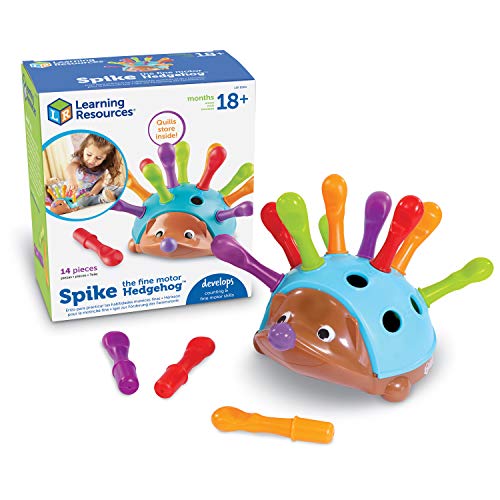
Learning Resources Spike The Fine Motor Hedgehog is designed to strengthen little hands through color-coded quills that fit into the hedgehog’s back. The toy supports essential fine motor development as toddlers remove and place pieces, which also enhances hand-eye coordination. It grows with a child, starting with simple placement for ages 18 months and up, then expanding to color practice, counting, and pattern recognition as skills mature in preschool years. The tactile quills are easy to grip and provide sensory stimulation to maintain focus during play. This versatile toy can serve as a playful introduction to sorting and sequencing tasks while encouraging independent exploration.
Kidoozie Ball Drop

The Kidoozie Ball Drop offers multi-level play with six colorful layers, each dropping balls to a new spot. This setup helps toddlers learn cause-and-effect as they observe how a ball travels through the tower. Beyond entertainment, the activity promotes fine motor control as little hands maneuver the balls and feed them into the top. The added rattling sounds during descent engage auditory senses and maintain curiosity, supporting sensory development during early play sessions. This toy is well-suited for short, focused play segments that reinforce sequencing and spatial awareness.
PEBIRA Montessori Sorting & Stacking Toys

PEBIRA’s wooden sorting and stacking set features 20 pieces across colors and geometric shapes to encourage early color and shape differentiation. Toddlers match blocks to targets, experiment with various combinations, and practice size differentiation. The toy helps develop hand-eye coordination while supporting quiet, focused play. Its toddler-friendly design includes smooth edges and an approachable scale, making it an appealing choice for travel and family learning routines. This set is a solid fit for parents seeking a tangible Montessori-style experience that emphasizes problem-solving and spatial awareness.
Jumlys Wooden Shape Peg Puzzle Set

The Jumlys wooden peg puzzle includes 12 shapes in six colors, offering a vibrant and engaging way to teach children color recognition and geometric shapes. As toddlers fit pieces into corresponding slots, they build fine motor skills and hand-eye coordination. The design supports safe exploration with large, toddler-friendly pieces and easy-to-grip handles. This toy is suitable for 12- to 24-month range and remains engaging as a basic puzzle activity that scales with growing abilities in early learning milestones.
Battat Pop-Up Pals
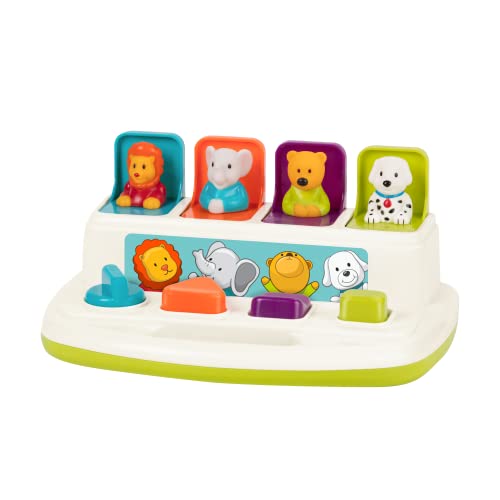
Battat’s Pop-Up Pals focuses on cause-and-effect with buttons and colors that trigger a playful animal pop-up. The variety of actions—press, flip, turn, and slide—provides diverse pathways to explore motor skills. The toy introduces basic cognitive concepts like prediction and object permanence, while also encouraging color and shape recognition through engaging visuals. Its interactive design makes it suitable for shared play and individual exploration, contributing to social interaction alongside motor development.
Buying Guide
- Age and skill alignment: Choose toys labeled for 18 months and up, with options that scale to preschool-level tasks as needed.
- Fine motor and cognitive targets: Prioritize items that build pincer grasp, hand strength, and coordination, as well as basic sorting, matching, and cause-and-effect concepts.
- Material and safety: Favor smooth-edged, non-toxic materials. Wood and durable plastics with rounded corners are common choices for toddlers.
- Durability and portability: Consider toys that hold up to rough toddler play and are easy to transport for travel or appointments.
- Maintenance and cleaning: Look for simple cleaning instructions, especially for wooden or fabric components.
- Engagement and sensory variety: A mix of textures, colors, sounds, and movement helps maintain interest and supports different sensory needs.
- Safety considerations: Avoid small parts that could pose choking hazards and ensure the product meets safety standards appropriate for the age group.
- Parental involvement: Some toys encourage cooperative play or guided activities, which can enhance learning through shared interaction.
- Budget and value: Evaluate the long-term play value and potential for different skill repetitions before purchasing multiple items.
- Accessibility and ease of use: Choose designs with intuitive setup and clear cues to minimize frustration and maximize independent exploration.