Best Connecting Blocks for Kids: Top STEM Building Toys for Hands-on Learning
Discover engaging connecting blocks that boost early math, engineering, and creative thinking. This guide highlights five popular sets that support counting, patterning, color recognition, and fine motor skills while inspiring open-ended play. Each product offers durable pieces designed for classrooms, homeschooling, and independent exploration.
| Product | Pieces | Key Benefit | Age Range |
|---|---|---|---|
| Learning Resources MathLink Cubes – 100 | 100 | One-to-one counting, early arithmetic | Ages 5+ |
| Incredibly Interconnectable KADU Rainbow 250 | 250 | Open-ended construction and patterning | Ages 5+ |
| PicassoTiles Hedgehog 120 | 120 | Colorful connectivity, spatial awareness | Ages 3+ |
| SpriteGru 100 Math Linking Cubes | 100 | Counting, place value, basic operations | Ages 3+ |
| Learning Resources MathLink Cubes Big Builders 200 | 200 | Imaginative engineering and design | Ages 5+ |
Learning Resources MathLink Cubes – 100
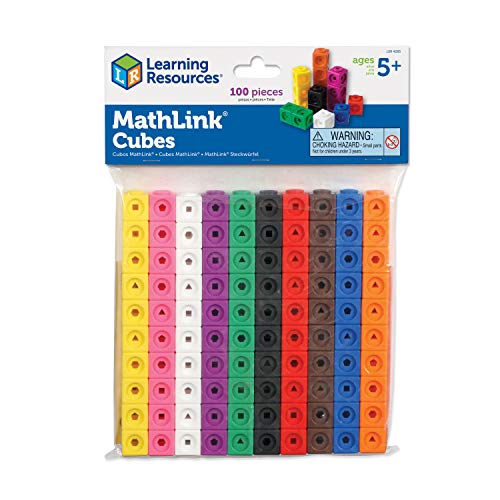
Product Highlights: This set supports core math skills through tangible manipulatives. Learners practice one-to-one correspondence, counting to 100, skip counting, addition, and subtraction. The cubes also aid patterning, graphing, and nonstandard measurements. Fine motor skills and eye-hand coordination improve as kids snap cubes together and apart. The system is well-suited for homeschool or classroom activities, promoting school readiness with structured and open-ended tasks. The cube design emphasizes geometric expression through color and shape cutouts, enabling more complex patterning.
Incredibly Interconnectable KADU Rainbow 250

Product Highlights: The 250-piece rainbow set invites rapid entry into open-ended construction. Each piece is designed for easy interconnection, with a single simple shape that still enables vast architectural possibilities. The color variety helps children learn color identification, patterning, and spatial reasoning. After building, pieces can be easily disassembled to start new creations, reinforcing problem-solving and planning skills while fostering creativity and collaboration in play sessions.
PicassoTiles 120pcs Hedgehog

Product Highlights: PicassoTiles Hedgehog blocks provide frustration-free connectivity, allowing quick assembly and disassembly. The 120 pieces support color discrimination, counting, sorting, and attention development, aligning with STEAM learning objectives. This set encourages hands-on exploration of shapes, 3D forms, and architectural design, making it a versatile classroom or home activity. Its scalable design supports group projects and cooperative building endeavors that foster collaboration and critical thinking.
SpriteGru Math Linking Cubes – 100

Product Highlights: This value pack features 100 math cubes in ten vibrant colors. The easy-to-link counting squares help children visualize color, quantity, height, and number equations. Beyond counting, kids can build imaginative projects—names, robots, windmills—enhancing creativity while practicing addition and subtraction. The blocks support early STEM activities and promote critical thinking, color recognition, and spatial awareness.
Learning Resources MathLink Cubes Big Builders – 200

Product Highlights: Big Builders expand imaginative play with 200 cubes, encouraging kids to design helicopters, robots, animals, and more. The set supports critical thinking and engineering concepts as children plan, build, and iterate their structures. It complements guided activities from teachers or parents and invites children to explore spatial reasoning through larger builds. The durable construction makes it suitable for repeated use in classrooms and homes, reinforcing math and engineering foundations through play.
Buying Guide
- <strongAge appropriateness: Check the recommended age range to ensure the set aligns with your child’s development stage and fine motor skills.
- <strongPiece variety and size: More colors and shapes aid early math concepts, patterning, and geometry. Larger sets support collaborative play.
- <strongDurability and material safety: Look for BPA-free plastics and sturdy construction, especially for younger kids who tend to chew or drop blocks.
- <strongStorage and organization: Sets with bins or boxes help maintain order and encourage independent cleanup after play.
- <strongEducational value: Consider how a set supports counting, place value, geometry, STEM exploration, and cross-curricular activities.
- <strongSystem compatibility: If you already own similar blocks, assess whether new pieces snap together easily for seamless expansion.
- <strongOpen-ended vs. guided play: Some sets emphasize imaginative design, while others focus on arithmetic fluency. A mix can support balanced development.
- <strongBudget and storage footprint: Larger sets offer more learning opportunities but require more space and may have higher upfront costs.
In selecting these products, the emphasis is on tangible, hands-on learning that connects counting, colors, shapes, and spatial reasoning with creative construction. Parents and educators can use the sets for structured activities—like patterning exercises or math stations—or as open-ended challenges to foster curiosity and collaboration. For classrooms, teachers may rotate through stations to maximize exposure to different STEM concepts while keeping the activity engaging and age-appropriate.