Best Black and White Cards for Newborns: Visual Stimulation That Supports Early Brain Development
Newborns benefit from high-contrast visuals that engage developing vision and support early cognitive growth. This article highlights highly rated black-and-white cards, books, and tactile toys designed to stimulate a baby’s sight, memory, and attention. Each product section below provides a quick overview, key features, and practical tips for use during tummy time, play, and daily routines. The selections focus on safe materials, durable design, and age-appropriate content to help caregivers choose effective visual tools during the first months of life.
| Product | Brand | Core Benefit | Best Use |
|---|---|---|---|
| Beiens High Contrast Flashcards (0-3 Months) | beiens | Right-brain activation, instant memory | Newborn visual stimulation sets |
| Kopokita High Contrast Cards (0-3 Months) | Kopokita | Bright high-contrast patterns, safe material | Daily visual routines |
| URMYWO Black & White Baby Toys (0-6 Months) | URMYWO | Soft book with patterns and mirror, tactile play | Tummy time and self-recognition |
| SpriteGru 50 Pages Visual Stimulation Flashcards | SpriteGru | Compact set, instant memory development | On-the-go visual activity |
| Infinno High Contrast Book & Cards (0-6 Months) | Infinno | Varied contrasts and mirror for sensory play | Comprehensive tummy time tool |
Beiens High Contrast Flashcards For Newborns

Beiens designs focus on rapid visual stimulation to engage a newborn’s developing right hemisphere. The set includes 20 cards across age-specific ranges (0-3, 3-6, 6-12, 12-36 months) with a total of 40 pages. The product emphasizes quick visual activity to promote recognition and attention. The language highlights that high-contrast visuals aid early brain activity and memory formation, while educational experts contributed to the card themes and progression. Use during short, focused play sessions to help babies process shapes, patterns, and motion.
Key features include a structured framework for age-appropriate development, compact design for easy handling, and a focus on quick visual cycling to engage babies who are still developing depth perception. The set’s 20 cards per subset allow caregivers to rotate themes without overwhelming the child. While designed for infants, the materials and printed images aim to be gentle on eyes and simple enough for a caregiver to administer during daily routines. Always supervise and keep sessions brief to match the baby’s attention span.
URMYWO Black And White Baby Toys

URMYWO’s black-and-white baby toy set is designed for infants from birth to 3 months and beyond. It features a soft, baby-safe book with 11 black-and-white patterns plus a baby-safe mirror to promote self-recognition and visual tracking. The book includes crinkle pages to introduce auditory stimulation and keep a baby engaged during tummy time or quiet play. The design emphasizes grip-friendly pages with gentle textures, enhancing tactile exploration while maintaining safety standards for soft toy materials. The straps enable attachment to cribs, strollers, or play mats for easy access during travel or transitions.
Practical usage tips include using the mirror page to help babies begin recognizing their own facial features, pairing pages with gentle voice cues, and rotating patterns to sustain attention. The soft construction reduces risk of injury during mouthing and play, making it a suitable choice for supervised early development activities. The combination of high-contrast visuals and interactive elements supports ongoing focus and cognitive processing during the critical 0-6 month window.
SpriteGru 50 Pages Visual Stimulation Flashcards

This compact set offers 25 flashcards on two sides, totaling 50 pages of black-and-white visuals. Designed for newborns up to 3 months, it emphasizes fast recognition to build instantaneous memory. The cards cover a range of shapes and geometric figures intended to stimulate visual processing and cognitive involvement as part of a caregiver’s daily routine. The design uses BPA-free, non-toxic materials and anti-dazzle film to protect developing eyes while presenting clear, high-contrast imagery. The rounded corners add a safety feature for little hands.
Usage guidance includes incorporating the cards into short, repeated sessions to reinforce pattern recognition. Place cards within the baby’s line of sight during calm moments or after feeding. The two-sided design enables quick rotation, keeping sessions engaging without overstimulation. When paired with a quiet narration or a gentle soundtrack, these cards can support early literacy precursors and attention control during the first months of life.
beiens High Contrast Flashcard Set (80 Cards)
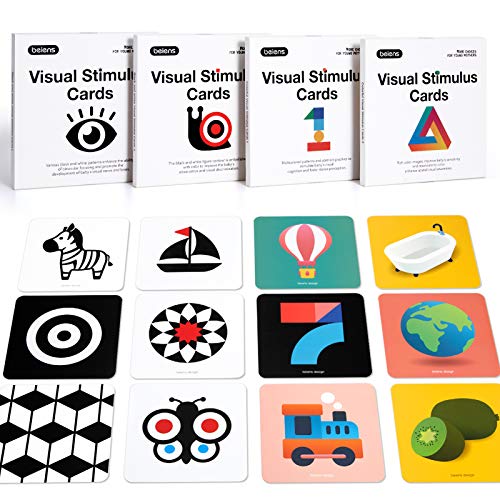
This larger beiens package expands the range with 80 flashcards across inclusive themes designed for babies from 0 to 36 months. The intent remains right-brain activation through rapid visual cues, while offering more content for longer developmental windows. The product notes emphasize that the content includes shapes and geometric figures across multiple age bands, enabling caregivers to tailor activities as a child grows. The dual-page format supports quick scanning and memory formation as infants begin to recognize patterns and pictures.
For best results, integrate the cards into short daily routines, such as a 5- to 10-minute session after feeding or during quiet play. Rotate topics to maintain novelty and avoid overstimulation. The cards’ size and round-edged design facilitate safe handling for toddlers and new crawlers alike. As with all infant toys, ensure clean storage and occasional inspection for wear to safeguard ongoing use.
Infinno High Contrast Cards And Mirror Book

Infinno combines a high-contrast baby book with mirror-based experiential play, creating a multisensory approach to early development. The product targets 0-6 months and offers both high-contrast visuals and vibrant sections to stimulate color and shape perception as growth progresses. The included mirror aids facial self-recognition, while the sturdy construction supports tummy time and floor play. The materials emphasize safe fibers and non-toxic construction, with practical features designed to endure active infant use through several months of development. Light, portable, and easy to wipe down, it suits busy caregiver schedules.
Practical considerations include choosing age-appropriate components, monitoring for tears or seam wear, and pairing mirror play with gentle facial interaction to maximize engagement. The dual nature of contrast and color can help transition from pure high-contrast stimuli to more complex visuals as babies mature. This makes it a well-rounded option for families seeking a single tool that evolves with their child’s visual development needs.
Buying Guide: Key Purchase Considerations
- Age suitability and progression: Look for sets with clearly defined age ranges (0-3 months, 3-6 months, etc.) and content that scales with development.
- Safety and materials: Choose non-toxic, BPA-free materials, rounded corners, and soft textures appropriate for mouthing and grasping.
- Visual contrast and patterns: Prioritize true high-contrast black-and-white patterns and occasional simple color accents to support progressive visual tracking.
- Durability and care: Seek durable cards and fabric books that withstand crinkling, mouthing, and occasional machine washing or spot cleaning.
- Versatility: Consider tools that combine multiple sensory elements (mirrors, crinkle textures, soft pages) for richer engagement across play and tummy time.
- Ease of use: Opt for lightweight cards or small books that caregivers can place within eye range without forcing focus or overstimulation.
- Portability: Compact packs travel well for on-the-go stimulation during feedings, stroller outings, or visits to relatives.
- Evidence of educational intent: Prefer products developed with input from educators or child development experts to ensure content aligns with typical milestones.
In selecting black-and-white cards for newborns, caregivers should focus on tools that are safe, developmentally appropriate, and adaptable across the first six to twelve months. Visual stimulation remains most effective when used in short, repeated sessions that align with the infant’s attention span. Rotating themes and combining visual cards with gentle verbal cues or sounds can enhance engagement and support early memory formation. By choosing high-quality materials and varied formats, families can build a practical, evolving sensory toolkit that complements daily routines and tummy time activities.