Best Toys for Special Needs 2 Year Olds: Safe, Engaging Picks for Early Learning
Choosing developmentally appropriate toys for a 2-year-old with special needs can boost fine motor skills, sensory processing, and social interaction. This guide highlights five vetted options designed for safe play and open-ended learning. Each pick balances durability, age suitability, and engaging features to help parents and caregivers support growth at home or on the go.
Summary Table of Selected Products
| Product | Key Benefit | Target Skill | |
|---|---|---|---|
| Kidus Montessori Magnetic Fishing Game | kidus | Fine motor coordination with safe wooden design | Fine motor, color recognition |
| Wooden Montessori 3-in-1 Learning Toys | EARLY EXPLORER TOYS | Multi-sensory exploration without screens | Fine motor, problem solving |
| HONGID Magnetic Color & Number Maze | HONGID | Color/number matching with magnetic play | Hand-eye coordination, cognitive sorting |
| HopeRock Whack A Frog Game | HopeRock | Cause-and-effect action with light and music | Motor skills, musical awareness |
| EPIMA Toddler Busy Board | EPIMA | Portability and varied fine motor activities | Dressing skills, hand dexterity |
The selections emphasize durability, safety, and engaging stimuli designed to support toddlers with diverse needs. Each product section below provides quick access to the item, a visual reference, and a concise overview of the included features.
Kidus Montessori Magnetic Fishing Game
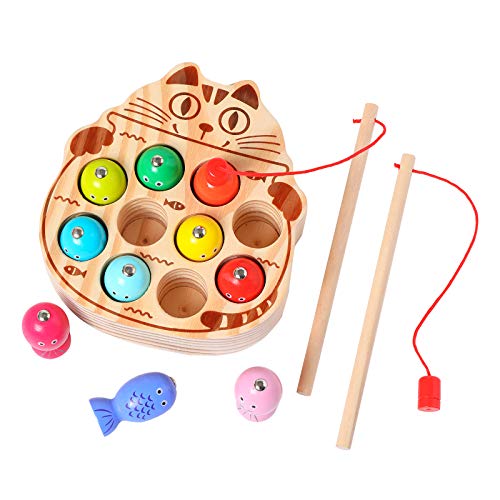
This wooden fishing game focuses on fine motor skills and color recognition through magnetic play. It includes two real wood magnetic poles and ten bright fish figures designed to resemble familiar characters, encouraging eye-hand coordination as kids attempt to catch the fish. The set is sized to be gripping-friendly for toddlers and features smooth edges and a sturdy build to withstand active play. The design prioritizes safety with choking-resistant measurements and non-toxic finishes.
Wooden Montessori 3-in-1 Learning Toys

This three-in-one set offers multiple lids and slots to explore color sorting, shape recognition, and fine motor practice. The activity pieces are designed for open-ended play, encouraging independent exploration while supporting hand strength, coordination, and problem-solving. The kit’s multisensory approach aligns with early Montessori principles, with a screen-free format that reduces overstimulation and fosters concentration.
HONGID Magnetic Color & Number Maze

This wooden magnetic maze is ideal for toddlers aged 2-5 and builds fine motor precision as kids guide beads with a magnetic wand across the surface. The activity emphasizes color matching and number recognition, helping to develop early cognitive skills while keeping hands busy. The board is designed with smooth edges and a fixed wand for safe, durable use, making it suitable for quiet, focused play sessions.
HopeRock Whack A Frog Game

The Whack A Frog game provides a dynamic, interactive challenge that strengthens hand-eye coordination and timing. With five modes and 45 levels, children can progress at their own pace, which is beneficial for maintaining engagement and confidence. An upgraded spray feature adds visual and sensory variety, helping keep attention focused while promoting turn-taking during two-player sessions.
EPIMA Toddler Busy Board

This portable busy board offers a variety of zippers, buttons, laces, puzzles, and calendar activities to support dressing skills, finger dexterity, and cognitive development. With 25 activities designed for toddlers, the board provides a safe, quiet, and screen-free way to practice fine motor skills during travel or at home. The layout emphasizes independence and structured exploration, which can benefit children who thrive on tactile feedback and routine.
Buying Guide
Key purchase considerations for toys for special needs toddlers include safety, age-appropriateness, sensory appeal, and the potential to support targeted skills. Look for: non-toxic finishes and rounded edges; choking-safe dimensions for small parts; open-ended design that supports multiple learning outcomes; and durable construction to withstand repetitive play. Consider a mix of toys that address fine motor skills (grasping, pinching, lacing), sensory processing (visual, auditory, tactile stimuli), and social interaction (shared play, turn-taking).
Safety features should include clear age labeling, material transparency, and parts that minimize choking hazards. For children with sensory sensitivities, opt for items with adjustable or non-overstimulating lighting, sound levels, and textures. For caregivers, portability and ease of cleaning are practical bonuses. Finally, assess how each toy can be used with a caregiver to promote modeling, feedback, and social play, while aligning with developmental milestones for two-year-olds.
In practice, combining a magnetic-peg style activity, a color/number maze, an interactive two-player game, a busy board, and a multi-sensory musical toy covers a broad spectrum of developmental domains. This mix supports not only fine motor and cognitive growth but also communication, attention, and engagement—critical areas for many children with special needs.