Best Toys for Intellectual Development: Stimulating Puzzles and Mind Games for All Ages
Exploring toys that challenge the brain helps build problem‑solving, logical thinking, and concentration. The following selections offer engaging, age‑appropriate ways to exercise the mind—from wooden puzzles to digital hand‑held brain games. Each picks up on themes like spatial reasoning, memory, and creative thinking, while remaining safe and durable for everyday play. Below is a concise guide to five standout options for improving mental agility at home or school.
| Product | Brand | Key Benefit |
|---|---|---|
| 4 Pack Wooden Puzzle Games Brain Teasers Toy | Rich Boxer | Enhances problem solving, stress relief through tactile play |
| Kingou Wooden Puzzle Magic Ball | KINGOU | Challenging puzzle for all ages; promotes persistence |
| PicassoTiles 8 Styles Interlocking Sensory Toys | PicassoTiles | Spatial thinking and collaborative problem solving |
| Xinbeiya Rechargeable Game Handheld Cube | Xinbeiya | Speed, memory, and cognitive stretch through varied games |
| KINGOU Wooden Logic Puzzle Brain Teasers | KINGOU | Numerical logic practice and strategic thinking |
Rich Boxer Wooden Puzzle Pack
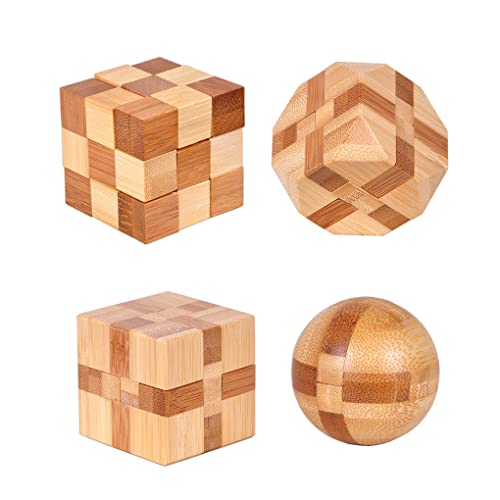
Material is high‑quality solid wood, corrosion resistant, and designed to resist cracking. Eco‑friendly construction keeps the wood lightweight yet sturdy. These intellectual toys aim to improve problem‑solving abilities while providing mood relief and enjoyment. Easy to disassemble, the puzzles remain challenging to assemble, making them a timeless gift option for adults seeking a mental workout as well as for teens.
Kingou Wooden Puzzle Magic Ball

The Kingou Wooden Puzzle Ball is a classic sphere puzzle designed to entertain and challenge. A noted trademarked wooden sphere puzzle, it emphasizes decomposing and reassembling with increasing difficulty. Its compact size suits both kids and adults who enjoy rigorous brainteasers, with a stated rating of significant challenge to assemble despite its compact footprint.
PicassoTiles Interlocking Sensory Toys Set

Eight styles of brain teaser designs include cubes, balls, barrels, globes, and more. This modular system develops problem solving, spatial imagination, hand‑eye coordination, and collaborative skills. The pieces are wood‑based and designed for portability, making it easy to take puzzles to school or travel. It’s suitable for ages 6 and up, with bonding opportunities for families and classrooms alike.
Xinbeiya Rechargeable Game Handheld Cube

This rechargeable handheld cube includes multiple game modes: speed, memory, and creativity challenges. It’s designed for ages 6–12 and beyond, supporting solo play or friendly competition. The device doubles as a STEM toy, helping sharpen attention, reaction time, and cognitive flexibility through varied gameplay and score tracking.
Kingou Wooden Logic Puzzle And Number Puzzle

High‑quality beech wood forms a compact 5.5 x 4.72 x 2.75 inch puzzle. Its mission demands arranging rows to total 38 across multiple directions. Suitable for ages 10 and up under adult supervision, the puzzle uses water‑based paint and a smooth finish to ensure safe handling and a satisfying solving experience.
Buying Guide
When selecting brain‑training toys, consider these key purchase factors to balance challenge with safety and enjoyment:
- Age and skill level: Choose puzzles that scale in difficulty to keep learners engaged without frustration.
- Material and durability: Wood tends to be sturdy and tactile, while plastics and metals may offer slide or spin mechanisms. Ensure safe finishes and no sharp edges.
- Learning outcomes: Match products to cognitive targets such as spatial reasoning, memory, logic, or fine motor skills.
- Storage and portability: Compact sets with clear storage help maintain focus during break times or travel.
- Social and solitary play: Some options support collaboration and family bonding, while others suit solo problem‑solving sessions.
- Safety and supervision: For younger users, ensure appropriate age guidance and potential supervision requirements for more complex puzzles.
These considerations help identify toys that align with educational goals, classroom needs, or family learning plans. Evaluating a mix of wooden puzzles, interlocking sets, and digital or handheld games provides a well‑rounded approach to intellectual development through play.