Best Toys for 8 to 12 Month Old Babies: Top Picks for Sensory Development
Discover engaging, development-focused toys ideal for babies aged 8 to 12 months. This guide highlights five carefully chosen toys that support fine motor skills, sensory exploration, crawling encouragement, and early learning. Each pick is designed to be safe, stimulating, and age-appropriate for infants transitioning into more active exploration. Use the table below for a quick overview before diving into detailed sections.
| Product | Brand | Key Benefit |
|---|---|---|
| Rain Stick, Montessori Baby Toys | GRESEESM | Soothing rain sounds and visual beads for sensory development |
| Jyusmile Musical Turtle | Jyusmile | Light, music, and crawl encouragement |
| hahaland Tissue Box Toy | hahaland | Multi-texture exploration and fine motor practice |
| Jyusmile Stacking Blocks & Sensory Toys | Jyusmile | Montessori-style blocks for colors, shapes, and coordination |
| Letapapa 4-in-1 Musical Rotating Projector | Letapapa | Interactive lights, sounds, and tummy-time play |
Rain Stick Montessori Baby Toys

The GRESEESM rain stick offers soothing raindrop sounds when flipped, shaken, or rolled. It combines a translucent body with moving beads to captivate visual attention and auditory senses. Designed for babies 6 to 12 months and older, it serves as a calming sensory tool and a gentle introduction to cause-and-effect play. Its gift-ready packaging also makes it a thoughtful option for baby showers or holiday gifting.
Jyusmile Musical Turtle Crawling Toy
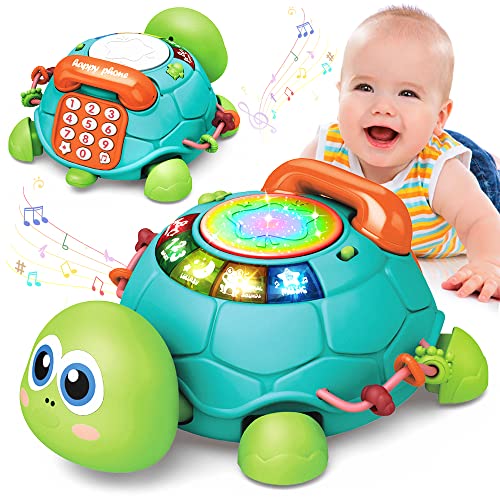
This crawling turtle toy introduces early education through lights, sounds, and movement. Babies learn numbers and letters as the turtle lights up with music. It supports fine motor skills by pressing buttons and engages gross motor development as the toy moves and babies chase it. The toy also includes rotating beads on its sides to practice finger dexterity, fostering eye-hand coordination and cognitive skills as babies explore cause and effect.
hahaland Tissue Box Toy Set

This set centers on a soft tissue box with textured crinkle tissues and 12 silk scarves. It engages babies through pulling actions, exploring textures, and rustling sounds. The bright colors help with visual tracking while the interactive scarves can be tied for added surprises. The design supports fine motor development, curiosity, and early cognitive recognition in a multisensory format.
Jyusmile Montessori 3-in-1 Block Bundle

This 24-piece set includes colored blocks, soft stacking rings, and squeeze balls. It supports color and shape recognition, counting, and problem-solving. Babies can practice stacking and knocking down structures, promoting fine motor coordination and hand-eye coordination. The set’s soft textures ensure durability and safety for munching or teething, while encouraging independent and guided play.
Letapapa 4-in-1 Musical Rotating Projector

Letapapa’s rotating projector toy combines 360° tummy-time play and underwater-themed visuals. It features six sea animal sounds and six melodies with adjustable volume, supporting sensory development without overwhelming noise. The toy’s rolling wheels and lights encourage mobility, rhythm recognition, and gross motor growth. It’s designed for babies around 6 to 12 months and beyond, making it a versatile early-learning tool for parents seeking multi-sensory engagement.
Buying Guide: Key Purchase Considerations
When selecting toys for 8 to 12 month olds, consider safety, age-appropriateness, and developmental goals. Look for non-toxic materials, smooth edges, and easy-to-clean designs. Prioritize toys that encourage both fine and gross motor skills, such as stacking blocks, push-and-pull toys, and those that reward crawling or cruising. Sensory-rich options with varied textures, colors, sounds, and visual stimuli help with neurodevelopment and focus. Choose a mix of standalone toys and multi-activity devices to maintain engagement over several months. Finally, assess volume controls and soft sound levels to protect hearing during extended play.
Montessori-inspired options emphasize independent exploration and problem-solving. Toys that encourage sequencing, grasp-and-release actions, and cause-and-effect are particularly valuable for this age. It can be helpful to rotate a small set of toys weekly to renew interest and support sustained attention. For caregivers, consider accessibility and ease of cleaning, as well as the toy’s durability under rough toddler play. Lastly, ensure the chosen items fit your space and travel needs, especially for busy families on the go.