Best Toy Clocks for Learning: Engaging Time-Telling Toys for Kids
Finding effective tools to teach children how to tell time can be both educational and fun. The following toy clocks combine interactive play with core math skills, helping youngsters grasp hours, minutes, and time concepts through hands-on activities. Below are five carefully selected options that support learning in classroom settings, homeschool environments, and at home play.
| Product | Brand | Why It Stands Out |
|---|---|---|
| BEST LEARNING Learning Clock | BEST LEARNING | Award-winning interactive clock with quiz mode and sleep mode night light. |
| Learning Resources Big Time Mini Clock | Learning Resources | Hands-on, color-coded, hidden gears for accurate time reading. |
| Melissa & Doug Turn & Tell Wooden Clock | Melissa & Doug | Turn-and-tell activities with time cards and auto-adjusting digital clock. |
| Learning Resources Time Activity Set | Learning Resources | Comprehensive teaching system with clocks, cards, boards, and dice. |
| V-Opitos Clock Learning Musical Toy | V-Opitos | Multifunction clock with quizzes, modes, and portable design. |
BEST LEARNING Learning Clock

The BEST LEARNING Learning Clock is designed to engage children through interactive play while teaching essential time-reading skills. It features a yellow hour hand and a red minute hand that children align and adjust to display the correct time. In Quiz Mode, the clock asks prompts to enhance recall and reinforce correct readings, turning practice into a game. The device also includes Sleep Mode with 10 classical tunes and 12 LED light options as a night light, helping children wind down at bedtime. Awards from Family Choice, Mom’s Choice Gold, Tillywig Brain Child, and Creative Child Seal of Excellence highlight its educational appeal. This clock is a solid option for toddlers and early elementary learners who benefit from guided, interactive time-telling activities.
Learning Resources Big Time Mini Clock

Designed to teach early time skills with a hands-on approach, the Learning Resources Big Time Mini Clock uses hidden gears to maintain accurate time as children spin the hands. The color-coded hour and minute hands align with corresponding markings, making it easier for learners to understand the relationship between hours and minutes. This clock serves as a durable classroom-ready tool for small groups or individual practice, supporting tactile exploration and visual learning for kids ages 5 and up.
Melissa & Doug Turn & Tell Wooden Clock

The Melissa & Doug Turn & Tell Wooden Clock combines a sturdy wooden build with engaging time-telling activities. Its “time cards” slot on top supports time-matching exercises, while a hideaway digital clock automatically shifts to reflect the analog display shown. This dual-display approach helps children connect digital and analog representations of time, offering a practical, seat-friendly option for classrooms and home study alike.
Learning Resources Time Activity Set
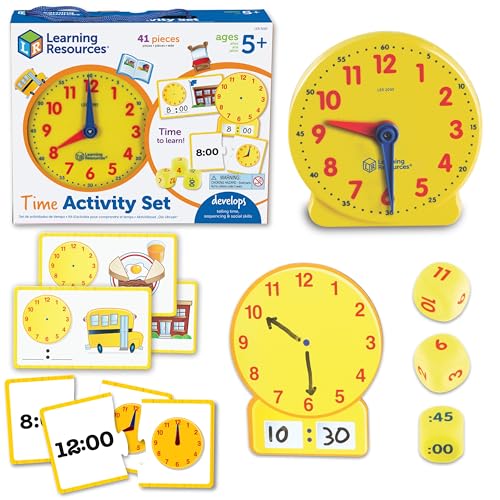
The Time Activity Set by Learning Resources offers a comprehensive teaching system designed for diverse learners. It includes a realistic clock with movable hands, double-sided activity cards, a dry-erase board, puzzles, dice, and foam components. The multi-sensory approach—color-coded parts, tactile pieces, and visual prompts—helps students understand time-telling, duration, and sequencing in a structured yet flexible format, ideal for small groups or individual tutoring sessions.
V-Opitos Clock Learning Musical Toy

The V-Opitos Clock Learning Musical Toy emphasizes interactive learning through seven sections, including time learning, quizzes, and bilingual options. It provides two learning modes—TIME Mode for showing the correct time and QUIZ Mode for prompting the user to set the clock accordingly. Features such as adjustable volume, repetition, and portable design make it a versatile choice for travel, classroom, or quiet-time learning. The toy is designed to stimulate hearing and imagination while reinforcing time-telling concepts.
Buying Guide: Key Considerations For Choosing a Time-Telling Toy
Age Appropriateness and Development
Choose clocks that match a child’s cognitive stage. For beginners, look for large, clearly labeled hands and color-coding. For older kids, clocks with interactive quizzes or multiple modes can sustain engagement while reinforcing accuracy.
Hands-On Features And Visual Cues
Hands-on manipulation helps kids grasp hour and minute relationships. Visual cues such as color-coded hands, hour markers, and removable pieces support active learning and reduce confusion when reading analog time.
Multi-Sensory Engagement
Multi-sensory tools combine sight, touch, and sound to improve retention. Clocks with audible prompts, tunes, or spoken questions complement verbal explanations and help learners who benefit from listening and repetition.
Durability And Classroom Suitability
Look for sturdy construction for repeated use in classrooms or high-traffic homes. Wooden clocks and gears typically withstand frequent handling, while plastic designs may offer lighter weight and portability.
Versatility And Expandability
Some sets include additional activities, cards, or boards that expand the scope of time-telling to durations, elapsed time, and daily routines. Consider whether you want a single clock or a growing set that covers broader time concepts.
Accessibility And Setup
Consider ease of use for caregivers and teachers. Features like simple alignment of hands, changeable volumes, and clear instructions help minimize setup time and maximize instructional time.
Cost-Effectiveness And Longevity
Balance price with longevity. Investment in a well-designed clock that remains relevant as skills progress can provide long-term value through repeated use in different activities and settings.
Across these options, the best toy clocks deliver concrete time-telling foundations while offering engaging, varied experiences. For classrooms and homes, selecting a mix of clocks that emphasize hands-on manipulation, visual cues, and interactive prompts can create a well-rounded learning toolkit that supports steady progress in early time-telling skills.