Best STEM Toys for a 7-Year-Old Boy That Spark Real Learning
Picking the right STEM toys for a 7-year-old boy means balancing hands-on fun with open-ended curiosity. The selections below cover robotics, physics, building, and problem-solving to nurture curiosity in science and engineering while keeping kids engaged. Each product features prompts for exploration, problem-solving, and teamwork—perfect for solo play or family STEM activities.
Summary of chosen products:
| Product | Brand | Key Focus | Age Range |
|---|---|---|---|
| STEM Kits for Kids Crafts 6-8 8-12 | BeAndge | Robotics, solar/wind cars, obstacle avoidance | 8-12 |
| Gravity Maze | ThinkFun | Logic, planning, problem solving | 8-12 |
| 10 in 1 Electric Building Toys | Veecafiodi | 10 models, STEM construction, battery operation | 4-8+ (7-12 context) |
| 5 in 1 STEM Kits | Poraxy | Model cars, engineering play, hands-on building | 8-12 |
| 180 Pieces Building Blocks | Huaker | Large-scale construction, color/shape recognition | 4-8+ |
BeAndge STEM Kits For Kids 6-12

The BeAndge STEM Kit set encompasses multiple science themes in one giftable package. It includes a solar-powered car, a wind-powered car, an obstacle avoidance robot, a transmission tank, and a glider. The kit is designed to foster early robotics curiosity while encouraging hands-on experimentation. Batteries are not included, which keeps costs predictable and allows parents to choose preferred energy sources. It serves well as a family STEM project or classroom activity, and its gift-box presentation makes it a standout option for birthdays or holidays.
ThinkFun Gravity Maze

Gravity Maze combines marble-run construction with logic challenges to boost critical thinking and planning. This hybrid game blends fun and education, appealing to kids who enjoy strategy and puzzle-solving. The set includes nine towers, three marbles, a game grid, and a target piece, offering endless design possibilities. It supports independent problem solving while naturally prompting kids to verbalize their reasoning, a useful skill for classroom participation and group activities.
Veecafiodi 10 in 1 STEM Toy Set

This versatile 10-in-1 building kit lets kids assemble a variety of models—from excavators to robots and racing cars. It emphasizes hands-on STEM learning, strengthening problem-solving, spatial reasoning, and mechanical understanding. The set includes 113 pieces and a detailed instruction manual. A sturdy storage bucket makes cleanup easy, helping families transition from play to neat, organized projects. Batteries are required for certain models, broadening the range of mechanical concepts explored.
Poraxy 5 in 1 STEM Kits For Kids
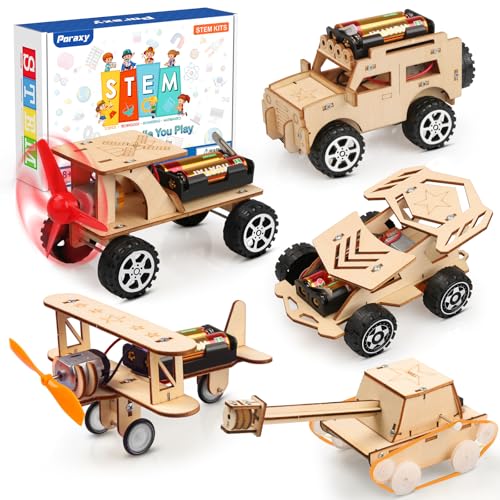
Poraxy’s 5-in-1 STEM kit focuses on model car construction and engineering problem-solving. It includes multiple car designs within a single kit, encouraging kids to explore different mechanisms and drivetrain concepts. The package promotes hands-on learning, better hand-eye coordination, and imaginative play. It’s designed for ages around 8 to 12 and provides a structured yet explorative experience to stimulate curiosity about engineering and mechanics.
Huaker 180 Pieces Building Blocks

The Huaker building blocks set includes 180 pieces with a mix of colors and shapes to support open-ended construction play. A large storage box keeps pieces organized, nudging kids toward neat, repeatable build sessions. The set is suitable for younger builders (ages 4-8) but also supports collaborative family play for older children who want to explore more complex structures. The emphasis is on spatial awareness, color recognition, and basic engineering thought processes.
Buying Guide: Key Considerations For 7-Year-Old STEM Toys
- Learning goals: Determine whether you want robotics, building sets, or logic-based challenges. A mix in a single purchase can cover multiple STEM domains.
- Age appropriateness: Check recommended age ranges and adjust for a child’s individual skill level and enthusiasm for hands-on tasks.
- Open-ended vs. structured play: Open-ended kits encourage experimentation and creativity, while structured kits teach specific concepts and sequencing.
- Hardware requirements: Some kits require batteries; others rely on solar or wind power or manual operation. Consider energy preferences and replacement parts readiness.
- Storage and organization: Sets with a dedicated storage container help sustain long-term engagement and reduce cleanup friction.
- Durability and safety: Look for non-toxic materials, sturdy construction, and age-appropriate small parts risk controls for younger siblings or pets.
- Educational impact: Favor kits that promote critical thinking, problem-solving, planning, and collaboration, not just repetitive assembly.
- Support materials: Clear instructions, color-coded labeling, and in-box challenge cards enhance learning and reduce frustration.
- Future growth: Choose toys that scale with evolving interests. A kit that adds new models or complexity can stay relevant for months.
- Price-to-value balance: Consider the breadth of projects, number of pieces, and potential for classroom or family use when evaluating cost.
How To Use These Toys For Maximum Learning
Set a learning goal for each session (for example, “plan a route from start to finish using three constraints”), then encourage children to verbalize their reasoning. Alternate between guided challenges and free-build time to balance structure with creativity. Involve siblings or parents in collaborative builds to foster teamwork and communication skills. Finally, document progress with simple notes or photos to review later and celebrate milestones without focusing on right-or-wrong outcomes.