Best Solar System Toys for a Kid’s Room: Fun, Educational Space Decor
Turning a child’s room into a tiny planetarium can spark curiosity about space while encouraging hands-on learning. The following selection focuses on solar system kits, projectors, inflatables, and wall decor that are age-appropriate, visually engaging, and STEM-friendly. Each option offers a different way to explore planets, stars, and celestial concepts—from glow-in-the-dark displays to ceiling projections. This guide highlights five top picks that work well for an American kid’s room, balancing imagination with science.
| Product | Brand | Key Strength |
|---|---|---|
| National Geographic Glow-in-The-Dark Solar System Model Kit for Kids | Blue Marble | Moving, glow-in-the-dark 3D model |
| Science Can Solar System for Kids | Science Can | Planetarium-style projection with educational facts |
| Dan&Darci Inflatable Solar System Planets | Dan&Darci | Inflatable planets for ceiling display |
| Solar System for Kids Projector Night Light | One Fire | 360° projection with multiple films |
| Galaxy Projector Pro for Bedroom | MuliVid | 13HD discs with solar system and constellations |
National Geographic Glow-in-The-Dark Solar System Model Kit

The National Geographic Glow-in-The-Dark Solar System Model Kit is designed for hands-on creativity and display. It provides a moving 3D solar system that glows in the dark, with a sun and eight planets that can be customized. The kit includes six paint colors, glow-in-the-dark accents, a brush, and decals, plus a poster with solar system facts. Assembly is guided by kid-friendly instructions, making it accessible for curious builders ages 8 and up. Movable arms enable easy adjustment of planet placement, supporting an interactive learning experience that can evolve with imagination.
For bedroom decor, this kit doubles as a captivating wall display or desk model. Parents can use it to introduce orbital mechanics, scale concepts, and space terminology in a tangible way. The glow-in-the-dark feature adds a nighttime dimension, helping children connect day-night cycles with the vastness of space. The comprehensive, all-in-one nature means fewer separate purchases and a cohesive learning setup that can be reconfigured as the child’s curiosity grows.
Science Can Solar System for Kids

The Science Can Solar System for Kids combines a tactile model with a projector, turning a ceiling or wall into a mini planetarium. The kit features eight planets orbiting the sun and includes a projector that can display the planets on any surface, creating an immersive space experience. It also offers bilingual educational content in English and Spanish, with easy-to-activate planet patterns on the base that reveal factual information about astronomy. With 24 accompanying slides, children can explore space imagery while learning key science concepts. Suitable for ages 5 and up, it emphasizes exploration and storytelling.
From an educational perspective, this kit supports vocabulary growth (astronomy terms, planet names) and visual learning through projections. The dual-language feature broadens accessibility and may encourage conversations about space across households with diverse language backgrounds. The combination of hands-on manipulation and projection aligns well with active learning styles and can serve as a recurring centerpiece in a child’s space-themed curriculum at home.
Dan&Darci Inflatable Solar System Planets
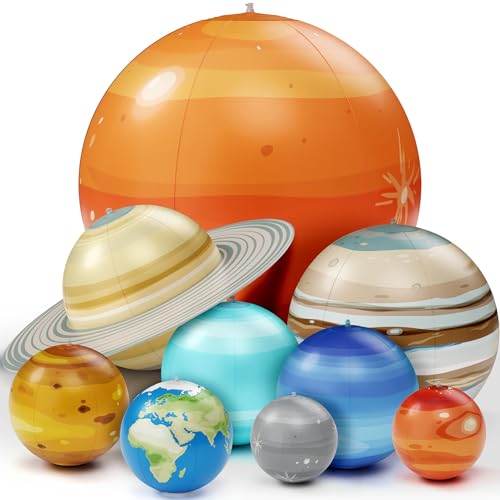
The Dan&Darci Inflatable Solar System Planets offer a large, tactile way to explore the solar system. The jumbo inflatables represent all eight planets and the sun, enabling ceiling display and interactive learning in a dramatic, room-enlivening format. Each set includes galaxy learning cards with key planet facts, encouraging kids to connect visuals with science content. Hanging loops and strings allow easy suspension, providing an engaging way to demonstrate orbital layouts and scale in a practical, decorative manner. This option is ideal for kids who enjoy physical play and room decor in one package.
Educators and parents can use these inflatables to discuss orbit paths, planetary order, and scale differences. The visual dominance of hanging planets creates a memorable focal point that can inspire ongoing curiosity about space exploration. The included learning cards extend the experience beyond decoration, turning play into a structured educational activity with a clear start-and-end for each learning session.
Solar System for Kids Projector Night Light

The One Fire Solar System Projector Night Light combines a space-theme projector with multiple film options. With 360° rotation and five distinct projection films, it creates dynamic ceiling displays featuring planets, stars, and ocean scenes. The projector supports a kid-friendly bedtime routine by transforming the room into a starry cosmos, contributing to a calming ambience. It also serves as a decorative night light, enhancing room aesthetics while introducing children to celestial bodies in a memorable way. The device is USB-powered for convenient use in a bedroom setting.
From a design standpoint, this projector balances brightness, color variety, and projection distance to optimize ceiling coverage. The 105 lighting modes through seven colors and three brightness levels provide flexibility for different moods and ages. Parents can tailor projection styles to suit a child’s preferences, making it useful for play, learning, and sleep routines. It’s a versatile choice for space-themed bedrooms without requiring extensive setup or ongoing maintenance.
Galaxy Projector Pro for Bedroom

The Galaxy Projector Pro from MuliVid broadens the scope from planets to a sweeping celestial panorama. It ships with 13 HD discs that cover the Solar System, Earth, Moon, and an array of galaxies and nebulae. The projector rotates 360°, filling walls or ceilings with a lifelike starry sky and planetary scenes. The discs can be swapped to alter the display, and focus can be adjusted for sharpness. USB-powered operation makes it easy to use in a kid’s room, dorm, or play area. It’s an appealing décor item that doubles as an educational visual aid for astronomy discussions.
Educational benefits include exposure to large-scale cosmos imagery, the chance to discuss constellations, galaxies, and cosmic structures, and the opportunity to compare astronomical features with the Solar System. The combination of rotation, projection distance flexibility, and multiple discs supports varied teaching moments—from guided lessons to independent exploration. This projector offers a visually immersive experience that can heighten engagement with space topics in a home setting.
URLLUAE Solar System Poster Hanger Frame

The URLLUAE Solar System Poster Hanger Frame offers a simple, stylish way to showcase space-themed art. Sized at 12×16 inches, this frame hanger provides an elegant display option that can elevate room decor while keeping a space-forward aesthetic. It’s an easy DIY project for a kid’s room, enabling quick rotation of posters or educational prints as interests shift. This product emphasizes minimalist design with a focus on showcasing favorite solar system art, making it a practical addition to a bedroom’s wall art collection.
In selecting wall decor, consider the frame’s mounting method, wall durability, and whether you plan to change posters seasonally. The hanger frame supports a clean, modern look that complements educational materials without overpowering the room’s space theme. It’s a versatile accessory that can pair with other space-themed decor elements for a cohesive look.
4M Solar System Planetarium
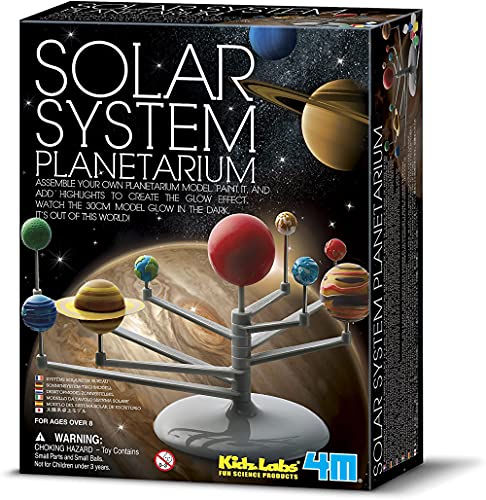
The 4M Solar System Planetarium is a classic DIY kit that blends art with science. It includes planets, stencils, glow paints, rods, string, a fact-filled wall chart, and a set of quiz questions to reinforce learning. Kids assemble and paint the model, then display it as a classroom-like planetary display. This kit promotes hands-on problem solving, fine motor skills, and space literacy, making it suitable for individual play or group activities. The structured content supports a guided exploration of astronomy concepts through creative building and decoration.
In terms of educational value, the kit provides an integrated learning experience—from assembly to painting to retention checks via activities. For parents seeking a STEM-focused, budget-friendly option, this kit offers a strong balance of creative craft and scientific content. The wall chart and quiz questions encourage recall and discussion, helping children articulate what they’ve learned about the solar system while building a tangible representation they can proudly display.
Buying Guide: Space-Themed Room Owning Considerations
Key purchase considerations include age appropriateness, durability, and the type of learning experience the child enjoys. For tactile, hands-on builders, kits with movable parts and paint supplies can reinforce comprehension of planetary order and orbits. For visual learners, projectors and inflatables provide immersive experiences that can anchor spatial concepts in memory.
Consider room size and display options. Wall-ready decor, ceiling projectors, and desktop models each suit different spaces and routines. Glow-in-the-dark features are engaging for night settings but may require darker rooms to maximize effect. Language options, like bilingual content, can broaden accessibility and support parents who want to introduce astronomy in multiple languages.
Consistency and progression matter. A kit that can be expanded with additional planets, more discs, or alternate scenes encourages ongoing exploration. Pairing a projector with a small model ecosystem allows children to compare a 2D projection with 3D representations, deepening understanding of scale, orbits, and orbital periods.
Safety and ease of use are essential. Look for non-toxic paints, age-appropriate assemblies, and clear instructions. For younger children, parent supervision during assembly is recommended. Where possible, choose products with durable materials and simple maintenance to ensure longevity in a child’s daily life.
Finally, consider the educational goals. A solar system model that glows initially captivates, but a projector that reveals facts and images sustains interest. A mix of decor items—kinesthetic kits, visual projections, and decor frames—offers a well-rounded space-learning environment that blends curiosity with scientific literacy.