Best Scientist Kit for Kids: Top STEM Kits for Hands-on Learning
The best scientist kits for kids combine engaging experiments with clear instructions, safe materials, and easy-to-understand science concepts. This guide highlights five top picks that cover chemistry, earth science, physics, and other STEM topics—perfect for curious kids and budding young scientists. Each kit is chosen for instructional value, variety of activities, and long-term educational value. Explore options that fit different ages, budgets, and interest areas, from volcanoes and crystal growing to magic-inspired experiments and lab-style play.
Summary of Chosen Products
| Product | Brand | Key Focus |
|---|---|---|
| UNGLINGA 150 Experiments Science Kit | UNGLINGA | Earth science, chemistry, physics, and more; 150 experiments |
| National Geographic Junior Chemistry Set | Blue Marble | Beginner chemistry with 50 experiments and 20+ tools |
| UNGLINGA 70 Lab Experiments Kit | UNGLINGA | Varied science activities; volcano, circuits, and reactions |
| National Geographic Earth Science Kit | Blue Marble | Earth science, crystal growing, volcano, rock collection |
| National Geographic Science Magic Kit | Blue Marble | 100+ science experiments with magic-style tricks |
UNGLINGA 150 Experiments Science Kit

The UNGLINGA kit offers a broad range of activities that span earth science, chemistry, physics, and other STEM topics. With 150 experiments, kids can explore hands-on concepts using a well-illustrated manual that guides step-by-step procedures. The kit emphasizes accessible materials and kid-friendly lab tools, including goggles for a real-scientist feel. This volume of experiments supports repeated exploration and deepening understanding across multiple science domains.
National Geographic Junior Chemistry Set

This complete early learning lab kit from National Geographic is designed for kids aged 4 and up. It centers on chemistry with 50 experiments and 20+ lab tools, enabling children to explore safe, kitchen-based experiments using common household items. Clear, illustrated instructions help young scientists perform experiments confidently, while the age-appropriate design supports progressive skill-building and curiosity about chemical reactions and states of matter.
UNGLINGA 70 Lab Experiments Kit

With 70 experiments, this kit emphasizes varied science exploration, including erupting volcanoes, crystal growing, balloon rockets, and fruit circuits. An easy-to-follow manual with step-by-step illustrations guides kids through each activity, offering explanations of the science behind reactions. The kit aims to foster critical thinking, problem solving, and collaborative learning when shared with family or classmates.
National Geographic Earth Science Kit

Geology and earth science take the spotlight in this 100+ activity kit. Kids can build a volcano, grow crystals, and perform geologic digs, all while learning about weather, erosion, and rocks. The included Learning Guide ties activities to science concepts, promoting deeper understanding and meaningful connections between experiments and real-world Earth science phenomena.
National Geographic Science Magic Kit

This kit blends science with magic tricks, featuring 100+ experiments and a themed magic kit. Kids perform science-based tricks that demonstrate physics and chemistry principles, such as bending metal with water and vanishing test tubes. The included wand and gloves add a performative element, helping young learners see science as exciting, interactive, and approachable.
UNGLINGA Kids Science Experiment Kit with Lab Coat
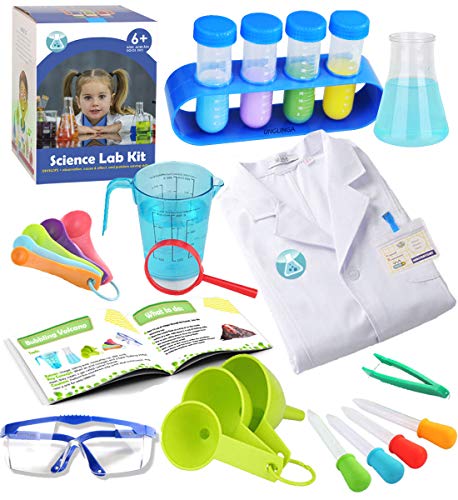
This kit emphasizes role-playing science, including a washable lab coat for dressing up as a scientist. It supports early hands-on exploration with a variety of science tool toys and a customizable badge, making it suitable for pretend-play scenarios such as school projects or birthday parties. The kit is designed to foster curiosity and an early interest in STEM careers.
Buying Guide
- Age range and safety: Look for age-appropriate experiments and clearly labeled safety guidelines. Kits with goggles and child-safe materials reduce risk during at-home experiments.
- Variety and depth: Choose kits that cover multiple science domains (chemistry, earth science, physics) for broad exposure or focus on one area for deeper skill-building.
- Instruction quality: Illustrated, step-by-step manuals help kids follow procedures independently and build confidence in scientific reasoning.
- Materials and tools: Consider whether the kit provides tools (lab goggles, beakers, safety gear) or relies on common household items. Reusability and replacement parts extend value.
- Learning support: Some kits include science explanations and learning guides that connect activities to underlying concepts, supporting classroom-style learning at home.
- Engagement and motivation: Kits that incorporate storytelling, role play, or magic-trick elements can boost sustained interest and curiosity in science topics.
- Budget and scalability: If you want long-term use, choose kits with a broad range of experiments or expandable components that can grow with the child’s abilities.
- Parent involvement: Set expectations for adult supervision or guidance, especially for more complex experiments or younger children.
In selecting the best scientist kit for kids, consider a balance between immediate engagement and long-term learning potential. Kits with a mix of hands-on experiments, clear instructions, and safety-friendly materials typically provide the most value for developing STEM interest and foundational knowledge.