Best Scientific Toys for 12-Year-Olds: Hands-on STEM Adventures
Exploring science through play helps 12-year-olds build critical thinking, problem-solving, and practical engineering skills. The following selection focuses on hands-on kits that balance creativity with learning, guiding curious minds toward real-world applications. Each product below is chosen for its potential to engage preteens without screens, while offering clear, step-by-step instructions and lasting value.
Summary of chosen products:
| Product | Brand |
|---|---|
| Smartivity DIY Robotic Mechanical Hand | Smartivity |
| STEM 13-in-1 Solar Power Robots | Bottleboom |
| STEM Projects for Kids | COBFDHA |
| Crystal Growing Kit for Kids | Dan&Darci |
| 24-in-1 STEM Circuit Kit | MEWOCHEE |
Smartivity DIY Robotic Mechanical Hand

The Smartivity kit offers action-packed, screen-free STEM fun that guides kids through assembling a functional mechanical hand. The manual provides clear, step-by-step instructions to boost concentration, logic, and spatial understanding. Suitable for ages 8-14, the kit emphasizes hands-on construction with a focus on engineering concepts, problem-solving, and long-lasting play as parts can be replaced or reassembled for different configurations.
Key features include a comprehensive, beginner-friendly build process and replacement-part availability to minimize interruptions during play. As children assemble and test their own robotic hand, they gain foundational insight into mechanical linkages, lever systems, and basic robotics—skills that translate to more complex projects later in life.
STEM 13-in-1 Solar Power Robots

This solar robot kit provides a multi-robot experience, letting kids build 13 different machines that run on solar energy. The activity encourages experimentation—children can disassemble and reassemble components to explore gears, plates, tires, and shafts. Built with non-toxic ABS materials, the set is designed for long-lasting use and hands-on exploration of renewable energy concepts.
The kit supports a transition from indoor to outdoor play, since solar power requires light rather than electricity. Through building and testing, learners observe how solar energy is converted into motion, while developing fine motor skills, measurement accuracy, and simple wiring understanding. This flexible design invites creative play and repeated experimentation.
STEM Projects for Kids: COBFDHA
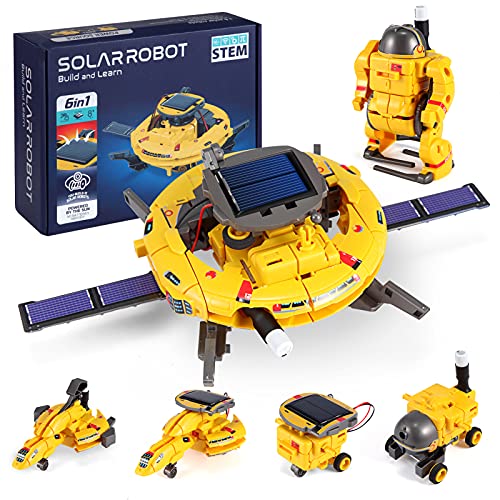
COBFDHA’s STEM project kit centers on building six different moving robots, powered by sun or battery, to explore mechanical design and problem-solving. The package includes a solar panel option alongside a traditional power supply, enabling hands-on comparison of energy sources. The design emphasizes creativity, manual dexterity, and logical thinking as kids adapt instructions to yield functional robots.
Designed for ages 8–14, the kit balances guided activities with room for independent experimentation. Parents can supervise as children plan, assemble, test, and iterate, building confidence in scientific thinking while reinforcing safe handling of electronics and energy systems.
Dan&Darci Crystal Growing Kit
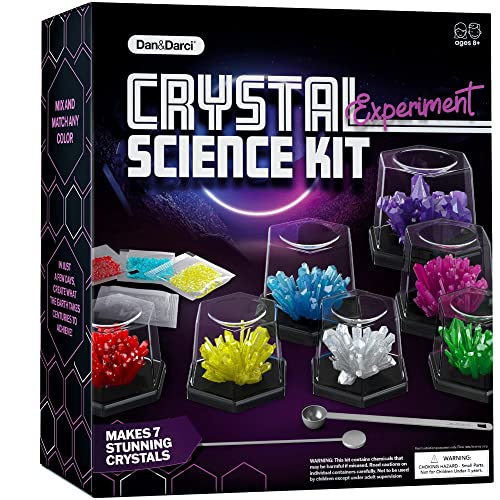
The crystal growing kit by Dan&Darci provides a colorful, hands-on chemistry experience. Young scientists mix ingredients to form seven crystals, then display them in a dedicated display case. The included seeds, powders, measuring tools, and instructional booklet guide learners through the crystallization process, offering a tangible reminder of chemical reactions and mineral formation.
With its clear, illustrated guide and safe components, this kit supports inquiry-based learning and patience as crystals gradually reveal their structure. It’s a practical introduction to experimentation, observation, and documentation—core elements of scientific literacy—wrapped in a visually engaging activity.
24-in-1 STEM Circuit Kit

This MEWOCHEE kit offers 24 distinct circuit-based projects, combining learning with creative construction. With multiple robot heads, modules, and connecting wires, kids can assemble walking robots, bubble-blowing machines, and other interactive builds. The kit emphasizes circuit principles, sensor concepts, and the logic behind electronic systems, helping learners develop a solid foundation in STEM fundamentals.
Clear instructions and modular parts reduce guesswork, enabling repeated experimentation and incremental skill advancement. The versatility of the kit supports diverse interests, from robotics to interactive art projects, making it a flexible option for ongoing STEM exploration at home or in classrooms.
Buying Guide: Key Purchase Considerations
When selecting science-based toys for 12-year-olds, consider the following factors to ensure value, safety, and sustained engagement:
- Learning goals: Determine whether the kit emphasizes engineering, chemistry, solar energy, circuitry, or a mix of STEM disciplines to align with the learner’s interests.
- Age appropriateness: Check recommended age ranges and complexity to ensure the project challenges without causing frustration.
- Hands-on balance: Look for kits that require planning, measurement, and problem-solving beyond simple assembly to maximize cognitive benefits.
- Materials and safety: Favor non-toxic components, durable parts, and clearly labeled safety guidelines for confident use by preteens.
- Reusability and expansion: Prefer sets that allow disassembly, reconfiguration, or add-on modules to extend play value and learning.
- Instruction quality: Clear, visual instructions with troubleshooting tips help independent learning and reduce repeated help from adults.
- Energy source and environmental impact: Solar-powered options introduce renewable energy concepts, while battery-powered kits may be best for indoor use and controlled testing.
- Age and skill progression: A kit with multiple builds or scalable challenges helps older kids continue to grow without needing a new purchase.
Perspective considerations:
- Educational depth: Some kits prioritize fundamental concepts, while others offer advanced projects that integrate physics, programming, or design thinking.
- Social learning: Group activities or collaborative builds can foster teamwork and communication, valuable along with technical skills.
- Time investment: Complex builds may require extended sessions; plan for multiple sessions to prevent rushed learning and maintain engagement.
- Parent/teacher role: Some products are designed for independent exploration, while others benefit from guided sessions or discussion prompts to reinforce concepts.
In summary, the recommended products offer a mix of mechanical, solar, chemical, circuit, and problem-solving experiences. Each choice supports hands-on experimentation, critical thinking, and a practical understanding of STEM principles that align with the curiosity and capabilities of 12-year-olds.